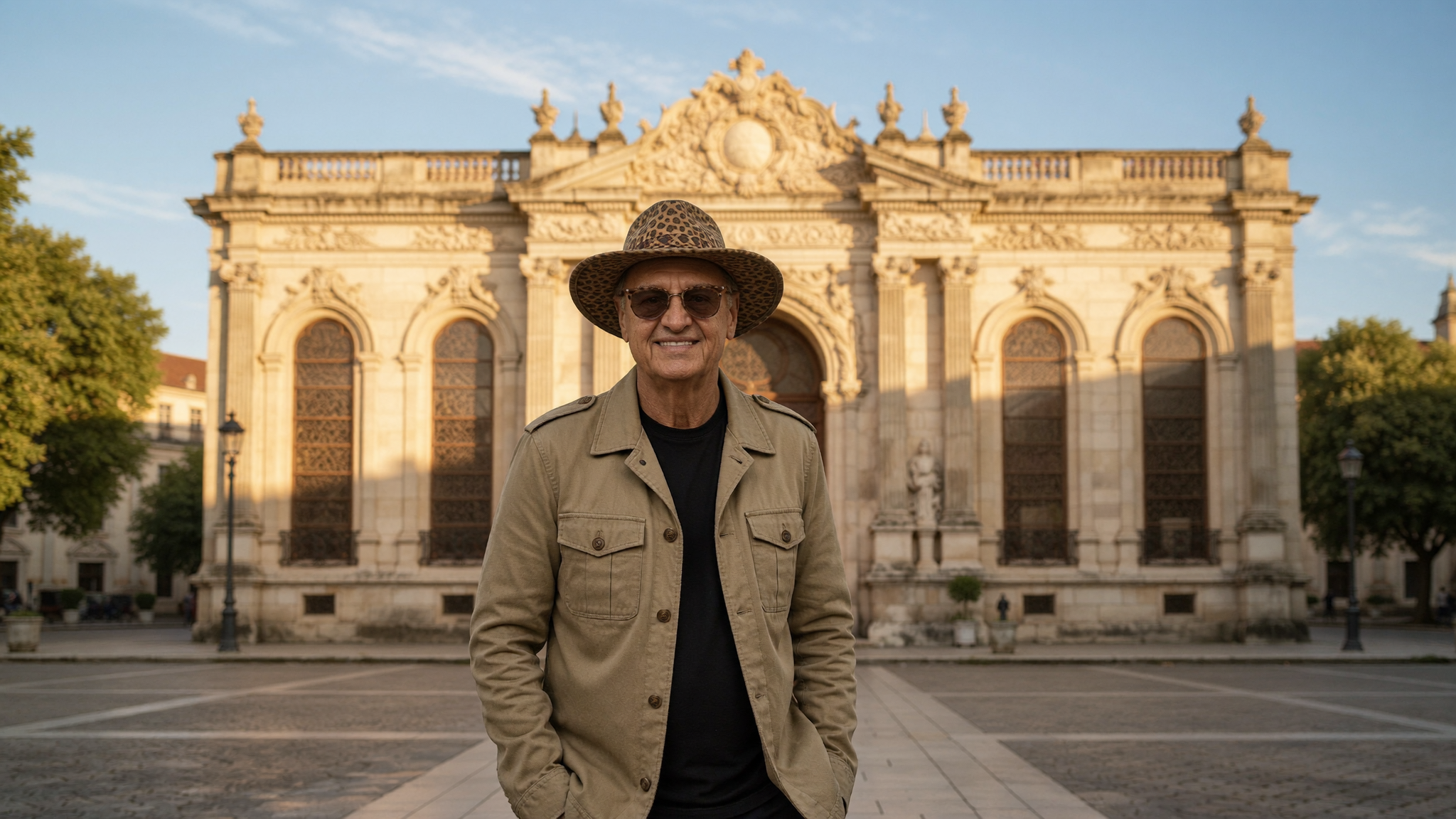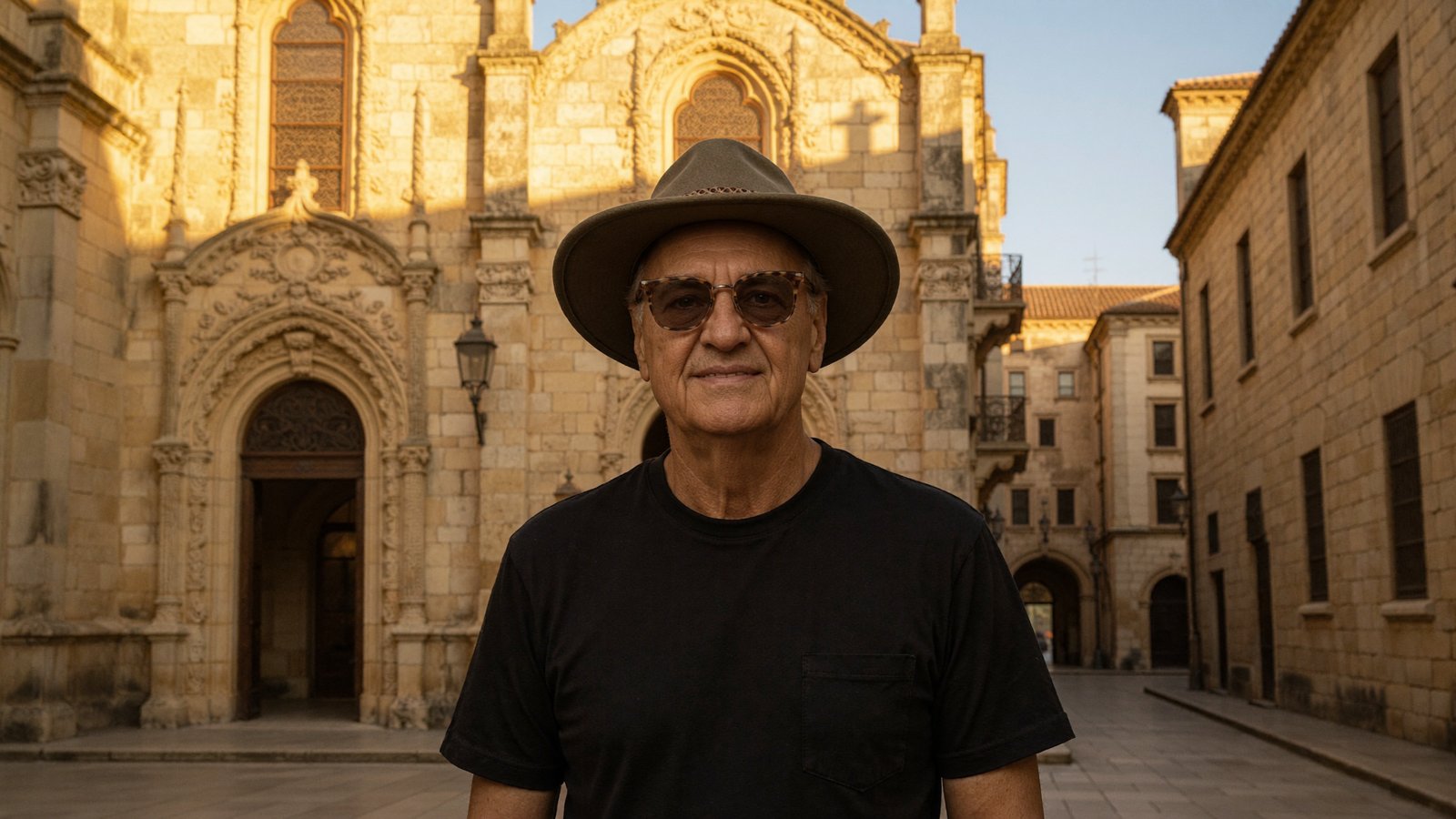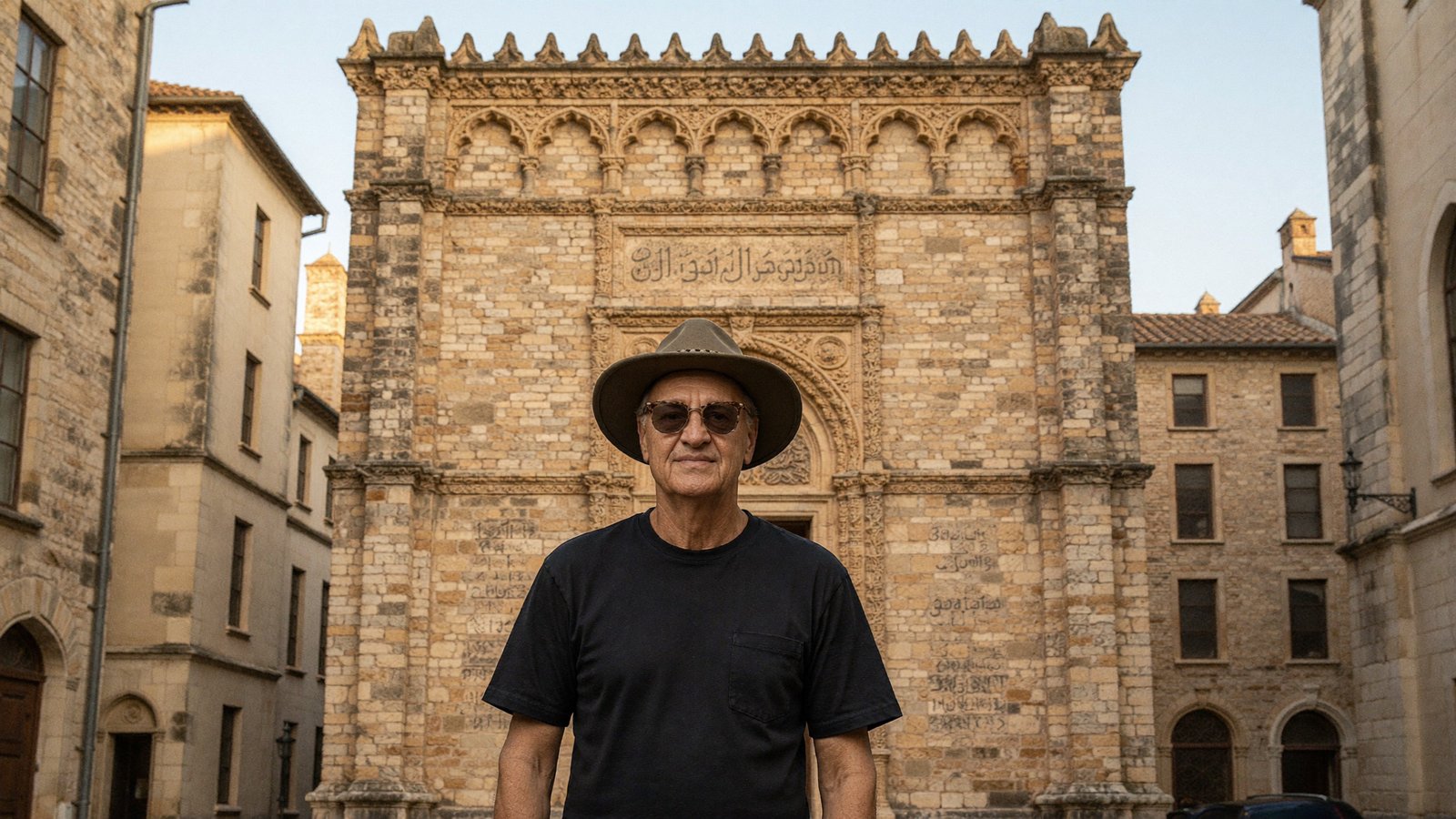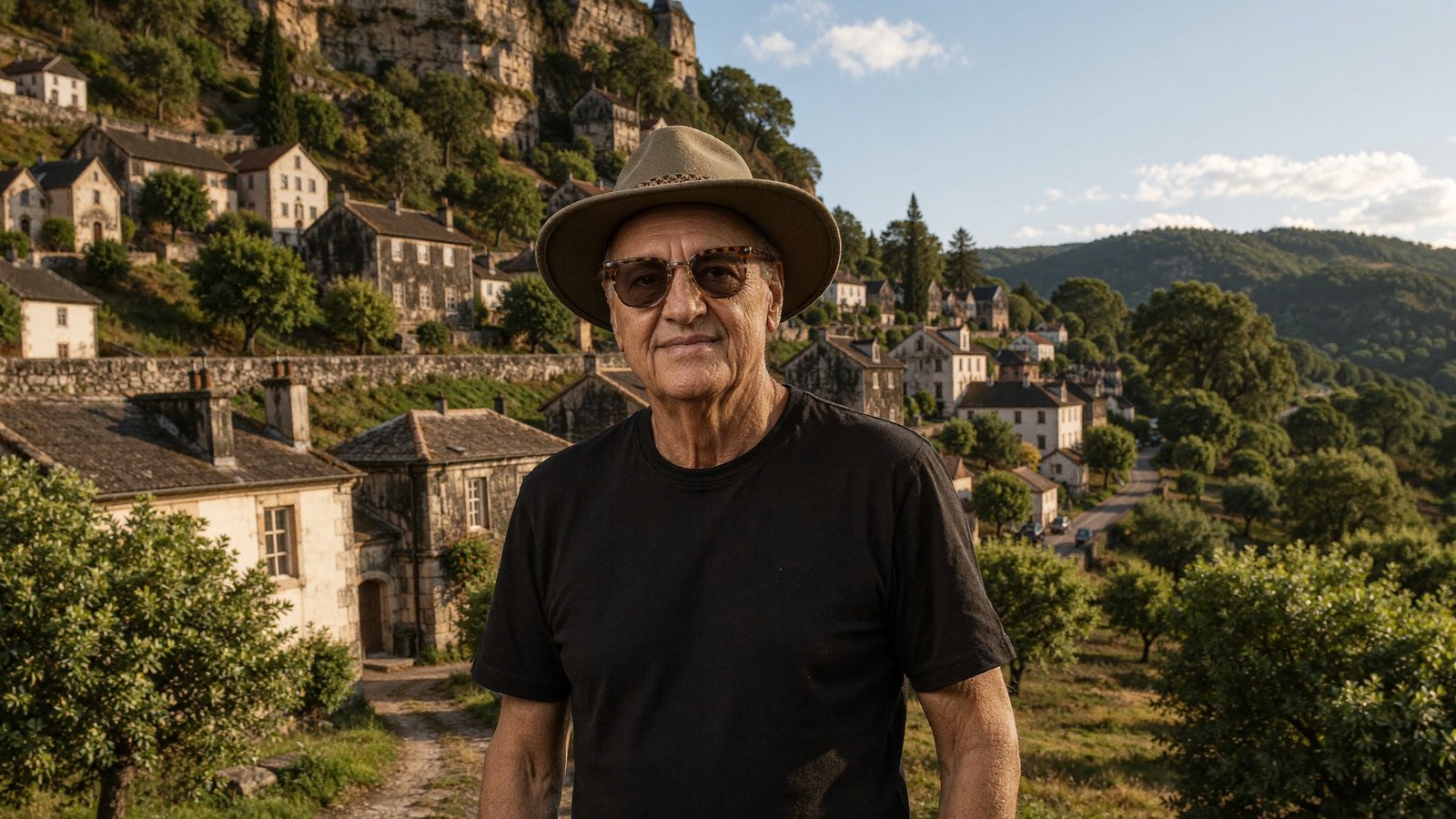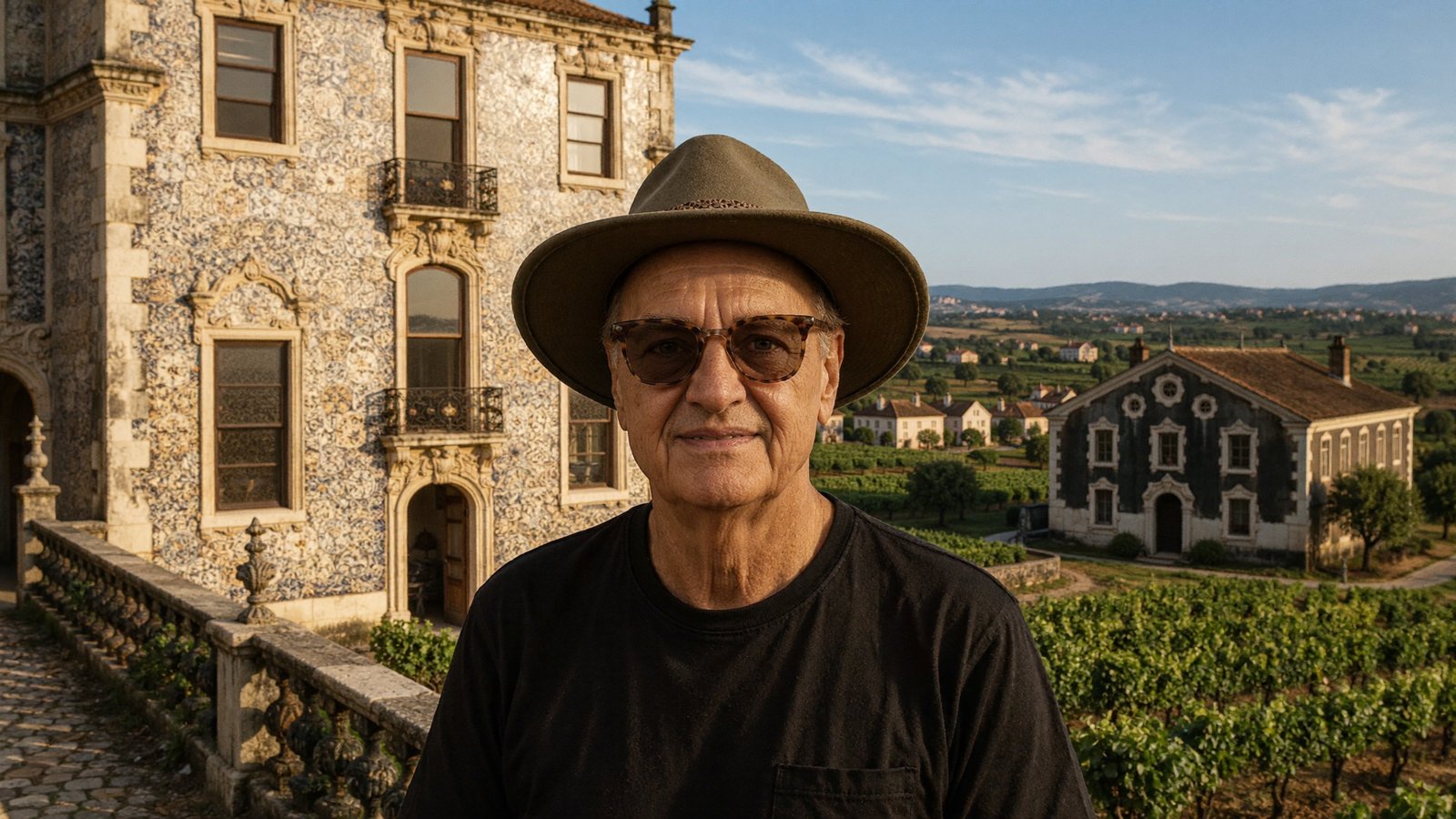
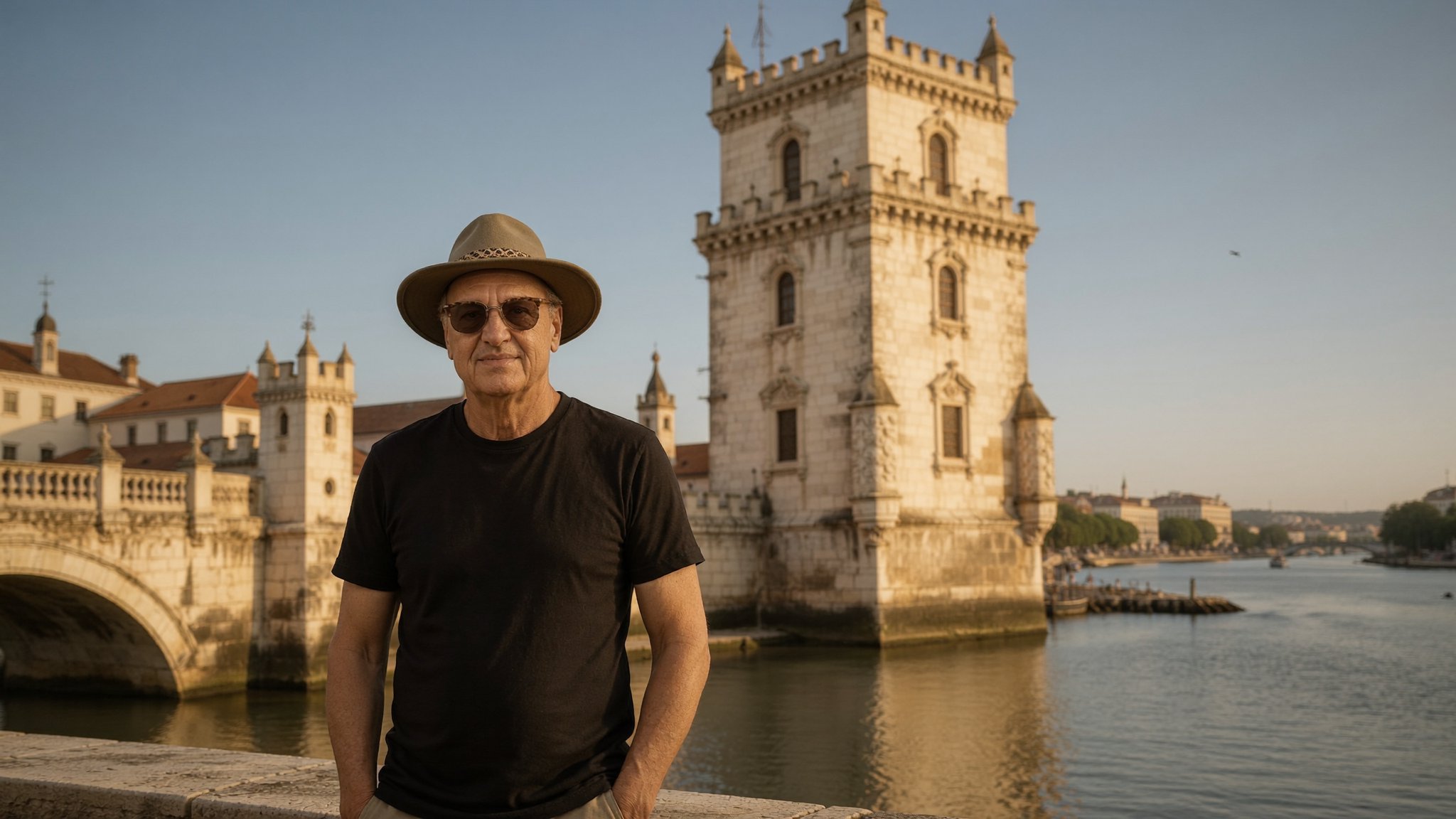
Your travel chronicle on Belém, Portugal, featuring Vasco da Gama and King Manuel I (15th and 16th centuries), back when Indian pepper was worth its weight in gold, while the Dutch East India Company (1602) was taking shape in the United Provinces, ready to challenge the Portuguese for the spice route a century later.
Your Daily Iberian Travel Chronicle & Guide
You know, there are places that don't look like much until you understand what happened there. Belém, west of Lisbon, is one of them. A quiet neighborhood by the Tagus, lawns, tourists queuing for a still-warm pastel de nata, and a white light bouncing off the limestone. And yet, it is here—precisely here, on this strip of land where the river widens before flowing into the Atlantic—that Europe opened its first door to the rest of the world.
Look closely, you who read these lines. It is no coincidence that the kings of Portugal chose this threshold to build their most beautiful monuments. Belém was the last piece of solid ground sailors saw before months on the high seas, and the first they looked for upon their return, eyes burned by salt, whether they came back laden with spices or didn't come back at all.
This morning, I am not alone in pacing this liquid border. Three companions are with me, each having come here in search of something different. And that is often how the best conversations are born: when no one is looking at quite the same thing.
Three perspectives on the same stone
The first to step out of the car is Mariana. A 45-year-old Lisboeta with the raspy voice of someone who laughs a lot. She comes from a family of caulkers—the workers who made hulls watertight with oakum and tar in the shipyards of Belém. Her great-grandfather was still swinging his mallet on these docks when the last great sailing ships passed through. She rests her hand on a low wall as if greeting an old friend.
Beside her, Willem unfolds his lanky frame. A 55-year-old Dutchman and maritime historian, he is a specialist in the Dutch East India Company, the famous VOC. He gazes at the river with an almost hungry curiosity—the look of a man who has read a thousand pages about a place and is finally walking its ground.
And then there is Inês. A 33-year-old Portuguese heritage restoration engineer. She doesn't see monuments; she sees stone decay, rising salts, and failing joints. She has already pulled out a small notebook.
The wind smells of iodine and the burnt sugar of nearby bakeries. A seagull cries out. Mariana closes her eyes for a second, breathes in, and smiles.
"Do you smell that?" she says to me. "The river hasn't changed its scent since my great-grandfather's time. Everything else has. But not the smell."
You who are reading this, pause for a moment on that thought. We are walking on ground that has seen empires depart, and the most faithful thing that remains is a scent.
The gold that came from pepper
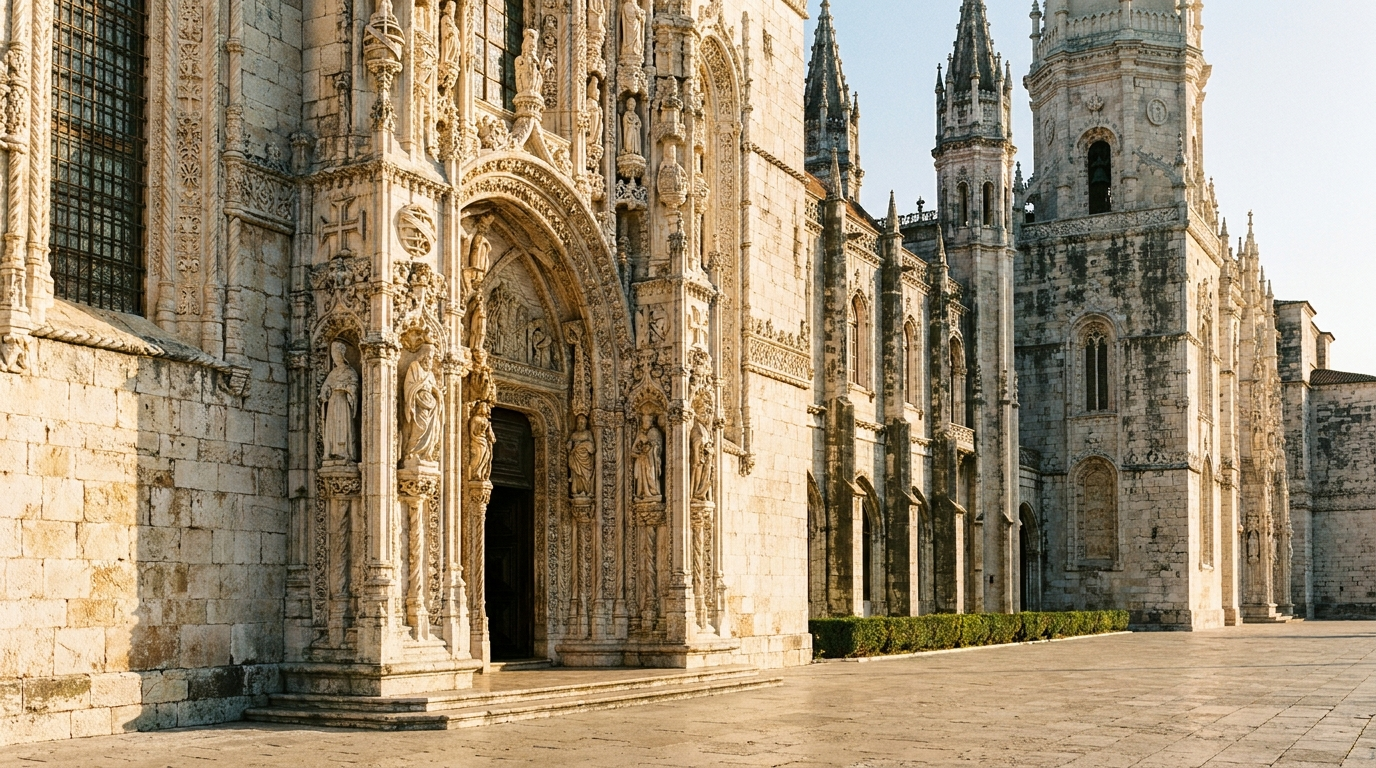
We head back toward the Jerónimos Monastery, the Mosteiro dos Jerónimos. Its southern facade stretches for a length that defies the camera. Limestone lace, twisted sculpted ropes, armillary spheres, and the Cross of the Order of Christ. It is Manueline style in all its excess—an art that turned stone into a travelogue.
Willem stops dead in front of the portal.
"A question has haunted me for years," he blurts out. "How did a kingdom as small as Portugal finance this?"
The answer lies in three Portuguese words: *vintena da pimenta*. The twentieth of the pepper. King Manuel I began construction on January 6, 1501, and paid for it with a five-percent tax levied on trade from Africa and the Orient. A share that represented, year in and year out, the equivalent of seventy kilos of gold annually. The pepper, cinnamon, and cloves themselves went straight into the Crown's coffers.
Inês looks up from her notebook.
"So this stone lace," she says slowly, "is petrified pepper."
The image makes her laugh, but it is accurate. Every scroll you see on this facade was paid for by sacks of spices unloaded just a few hundred meters from here. The first architect, Diogo de Boitaca, invented this ornamental vocabulary where ropes, anchors, and seashells replace classic Gothic motifs. A Spaniard, Juan de Castillo, succeeded him around 1517 and raised the nave to dizzying heights.
Mariana, for her part, is focused on a more modest detail at the very base of a column.
"My ancestors aren't in the archives," she says, without bitterness. "The caulkers, the tailors, the laborers. We know the names of kings and architects. Never the names of the hands."
She is right, and it is something to keep in mind when faced with any splendor. The beauty we admire always rests on anonymous shoulders.
The night before the world
Now you must understand why this monastery stands exactly here, and nowhere else.
Before the stone cathedral, there was a modest chapel here, the Ermida do Restelo, founded by Prince Henry the Navigator. And it was there, in that small building now lost to time, that Vasco da Gama and his men spent their final night on land in 1497, in prayer, before setting sail for an ocean whose end no one knew.
Willem speaks more quietly, as if in a church.
"Imagine those sailors. They didn't know if a passage to India even existed. They were setting off on a hypothesis."
Two years later, in 1499, da Gama returned. He had found the sea route to the Indies, rounded Africa, and opened the spice trade. Of the four ships that departed, only two returned, and part of the crew lay at the bottom of the sea. But Portugal held the key to a trade that would reshape the world's economy. Manuel I had his monastery built on the very site of that night of prayer, like a giant votive offering—a thank you in stone addressed to the heavens and the sea.
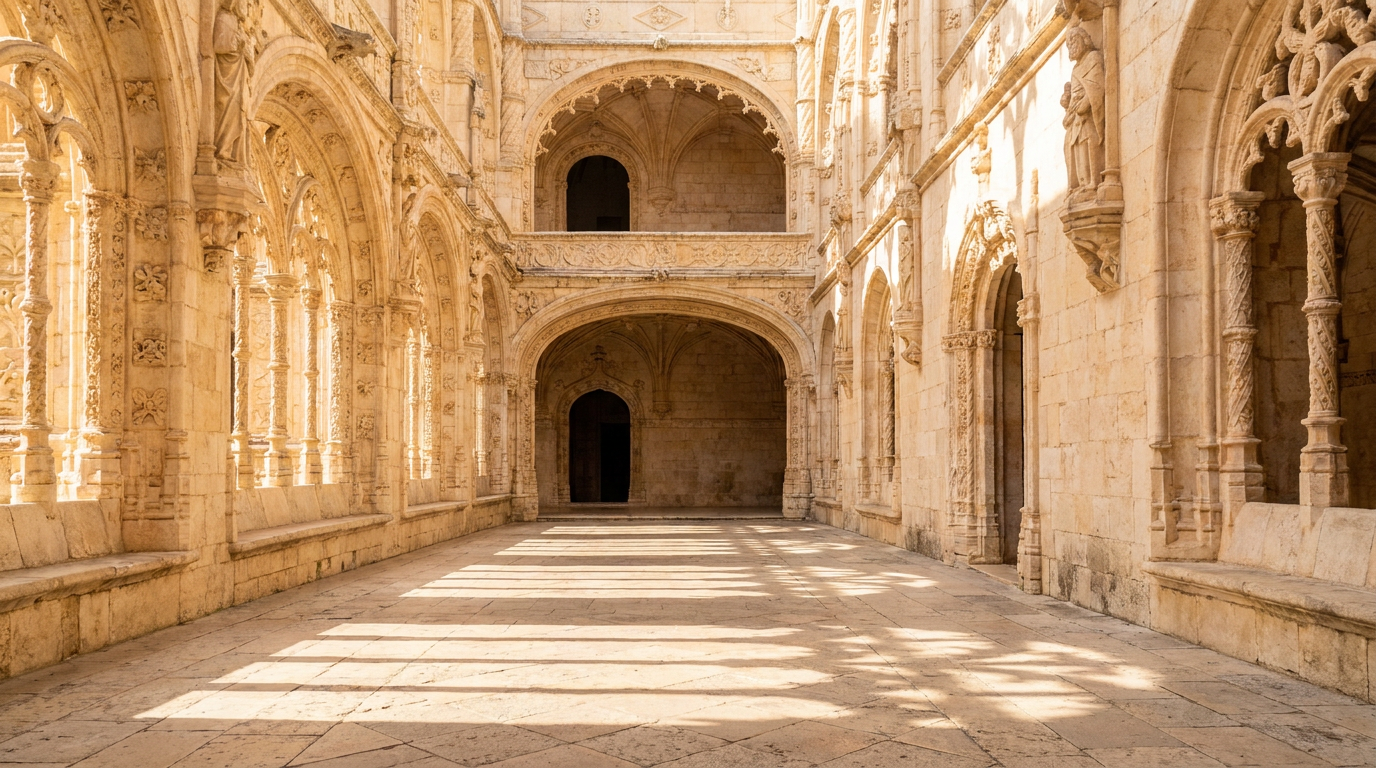
We enter the cloister. The light falls filtered, golden, almost liquid. Inês runs her palm over a column shaft and frowns.
"Lisbon limestone breathes," she murmurs. "It drinks the river's humidity and breathes it back out. Restoring this place is a constant negotiation with salt and water. Every generation must take up the fight again."
You, dear reader, might think that a monument, once built, is secured forever. It never is. This cloister only stands because, century after century, women and men like Inês refuse to let it die.
In a corner of the nave, a discreet tomb draws visitors. It is that of Vasco da Gama, whose remains were transferred here in 1880, four centuries after his great voyage. Mariana lingers there for a long time, silent. Then she says, almost to herself: "He made it back to port. Many never returned."
The tower, the guard, and the rhinoceros
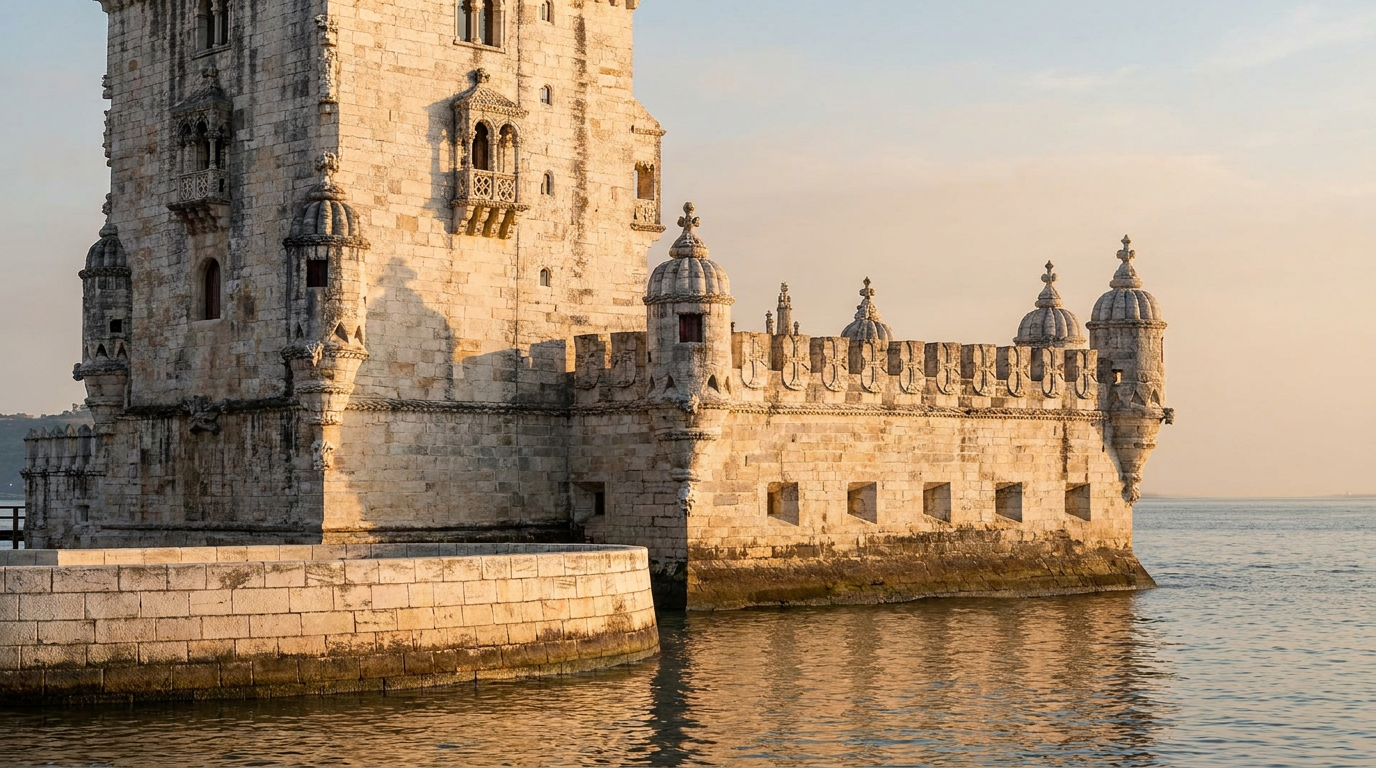
We head back down toward the river, to the Belém Tower. It stands at the water's edge, all Moorish balconies, bulbous turrets, and ornate battlements. It was built between roughly 1514 and 1519, still under Manuel I, based on plans by the architect Francisco de Arruda. Originally, it stood further out in the Tagus, like a sentinel planted in the current, tasked with controlling who entered the port of Lisbon.
"It was in the water?" Willem asks, surprised.
"The river has shifted," Inês replies. "The great earthquake of 1755, the silt, the land reclamation. What you see near the shore was once surrounded by the current."
That is when a man approaches us. A retired guard with a weathered face and a worn cap, who still hangs around the tower every morning out of habit and love. His name is Seu Amâncio. He heard Willem speaking with his accent, and he comes over, a mischievous glint in his eye, to show us something.
"Do you see that stone, at the base of the turret? Lean down."
We lean down. Carved into the base of the watchtower, worn by five centuries of wind and sea spray, an animal's head emerges from the limestone. A horn. A wrinkled snout. A rhinoceros.
"They say," says Mr. Amâncio, lowering his voice as if sharing a secret, "that this is the first rhinoceros ever sculpted in Europe. The King's own."
The real story is almost as beautiful as the legend. In 1515, Manuel I received a live rhinoceros from India—a beast Europe hadn't seen since antiquity. He put it on display, then decided to gift it to the Pope. The animal was loaded onto a ship that later sank. The chained rhinoceros drowned. But its image survived, etched into memory and, according to Belém tradition, into the stone of this tower.
Willem, being a good historian, immediately tempers this, and to his credit.
"We can't prove it's exactly that rhinoceros. But the fact that a king had a beast from the Indies carved onto a tower guarding the route to the Indies—that says everything about an era."
That is why I love these places. Legend and fact do not always contradict each other. Sometimes, they walk hand in hand.
The century the Dutch arrived
Willem had been holding something back until the end. Standing before the tower, facing the open sea, he finally says it.
"You Portuguese opened the route. But a century later, it was my ancestors who came to challenge you for it."
In 1602, the United Provinces founded the VOC, the Dutch East India Company. It was a new kind of enterprise, with shareholders, armed fleets, and a cold logic of profit. Where Portugal had planted forts and chapels, the Dutch installed trading posts and cannons. Little by little, they chipped away at the spice empire, seizing islands and cutting off routes. The threshold of Belém, where it all began, watched a world slip away from it.
Mariana listens, arms crossed.
"So it wasn't just a story of courage," she says. "It was also a story of money."
"It always has been," Willem replies softly.
And that is perhaps the hardest lesson of Belém. What began as an adventure of faith and daring ended as a matter of accountants and corporations. The pepper that built a monastery eventually attracted better-organized rivals. Greatness cannot be preserved like wine. It must be maintained, or it passes into other hands.
What the river keeps
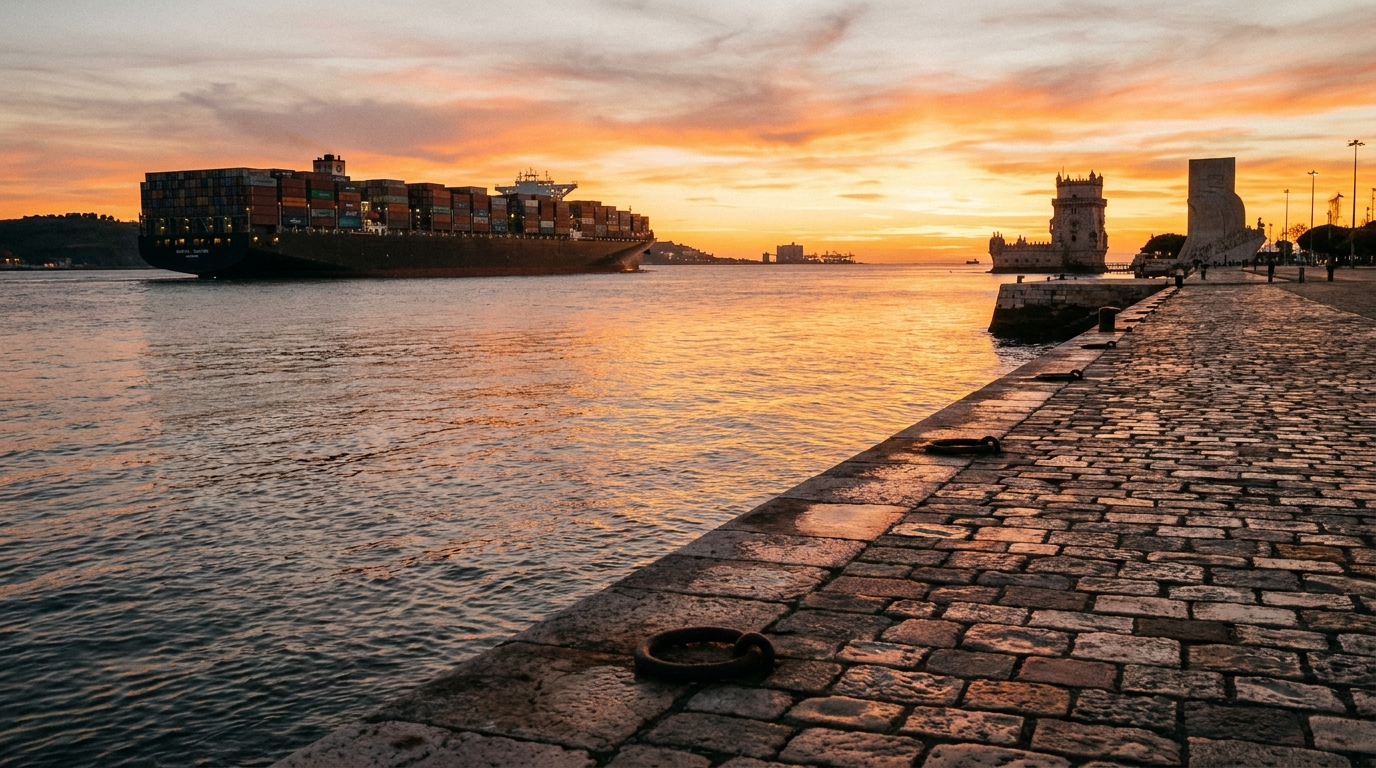
The light fades as we head back toward the docks. The Tagus has taken on the hue of molten metal. A modern cargo ship glides in the distance, enormous and silent, on the same water that once carried the caravels.
Inês puts away her notebook. She has filled pages with measurements and observations, but it is something else she says now.
"Restoring these stones isn't about freezing them in time. It's about allowing them to keep telling their story."
Mariana looks at the river as one looks at a loved one's face. "My ancestors have no tomb here. But every time a hull held firm against the sea, a part of them set sail again. That is my way of believing in ghosts."
Willem, the rationalist, says nothing. He simply picks up a pebble, turns it between his fingers, and slips it into his pocket.
And you, reader in the shadows, if you ever pass through Belém, don't just photograph the tower and bite into a pastel. Go down to the water. Look for the rhinoceros head at the base of the turret. Listen to what the river has held onto. For a place is never just what you see. It is also everything it has let go, and everything that, one day, never returned.
Belém is not a monument. It is a threshold. And a threshold, by its very nature, can only be crossed once.
Category: Civilizations · Country: Portugal · Type of site: Historical monument
You know, seeking out these stories comes at a price. Traveling to these places, consulting archives, verifying every date with historians—it takes time, and for an independent author, time is the only currency that truly matters.
If these stories resonate with you, supporting this work will cost you less than a coffee and a glass of Portuguese wine. For €5 a month, you get access to the newsletter, the latest stories, and two early-access pieces before anyone else. And as long as you are a member, the entire Library is open to you: 14 ebooks already written, with a total value of €138.60, included in your subscription.
If you ever decide to leave, no ebook will truly disappear: you will always be able to purchase them individually for €9.90 each.
Because a journey never truly ends. It continues, somewhere between the pages and the memory. — Lucas Lunes, author of ancient stones