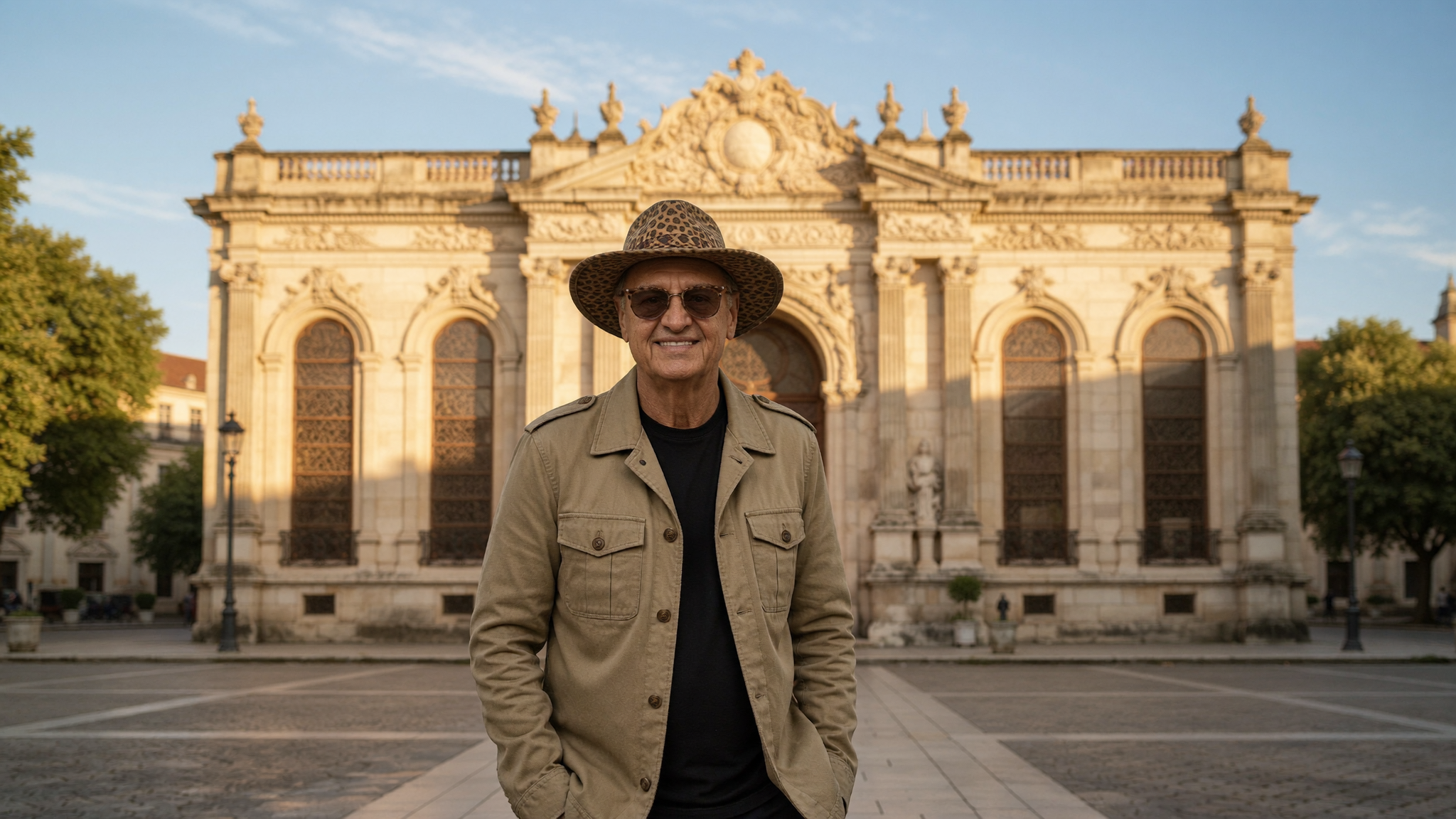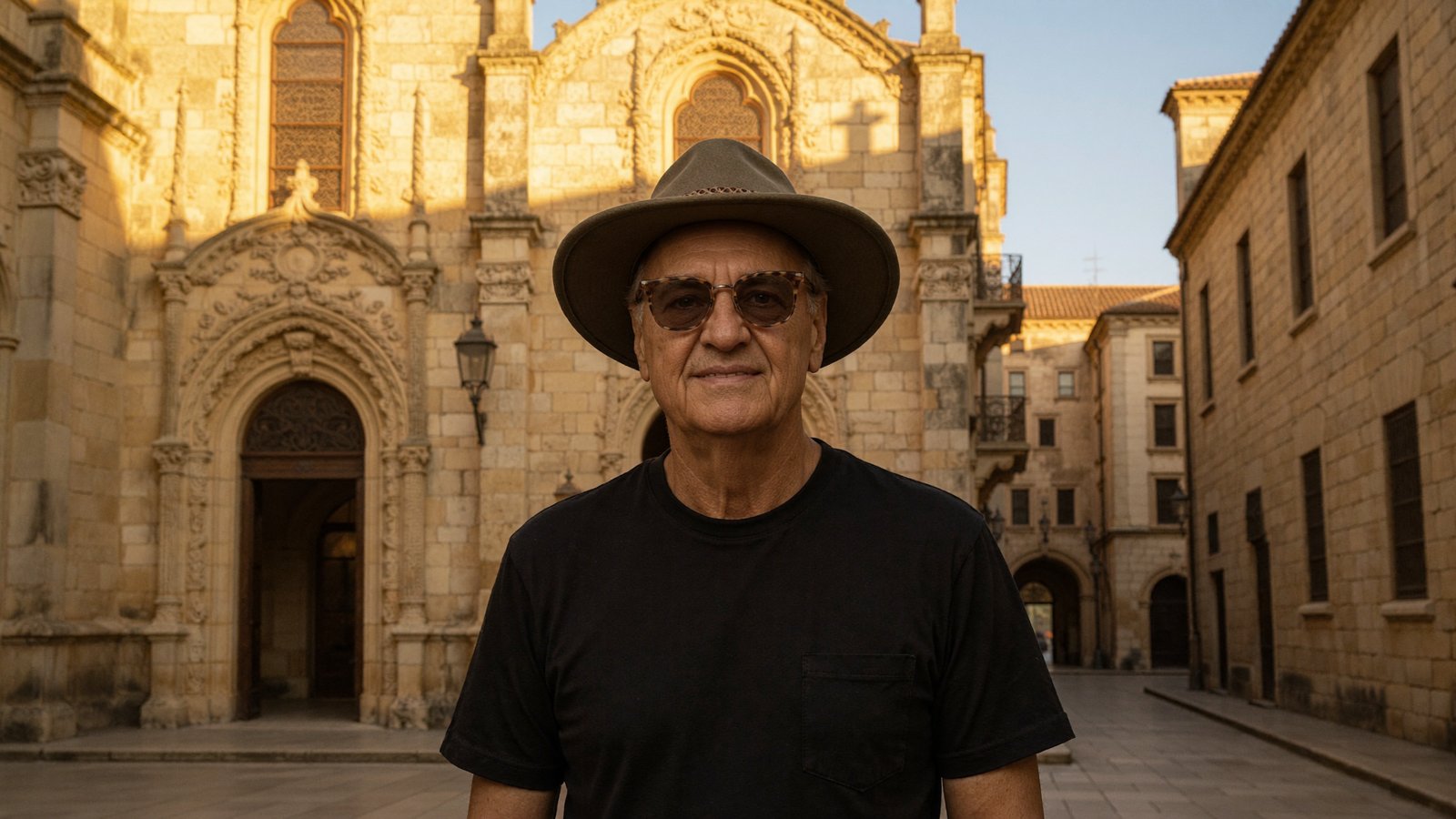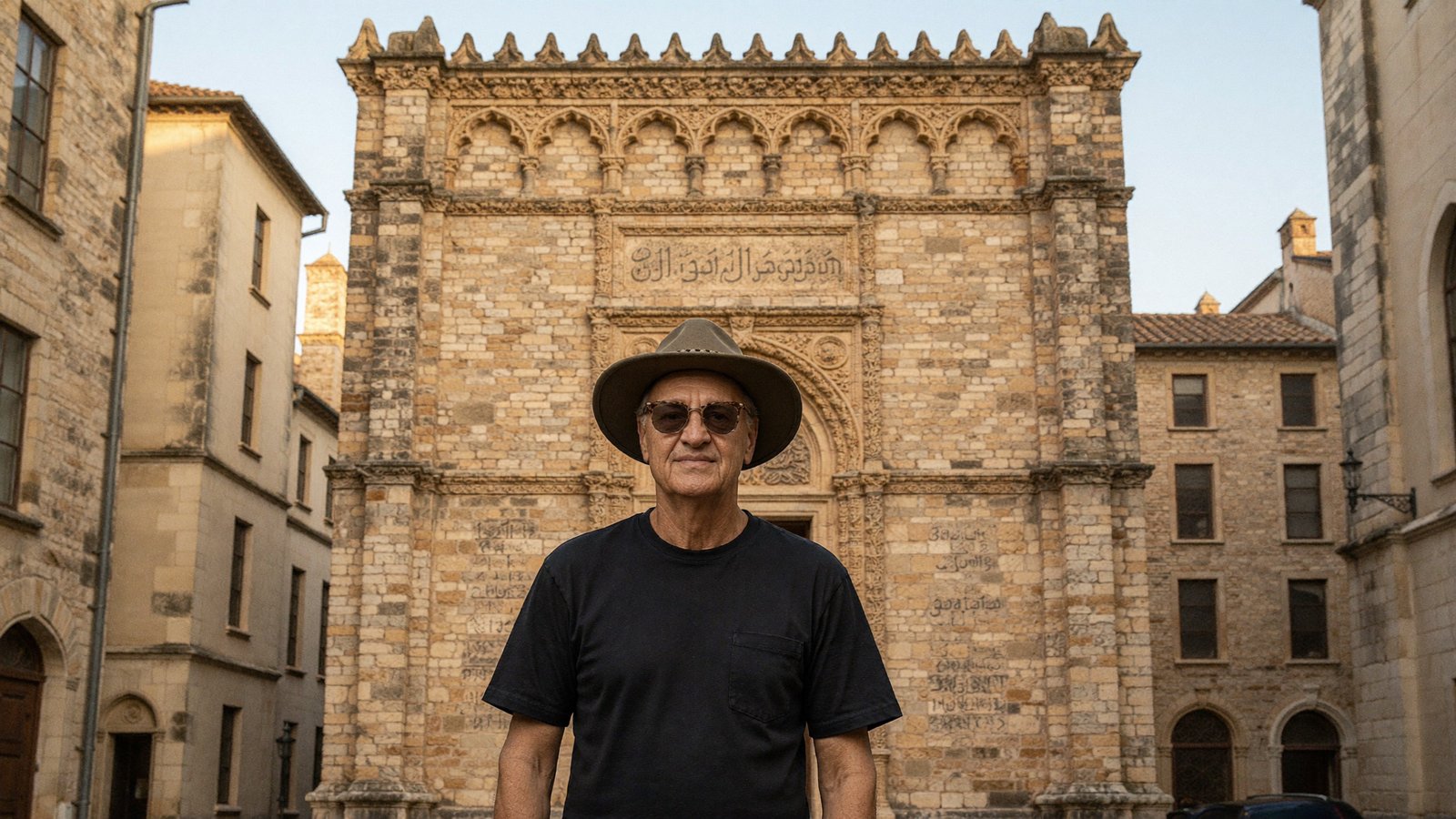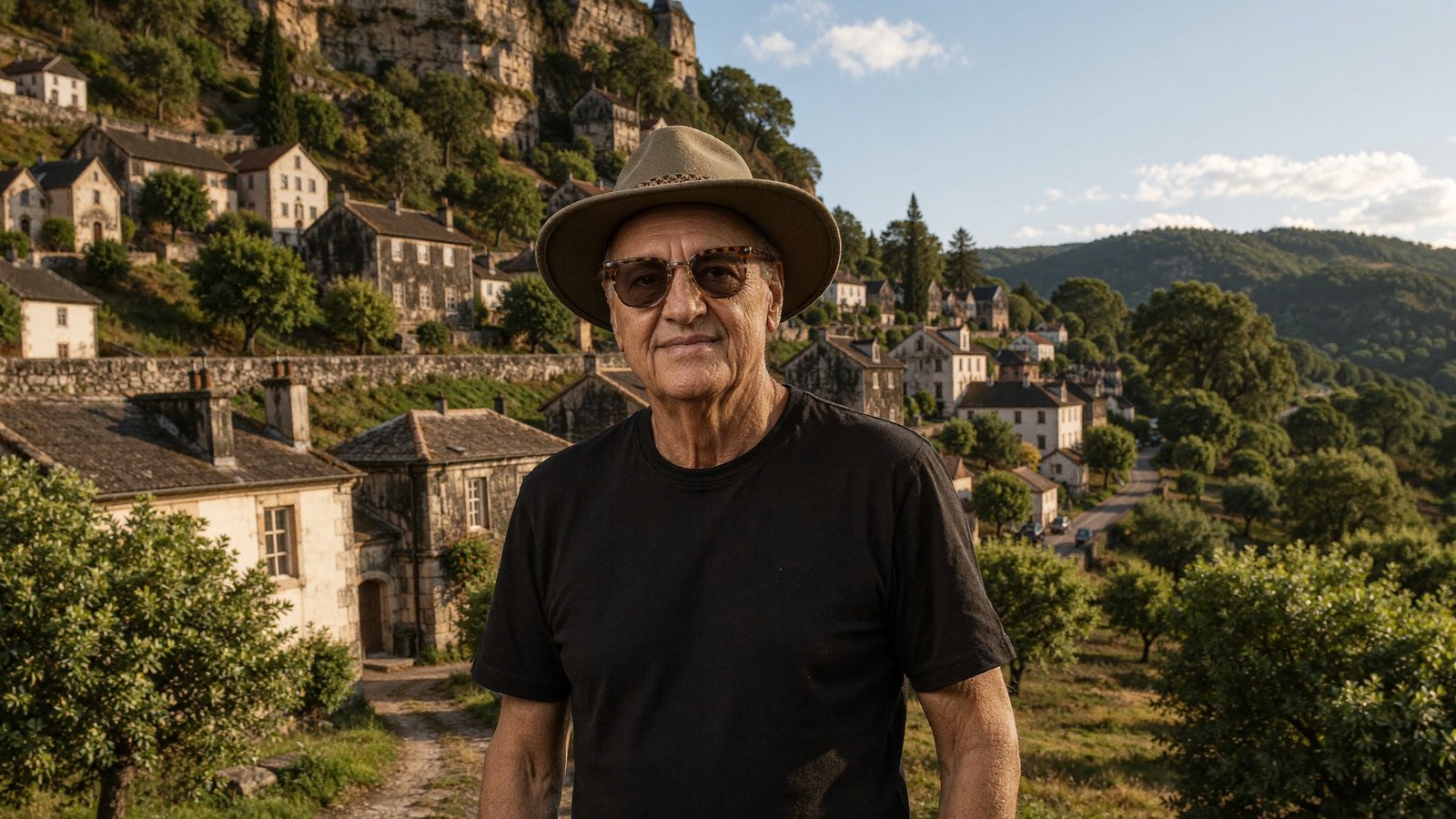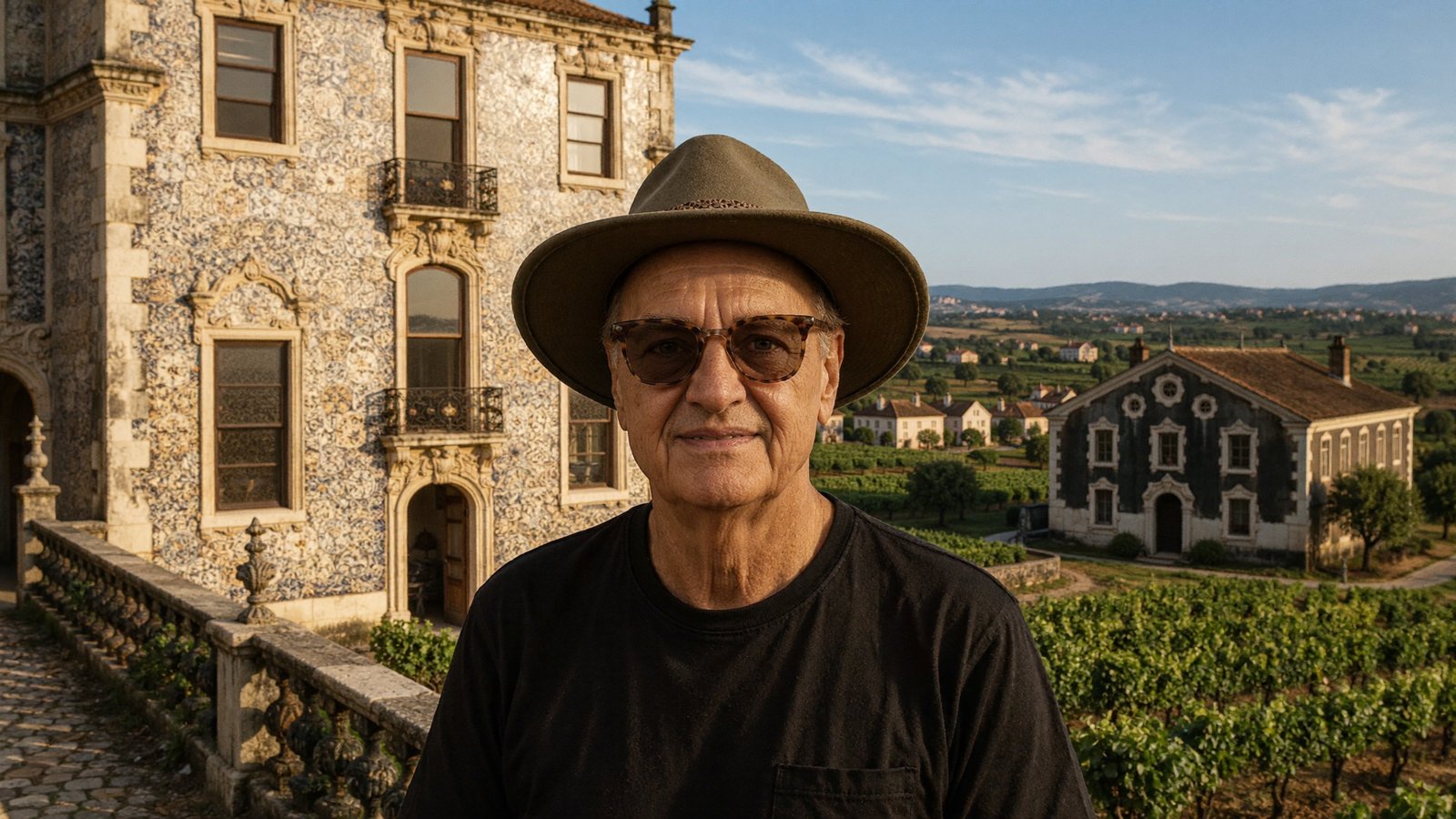
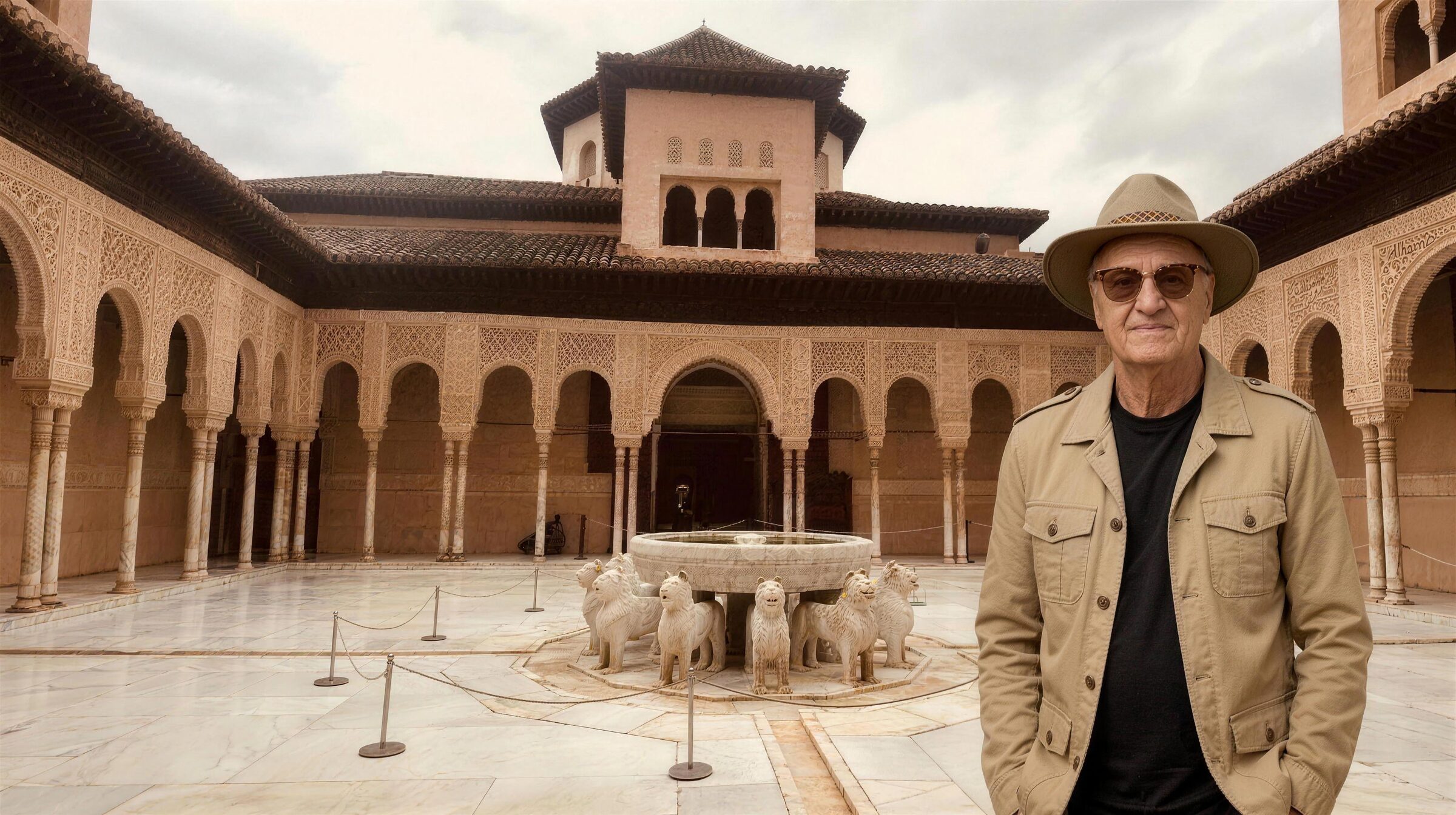
Your travel chronicle on the Alhambra in Granada, Spain, featuring Boabdil, the last Nasrid sultan (15th century), during the fall of the final Muslim kingdom in Iberia, while in England the young Tudor dynasty was still quelling a rebellion by pretenders to the throne (1487).
Your Daily Iberian Travel Chronicle & Guide
You know, there are mornings that change the destiny of a country without a single sword being drawn. This one took place on January 2nd, on the heights of Granada, in a silence that chroniclers of the time took care to note as if it weighed heavier than a battle.
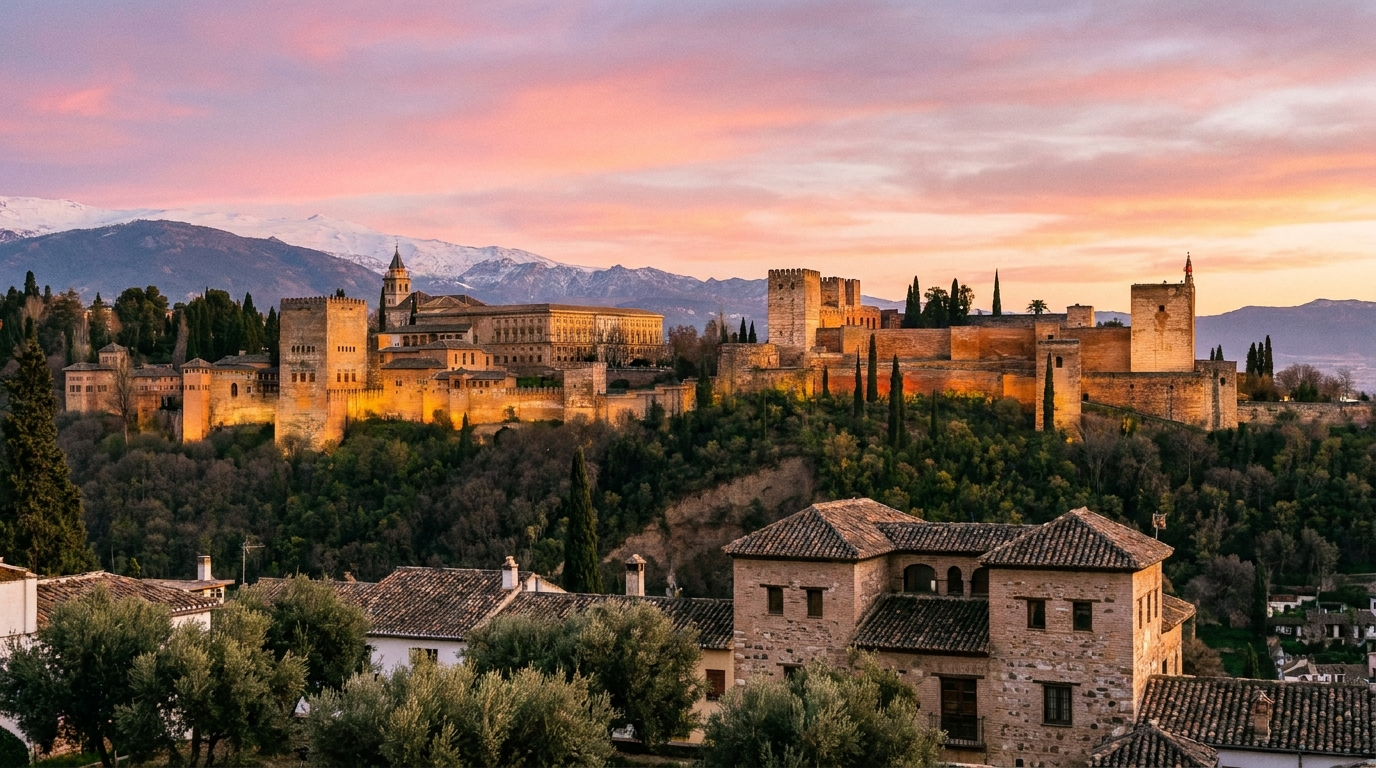
I arrived before dawn at the Mirador de San Nicolás, that small promontory in the Albaicín from which the entire city seems to lean forward to gaze at the Alhambra. At that hour, the fortress is still just a dark mass on its hill, the Sierra Nevada behind it white as a shroud. Then the sun rises, and the stones slowly turn red, a shade of brick and blood that gave the palace its name: al-Hamra, the red one.
Rosario was already there when I arrived, sitting on the low wall, a shawl over her shoulders despite the season. Seventy years old, with a family that has lived in the Albaicín for more generations than she can count. "My grandmother came here every morning," she told me without even turning around. "She used to say that the city remembered, even when people forgot."
Elena arrived a few minutes later, a shoulder bag heavy with files and a notebook already open. A thirty-five-year-old Nasrid art historian, she had dedicated an entire thesis to the final decades of the Kingdom of Granada. "I come here before every visit to the palace," she explained. "You have to see the Alhambra from afar before seeing it from the inside, otherwise you don't understand what it represented."
And then Fernando, fifty, his hands still marked with dried plaster despite the early hour. A restorer attached to the palace for nearly twenty years, he spends his days consolidating stucco that is six centuries old. "I repair what time damages," he said by way of introduction. "But there are things I cannot restore. What happened here in 1492, for example."
You who are reading this, remember this date: January 2, 1492. Not for the year, which everyone knows for a completely different reason. But for this specific day, when a king handed over the keys to his kingdom without a single soldier dying that morning.
A kingdom born in division, dead in division
We began to walk toward the Alhambra, and Elena spoke first, with the ease of someone who has told this story a hundred times without ever tiring of it. "The Nasrid Kingdom of Granada was born in 1238, founded by Muhammad I ibn al-Ahmar. It was the last Muslim state on the peninsula, all that remained after centuries of Christian Reconquista. For more than two centuries, it survived by maintaining a precarious balance: a tributary vassal to the Kingdom of Castile most of the time, paying an annual tribute to be left in peace."
"So it wasn't really independent," I asked.
"Independent, yes, within its borders and its court. But never truly free from the Castilian gaze," Elena replied. "And in the fifteenth century, the kingdom tore itself apart from within long before the Christian armies finished it off from the outside."
That is where Boabdil enters the story, and Fernando, who happens to be restoring a room linked to this episode, took over with particular gravity. "His real name is Abu Abdallah Muhammad, the twelfth of this dynasty. The Castilian chronicles nicknamed him Boabdil, a corruption of his name. He ascended the throne by rebelling against his own father, Sultan Abu al-Hasan Ali, with the support of his mother, Aisha al-Hurra. A civil war within the royal family itself, while Castile and Aragon, unified by the marriage of Isabella and Ferdinand a few years earlier, watched this division with an interest that was anything but innocent."
Look closely, you who are reading these lines: a kingdom weakened from within is always easier to conquer from without. The Catholic Monarchs, as they would soon be called, understood this perfectly.
The siege that never ended
We entered the palace grounds, and the light changed completely: interior courtyards, perfectly still water basins, stucco arches carved like stone lace. Rosario stopped in front of one of the patios, silent for a long moment.
"The Granada War began in 1482 and lasted ten years," Elena continued, her notebook still open. "It wasn't a single battle, it was a slow asphyxiation: the Catholic Monarchs took one city after another—Ronda, Málaga, Baza—tightening the noose around the capital. Boabdil himself was captured by Castilian troops in 1483, then released on the promise of becoming their vassal in exchange for their support against his own uncle, who had meanwhile contested his throne."
"A king held captive by his enemies to reclaim his throne from his own kin," Fernando murmured. "Hard to imagine a more impossible position."
"In April 1491, the Castilian and Aragonese armies laid siege to Granada itself," Elena continued. "They even built an entire city for the occasion, Santa Fe, a few kilometers away, to show they wouldn't leave until victory. The siege dragged on for months. The city, cut off from its harvests, began to run out of everything."
"And on November 25, 1491," added Fernando, stopping in front of a door he knows by heart from having restored it, "the Treaty of Granada was signed in secret. Boabdil agreed to surrender the city in exchange for guarantees: religious freedom for the Muslims who remained, respect for their property and laws, and for himself, a lordship in the Alpujarras, those mountains to the south of here."
These promises would not last a decade. By 1499, the first forced conversions began in Granada. In 1502, a royal decree outright banned the practice of Islam throughout the Kingdom of Castile. The paper still held that January morning. Time, however, did not.
And you, dear reader, consider this moment: a treaty signed in secret, two months before it became public reality. The kingdom already knew. Only the city remained unaware.
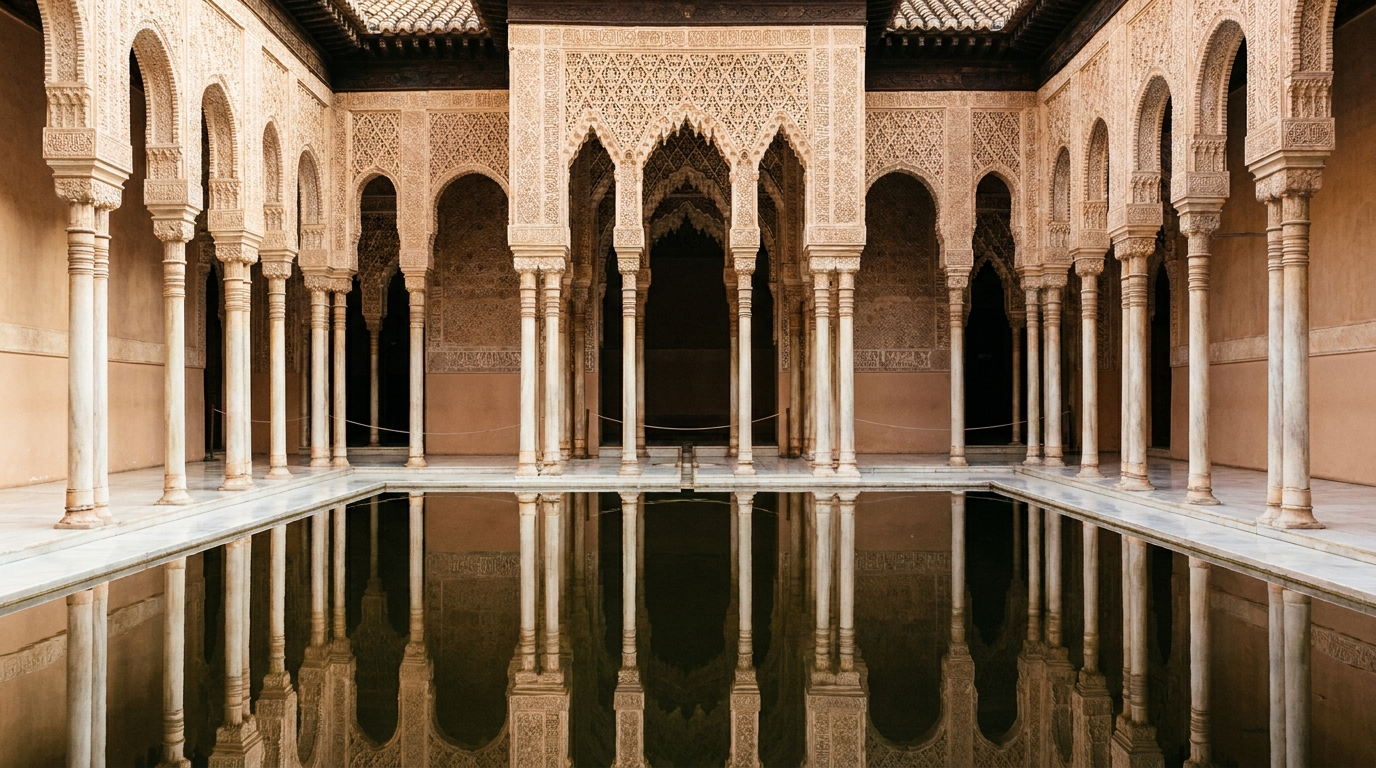
January 2, 1492: The keys to a kingdom
We stopped in the great Hall of the Ambassadors, beneath a carved wooden ceiling representing the seven heavens of Islamic cosmology. It is here, according to the tradition passed down by the palace guides, that Boabdil is said to have officially surrendered the city.
"On the morning of January 2, 1492," Elena said in a lower voice, as if the room itself demanded silence, "Boabdil left the city through the gate that now bears his name, accompanied by a small escort. He handed the keys to the Alhambra to Cardinal Mendoza and the Count of Tendilla, who passed them on to the Catholic Monarchs waiting at a distance. Isabella and Ferdinand entered the city that very afternoon. The last Muslim kingdom on the Iberian Peninsula, after nearly eight centuries of presence, ceased to exist that day."
Fernando placed his hand on a wall he knows intimately. "What I find most unsettling about my job is that nothing here was destroyed that day. The Catholic Monarchs wanted to keep the palace intact, more as a trophy than a ruin. Perhaps that is why it is still standing today, while so many other witnesses of that era have vanished."
"You who are reading this," I said to the others without really addressing them, "there is something dizzying about this idea: the beauty of this place may have been what saved it from destruction."
Rosario nodded slowly. "In my family, we say that this palace never really changed hands. It just changed guardians."
The meeting at the pass of the last sigh
In the afternoon, we took the road leading south toward the Alpujarras, the very same path Boabdil took when leaving Granada for the last time. About ten kilometers from the city, the road climbs toward a mountain pass, and that is where we met Paco.
He was running a small stand selling postcards and dried figs in the shade of an olive tree, a man in his sixties with a face weathered by decades of Andalusian sun. "You're in the right place," he called out as he saw us slowing down, even before we asked anything. "This is the Puerto del Suspiro del Moro. The Moor's Last Sigh pass."
"Do you know the story?" asked Elena, her notebook already in hand.
"I've lived next to this story my whole life," Paco replied with a knowing smile. "They say that Boabdil, leaving Granada for good on his way to exile in the Alpujarras, stopped here on this height for one last look at the city and his palace. And that he wept."
"And his mother?" asked Fernando, who clearly already knew the rest but wanted to hear it from Paco's lips.
"Ah, his mother," Paco said, raising a finger as if he had been waiting for this question forever. "They say that Aisha al-Hurra, who was accompanying him, threw a line at him that has remained famous throughout Andalusia: 'Do not weep like a woman for what you could not defend like a man.'"
Elena closed her notebook for a moment. "No fifteenth-century chronicler reports this phrase as it is," she clarified, looking as fascinated as she was cautious. "It appears later, in the accounts that followed. As if the silence of that morning had eventually called for words to fill it."
A silence settled in, disturbed only by the wind that constantly blows through the pass, as if it were still carrying the echo of that day.
"It's a harsh legend," Elena finally said. "A mother humiliating her son at the most painful moment of his life."
"Legends are rarely tender," Paco replied with a shrug. "They are made to be remembered, not to make us feel good."
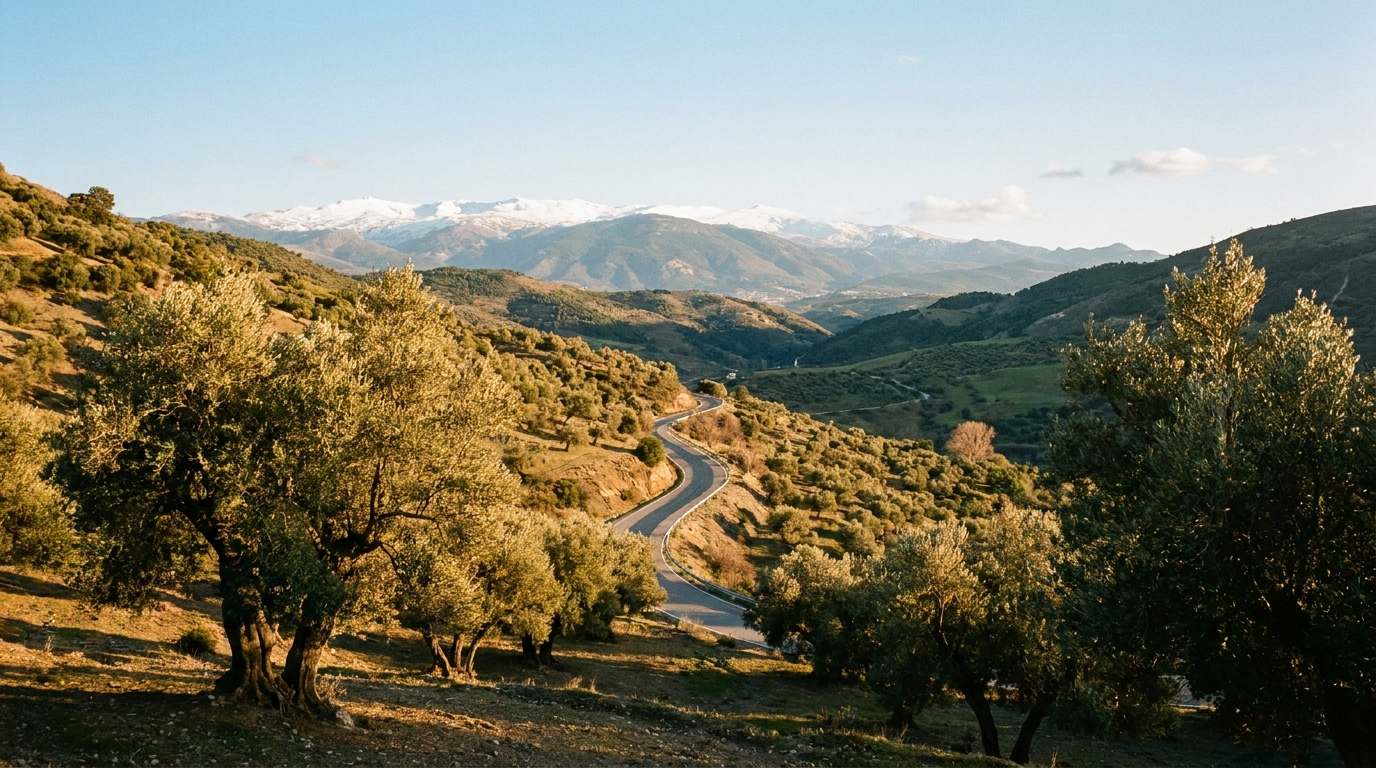
And you, shadow reader, imagine the scene: a man who lost his kingdom without a battle, who must now live with that choice for the rest of his life, and a voice—real or invented by history—that refuses to grant him even the right to grieve.
What remains, what fades away
Boabdil first settled in the Alpujarras lordship granted by the treaty, alongside his mother, Aisha. But the arrangement did not last long: betrayed by his own vizier, who sold the lordship to Ferdinand without his consent, Boabdil set sail from the port of Adra in October 1493, bound for North Africa. He eventually settled in Fez, Morocco, where he would spend the rest of his life, far from the Alhambra he never saw again.
"What strikes me," Fernando said as we headed back down toward Granada, the city now bathed in the golden light of late afternoon, "is that this palace I restore every day, stone by stone, stucco by stucco, has become everyone's heritage. From the Muslims who built it to the Christians who conquered it, right up to the tourists from all over the world who come today. Boabdil lost a kingdom. But what he left behind has never stopped belonging to someone."
Rosario looked back one last time at the Alhambra, now far behind us on its hill. "My grandmother used to say that Granada never really lost its soul that day. It just learned how to share it."
And you, do you know of a place whose beauty survived the defeat of those who created it, only to become, centuries later, the heritage of all?
Because a journey never truly ends. It continues, somewhere between the pages and the memory.
You know, seeking out these stories comes at a price. Traveling to these places, consulting archives, verifying every date with historians—it takes time, and for an independent author, time is the only currency that truly matters.
If these stories move you, supporting this work will cost you less than a coffee and a glass of Portuguese wine. For €5 a month, you join the newsletter—getting the latest stories, plus two previews before anyone else. And as long as you are a member, the entire Library is open to you: 14 ebooks already written, with a total value of €138.60, included in your subscription.
If you ever leave, no ebook truly disappears: you will always be able to purchase them individually for €9.90 each.
Because a journey never truly ends. It continues, somewhere between the pages and the memory.
— Lucas Lunes, author of ancient stones