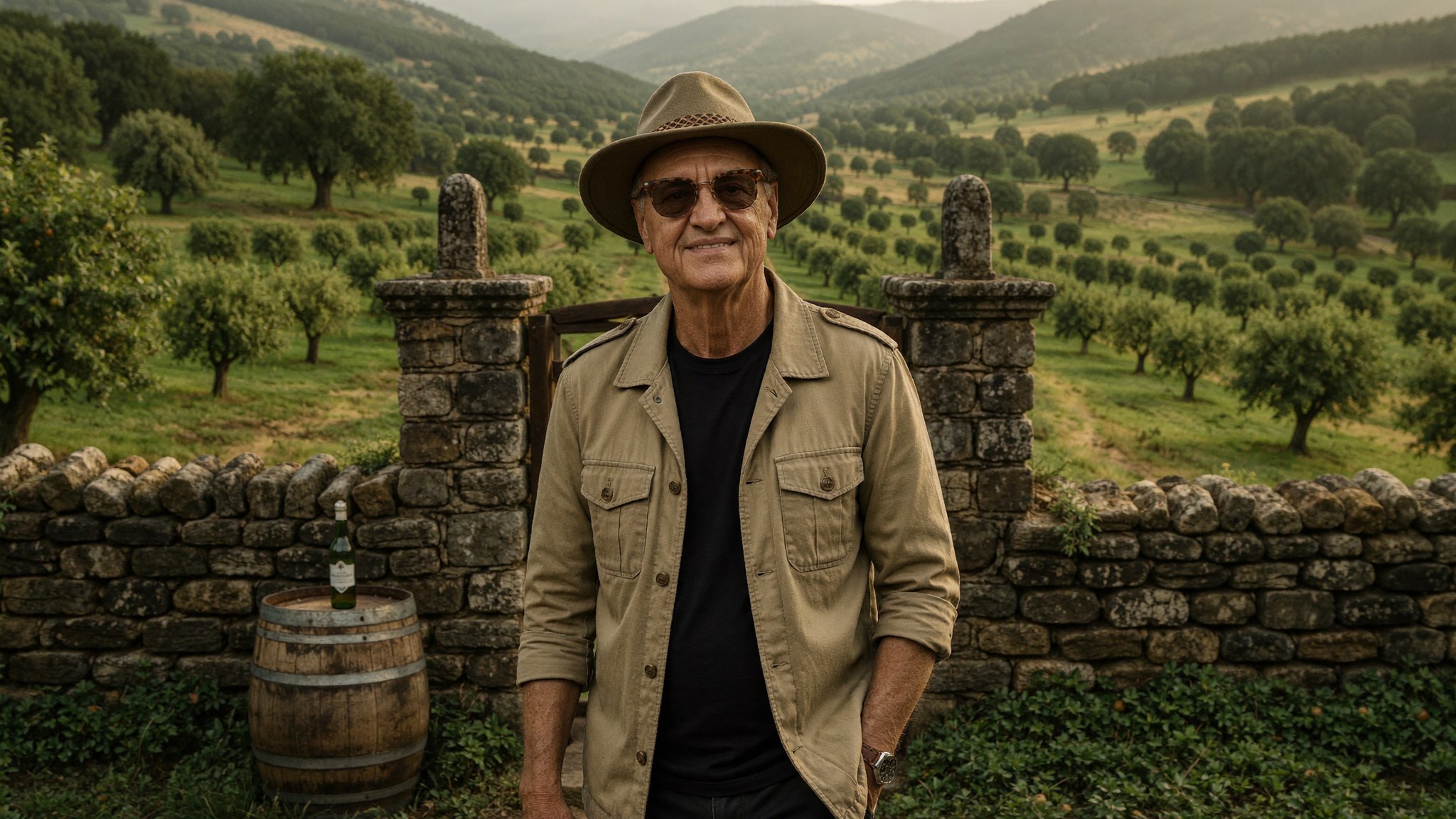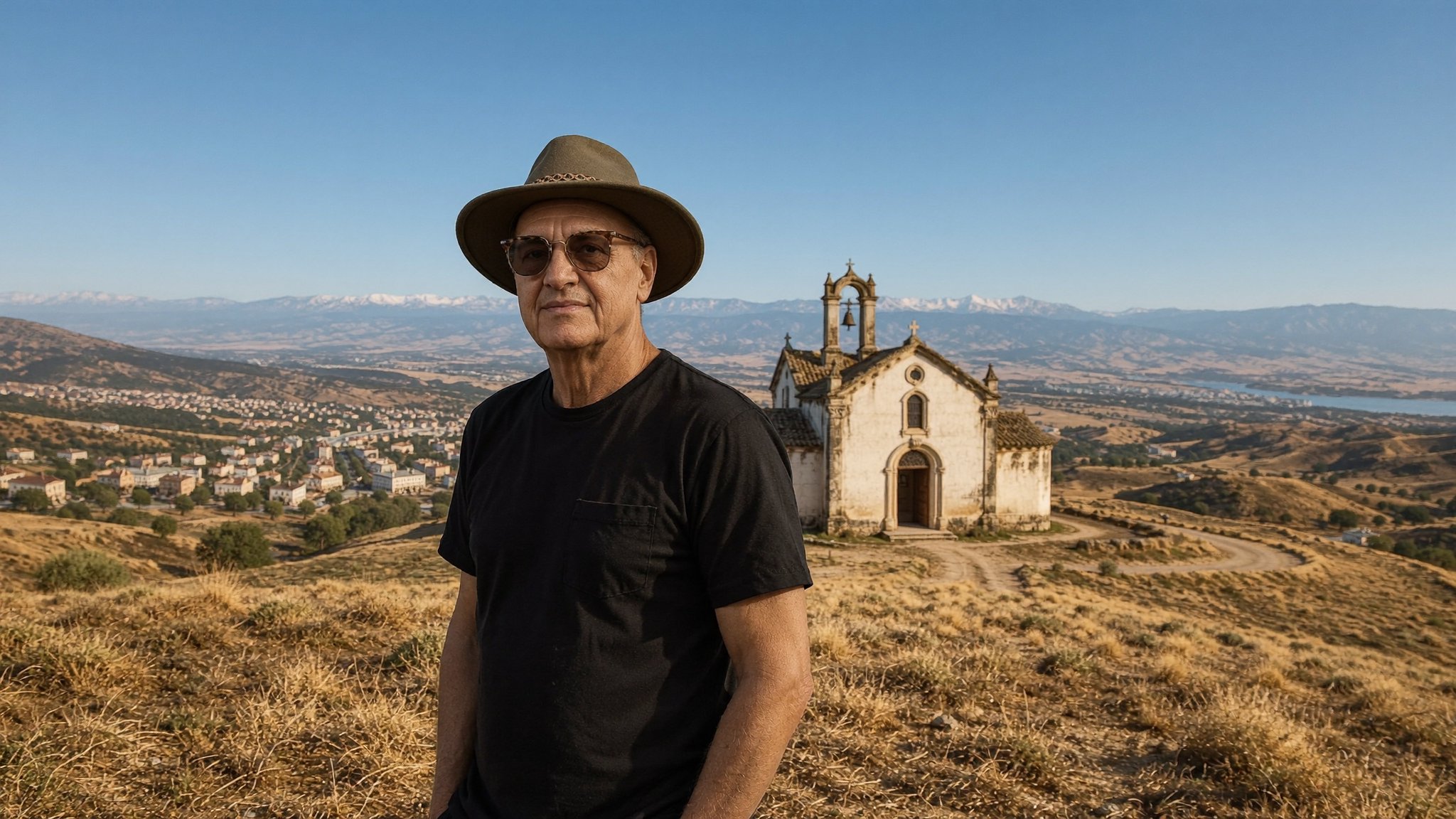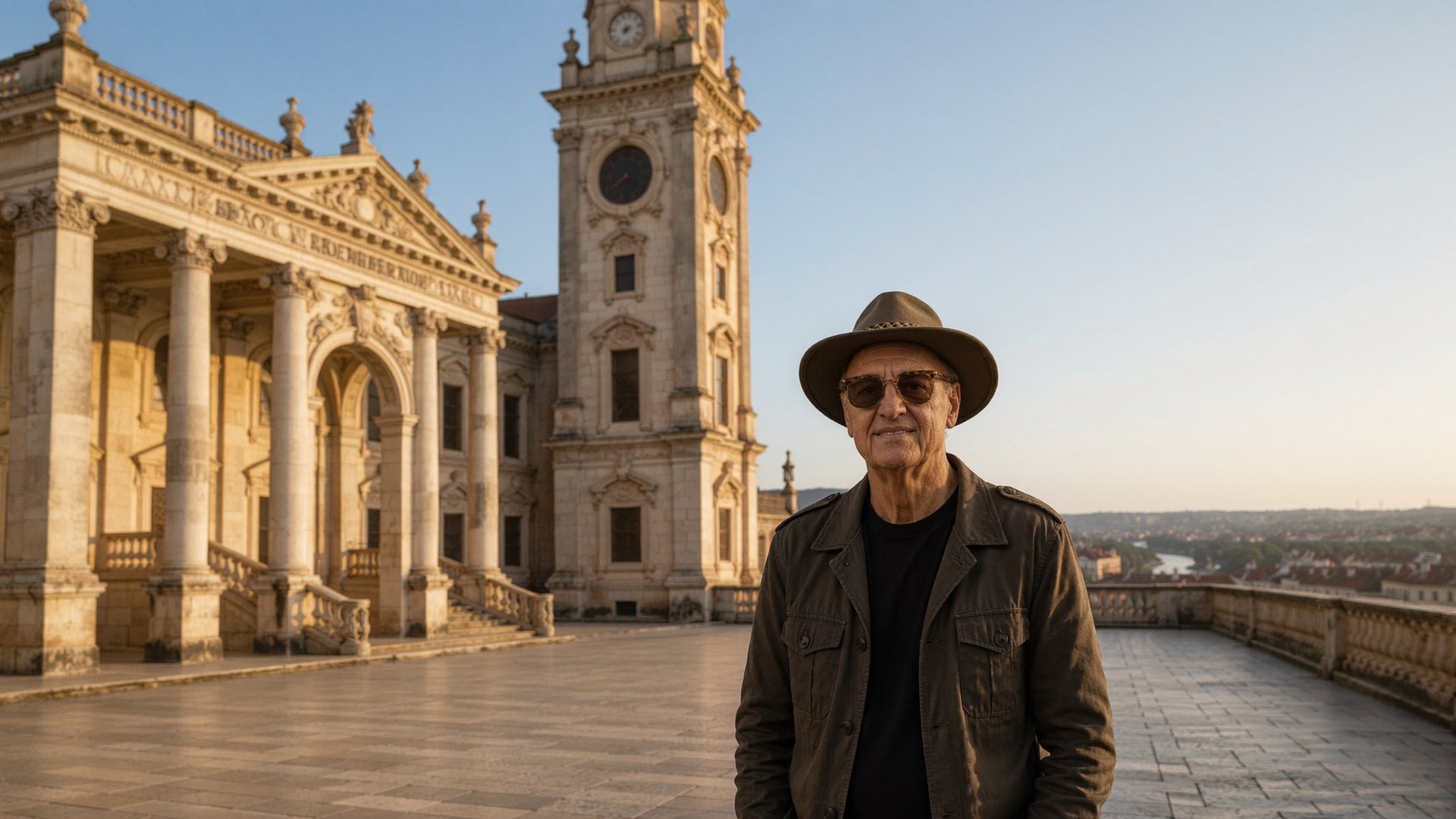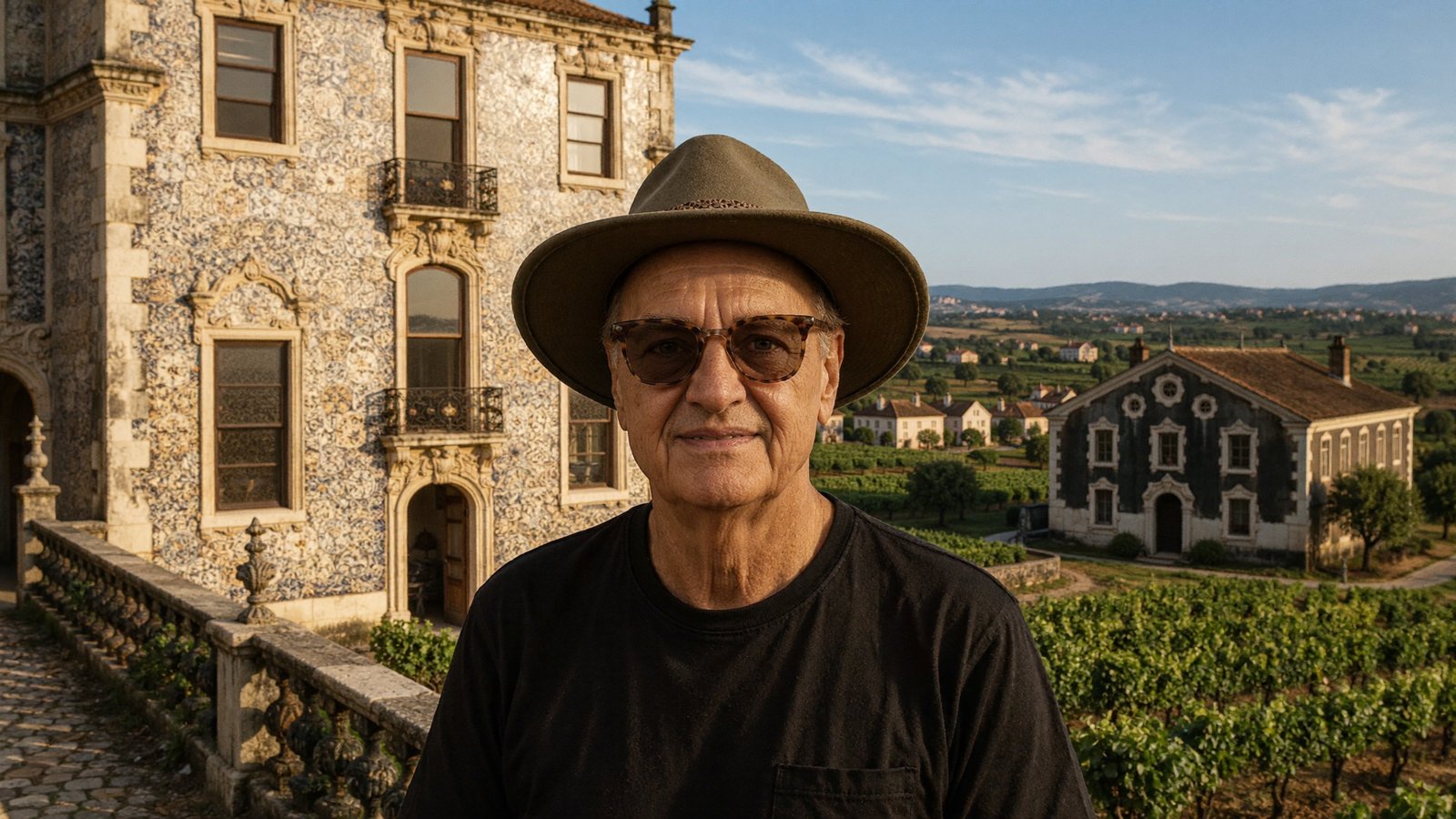
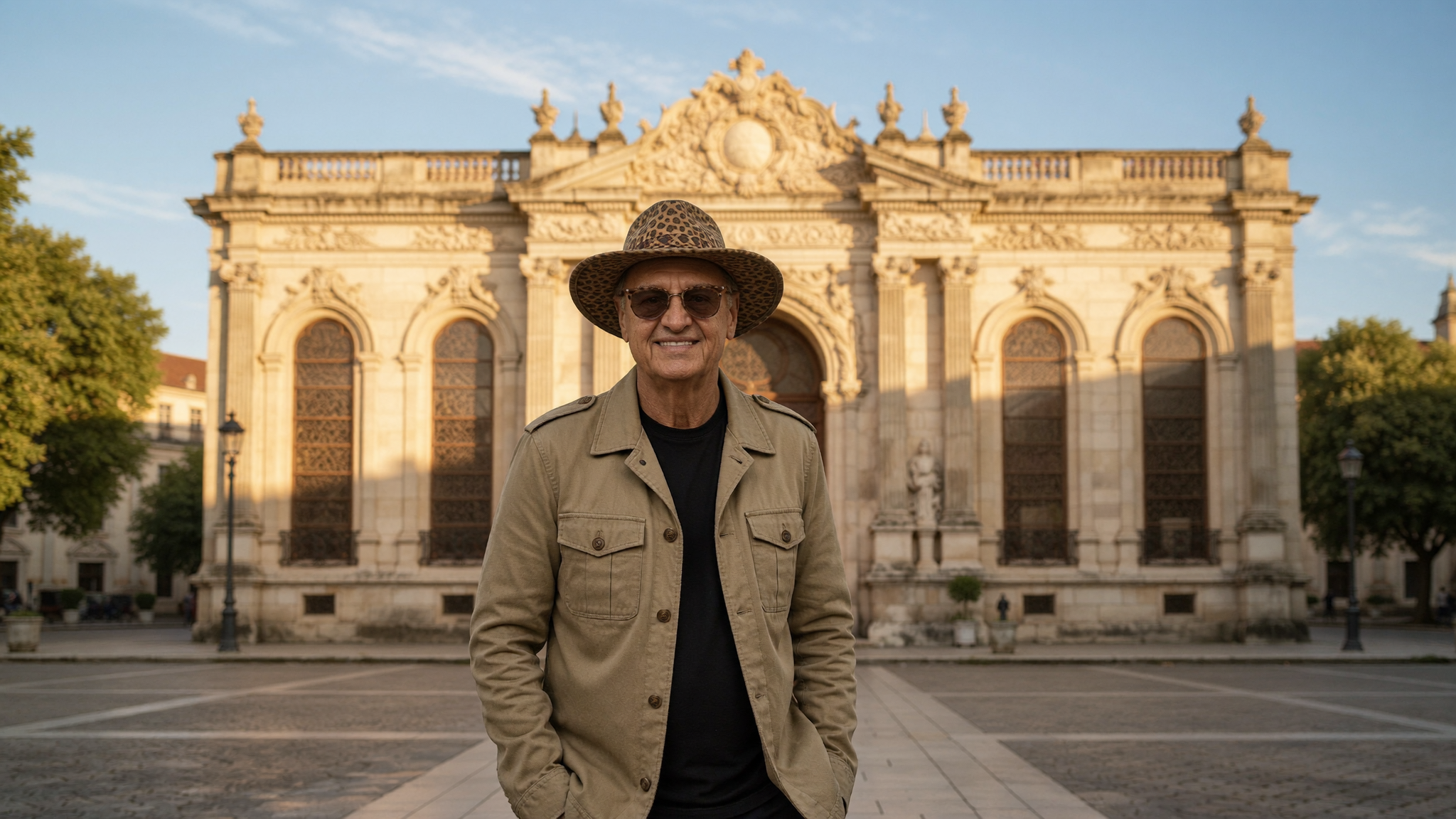
Your travel chronicle on Porto’s Palácio da Bolsa, featuring the English merchants of the Factory House and the Methuen Treaty (1703–19th century), back when the port wine trade funded sixty years of construction for the Associação Comercial do Porto, while in England, the war against France cut off access to French wine and left English tables to port.
Your Daily Iberian Travel Chronicle & Guide
You know, there are palaces you visit and palaces you read. This one is read through a scent first. Even before crossing the great granite door in that quiet Porto square tucked between the river and the church of São Francisco, a heavy note already floats in the air—a blend of aged wood, fermented grapes, and damp stone rising from the cellars of Vila Nova de Gaia across the Douro. The Palácio da Bolsa never produced a drop of wine. And yet, everything here is steeped in it, right down to the gilding.
I arrived early, before the tour groups opened, to have time to sit for a moment on the steps and watch the facade wake up under the morning sun. That’s where I met Eleanor, Vítor, and Beatriz, my three companions for this morning spent tracing the thread of a fortune that owed almost nothing to chance.
Eleanor Whitfield arrived first, a notebook under her arm and glasses pushed up onto her forehead. A trade historian from London, she has spent a good part of her career studying the dusty ledgers of the English trading houses based in Porto—names still found today on vintage port labels. "I’ve been coming here for fifteen years," she told me in English, before switching effortlessly into impeccable French. "And I never tire of asking myself the same thing: how much of this palace truly belongs to Portugal, and how much belongs to England without saying so?"
The question made Vítor Pinheiro smile as he joined us a few minutes later with the slow, steady gait of a man used to walking between rows of barrels in the cool dimness of a cellar. Sixty years old, a cellar master at a Vila Nova de Gaia house for over three decades, with a nose capable of distinguishing a ten-year-old tawny from a twelve-year-old just by the scent. "Nothing belongs to England here," he replied quietly. "Everything belongs to the wine. England only placed the order."
And then there was Beatriz Fonseca, twenty-eight, who arrived by bike, breathless, a camera around her neck. She is the great-granddaughter of a cooper from Vila Nova de Gaia, a man whose hands were all she ever knew of him, her grandmother used to say—always covered in small scars left by the iron hoops of the barrels. "No one in my family had ever set foot in this palace before me," she let out as she caught her breath. "We made the barrels that filled the boats that filled the cellars of those who, unlike us, had the right to enter here."
You who are reading this, remember this name that no one ever mentions in tourist brochures: Associação Comercial do Porto. They are the ones who built this palace, and they are where you must start, even before talking about gold, wine, or England.
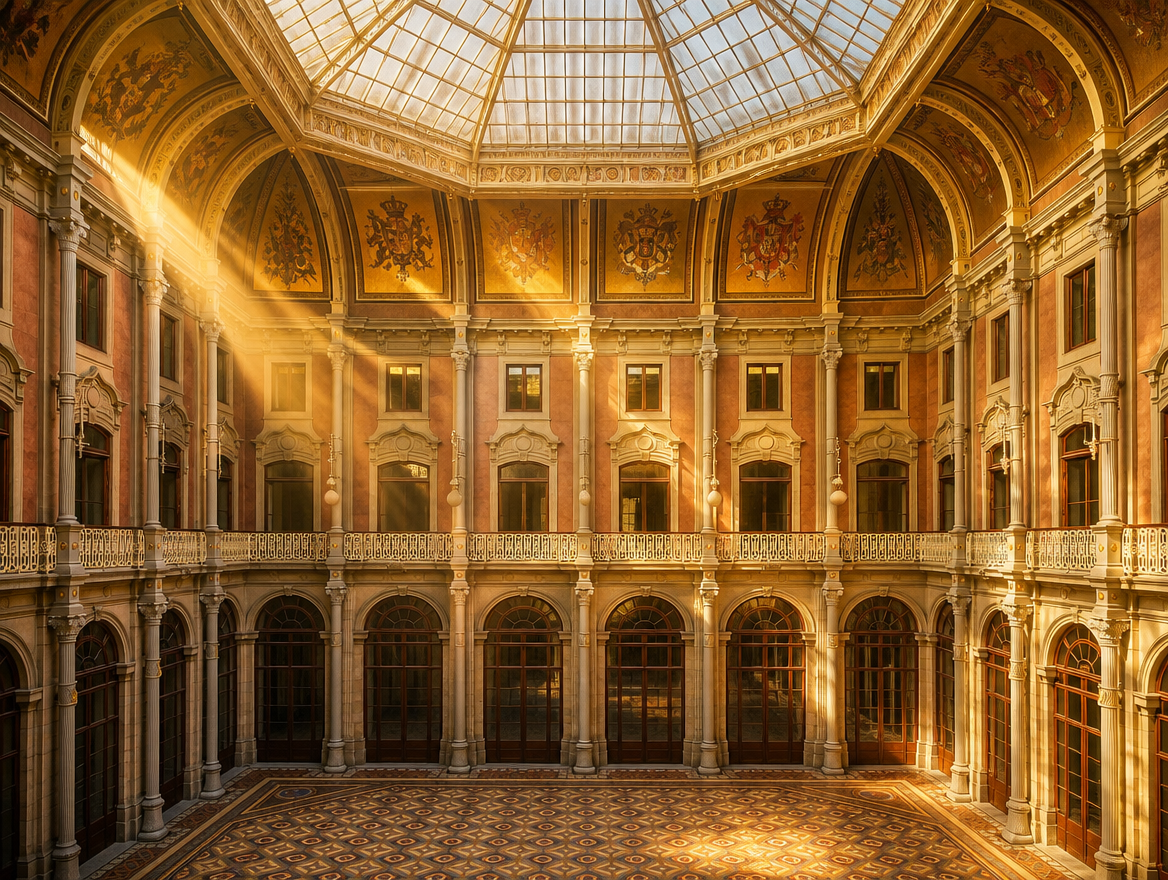
We entered the Pátio das Nações, the inner courtyard covered by an octagonal glass roof, where the morning light fell in oblique, filtered, almost liquid sheets. On the walls, the painted coats of arms of the nations with which Porto once traded are displayed in a circle, like a world tour frozen in plaster. Vítor was the first to look up. "Look. They painted the whole world on the walls of a room that was only used to discuss the price of wine." He wasn't wrong, and yet the history of this courtyard begins with a fire, not with trade.
On the night of July 24, 1832, in the midst of the Portuguese Civil War, a massive fire ravaged the Franciscan convent that then occupied this land, leaving only the adjacent church standing—the very one we had been standing in front of a few minutes earlier. For nearly ten years, the ruins remained as they were, a black hole in the city's fabric. In 1841, Queen Maria II finally ceded this charred land to the merchants of Porto, who had just lost their former meeting place and were now discussing their business in the open air, on the docks, at the mercy of the wind and rain. "Imagine the scene," I told the three travelers. "Men handling considerable fortunes, forced to conclude their contracts standing under a gray sky." Beatriz laughed. "That, at least, is an image I like."
On October 6, 1842, the first stone of the Palácio da Bolsa was laid under the presidency of the Baron of Ancede, José Henriques Soares. The chosen architect, Joaquim da Costa Lima Júnior, a native of Porto himself, designed a neoclassical building with Palladian influences—a sober and severe facade that gives no hint of what awaits inside. The facade and the first floor were completed in 1850. But the story was only just beginning, because the interior decoration would stretch on for nearly sixty years, until 1909. A project so long that it became, in the words of a local guide, a true school for an entire generation of Porto artists.
And you, dear reader, do you know what funds such a project, year after year, for six decades? Not a single fortune. An entire city, or almost, through its chamber of commerce.
That’s when Eleanor spoke up again, more seriously. "It’s often said that this palace is an English palace disguised as a Portuguese one, because of the wine. It’s a simplification that annoys me a bit as a historian, but it’s not entirely false either." She had us sit for a moment on a stone bench in the shade of the glass roof and told us what few visitors know. In 1703, England and Portugal signed the Methuen Treaty, negotiated by the English diplomat John Methuen on behalf of Queen Anne. The principle was simple: English woolens would enter Portugal without restriction, and in exchange, Portuguese wines imported into England would benefit from a customs tariff one-third lower than that of French wines. France was at war with England at the time, French wine became difficult to obtain on English tables, and port—that wine from the Upper Douro fortified with brandy to survive the sea voyage—suddenly became a highly coveted luxury product across the Channel.
"From then on," Eleanor continued, "dozens of English merchant families settled in Porto. They set up their own houses, brought in their own coopers, their own captains, and even built their own club a little further down the docks, the Factory House, where no Portuguese person was ever really invited to sit at the table as an equal." Vítor nodded without surprise. "Feitoria Inglesa. We know it well. It’s no secret; it’s just a place we don’t go."
Imagine these two buildings, just a few hundred meters apart. On one side, the Factory House, exclusively English, closed off, a private club where the greatest port fortunes have been negotiated since the eighteenth century. On the other, this palace where we stood, Portuguese in its soul, its architect, and its presidency, but whose every stone breathes the prosperity that this same Anglo-Portuguese trade brought to the entire city. The Palácio da Bolsa is not an English building. But it probably wouldn't exist without the money that the Methuen Treaty poured into the cellars of Porto for over a century. The archives don't allow us to say exactly how much of this money came specifically from port rather than the other activities of this merchants' association. But one thing remains certain: throughout that time, the wine trade occupied the heart of the city's economy, and the heart of this assembly of merchants who had the palace built.
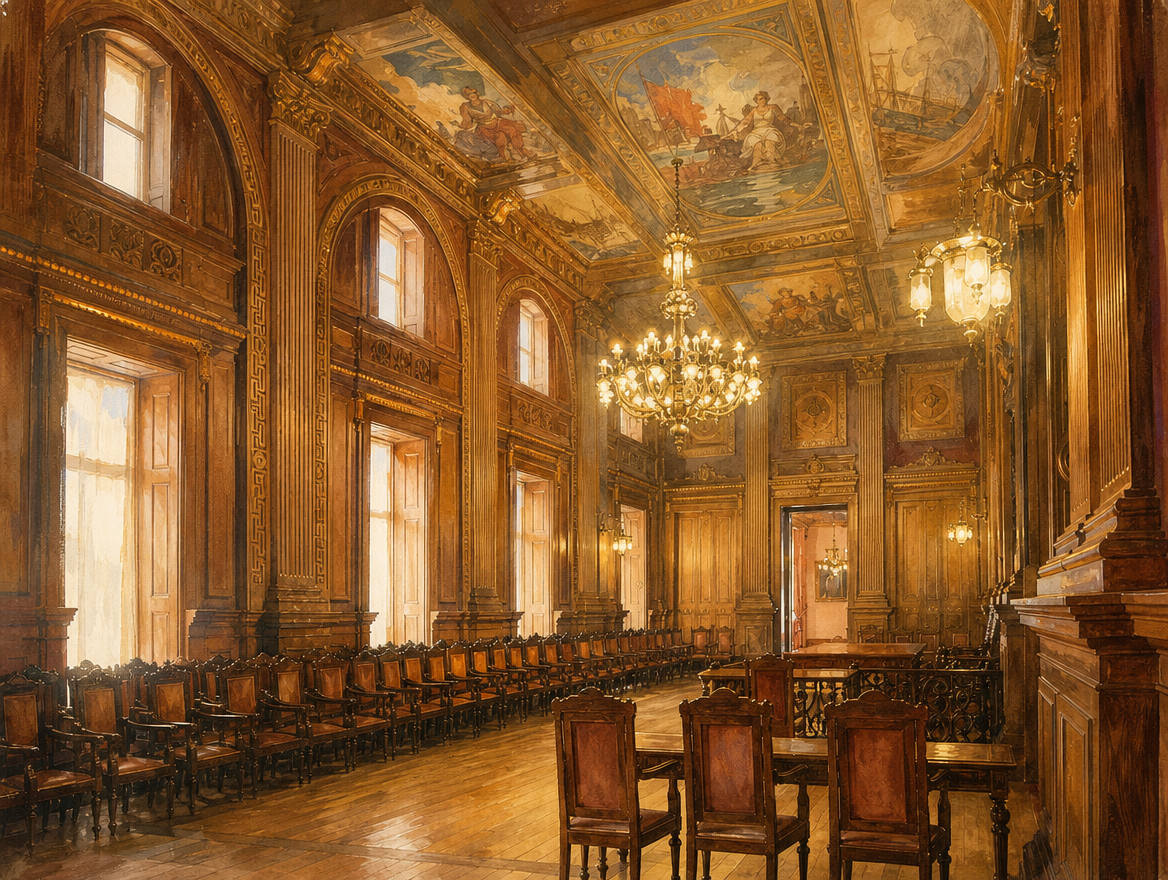
Beatriz was the first to get up to continue the tour. She wanted to see the room her grandmother had talked to her about since childhood without ever having seen it herself. We climbed the Escadaria Nobre, the grand staircase built in 1868 by the architect Gonçalves e Sousa, with its ceiling frescoes depicting allegories of commerce and industry, and arrived in front of a double door that Beatriz stared at for a long moment before entering.
The Salão Árabe. The Arab Room. The crown jewel, as it is called here without exaggeration.
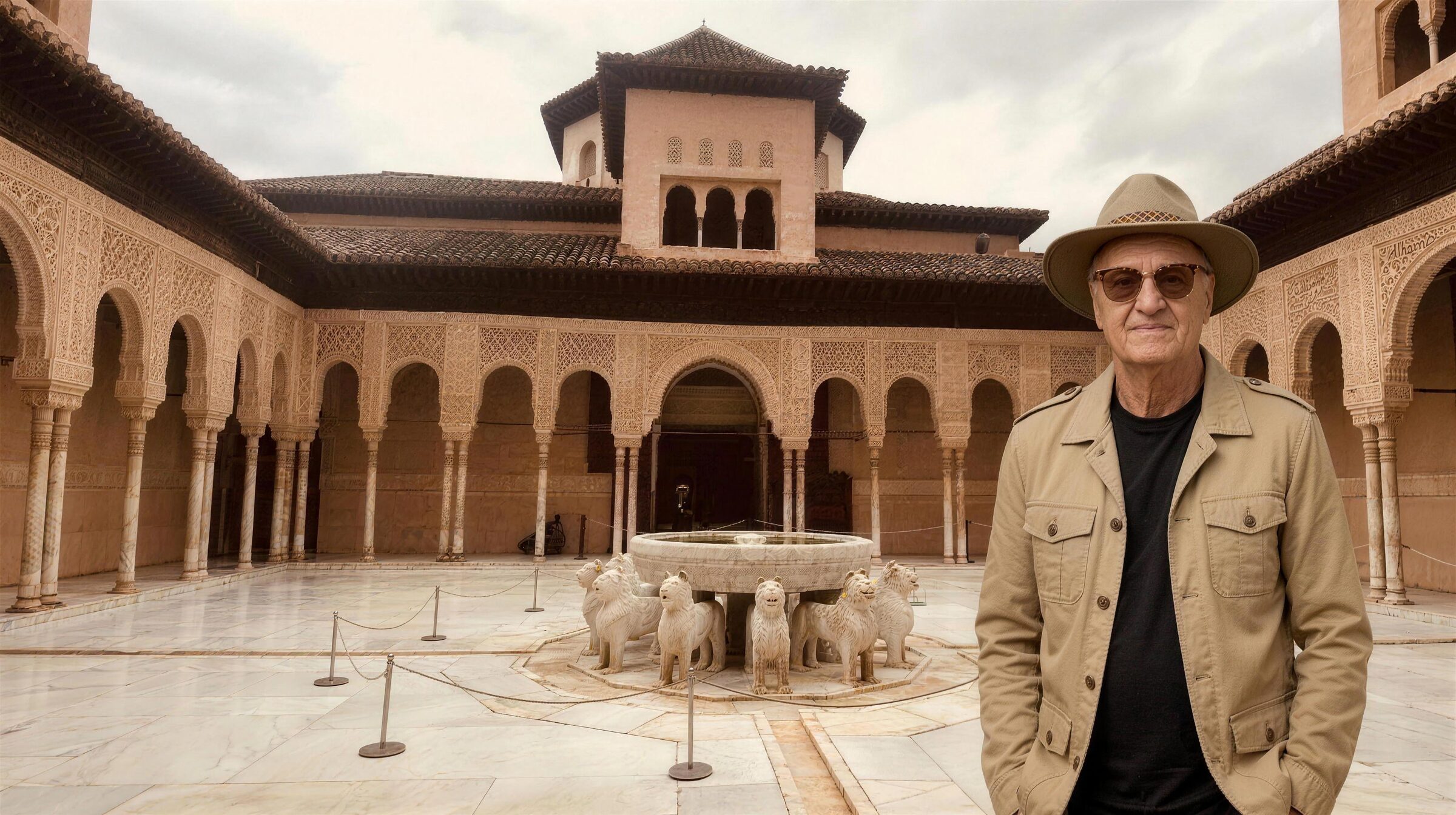
The light changes as soon as you cross the threshold. It becomes golden, literally, reflected by thousands of patterns carved into the stucco and covered in gold leaf, inspired by the Alhambra in Granada—a Moorish fortress that none of the craftsmen who worked here had likely ever seen with their own eyes. The silence in this room has a particular texture, muffled by the carpets, amplified by the high ceilings, and punctuated by the breath of visitors who, invariably, stop dead in their tracks upon entering, mouths agape.
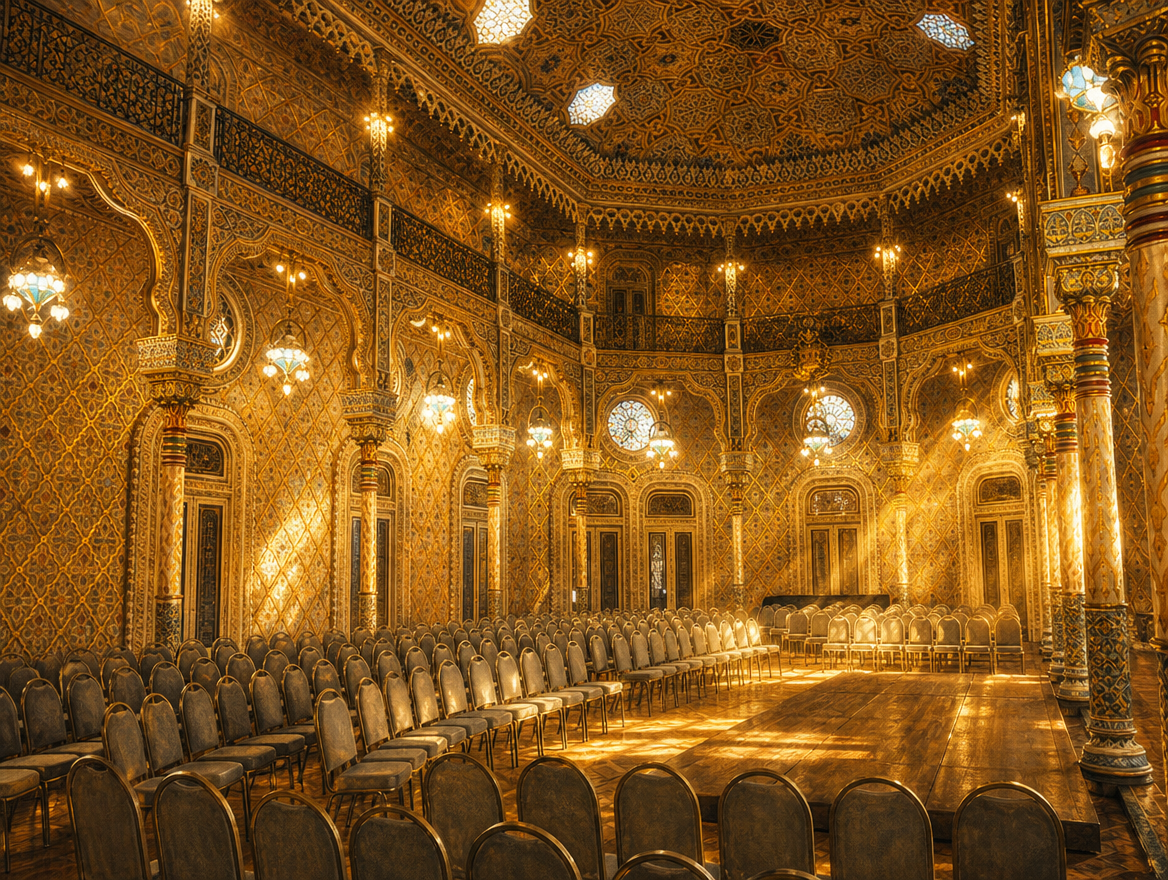
"Eighteen years," Vítor whispered. "Eighteen years of work just for this room." He wasn't exaggerating. Construction began on September 15, 1862, under the direction of Gustavo Adolfo Gonçalves e Sousa, and the room was only inaugurated on June 12, 1880, during the celebrations of the tercentenary of the death of Camões, Portugal's greatest poet. Generations of Portuguese workers—woodcarvers, gilders, plasterers—spent their working lives in this unique room, recreating a dream of the Orient for wine merchants who had likely never set foot in Andalusia either.
Eleanor approached a wall and placed a finger, without truly touching it, on one of the golden Arabic inscriptions running along the cornices. "They don't mean anything specific, you know. They are decorative motifs, not a real religious or political text. It’s nineteenth-century Orientalism, a European fantasy of the Orient more than an exact quote." Beatriz, who had said almost nothing since we entered, finally spoke, her voice a little shaky. "My great-grandfather may have delivered wood for this room. We'll never know for sure; the supplier ledgers of the time don't mention the names of the workers, only those of the houses that placed the orders. But the wood for the barrels and the wood for the paneling in Porto often came from the same workshops." It was a family intuition more than a fact, passed down by word of mouth rather than recorded in a ledger, but it said something true about this city, where the same hands and the same wood circulated from one trade to another without anyone ever bothering to write it down.
And you, reader in the shadows, think about it for a moment. This room that everyone photographs, this explosion of gilding featured on the cover of every Porto guidebook, carries within it the invisible work of hundreds of anonymous hands—coopers, gilders, sculptors—of whom almost no trace remains, except perhaps in the oral history of a family like Beatriz’s.
We emerged in the late morning, when the light had already changed, becoming whiter and harsher. On the square in front of the Church of São Francisco, which survived the fire of 1832, Vítor stopped for a moment and looked at the palace facade as a whole, the way one looks at a familiar face. "You know what strikes me," he said, "I, who spend my days in the darkness of a cellar listening to wine age. It’s that this palace tells exactly the same story as my profession. We work in the shadows for years, sometimes decades, so that someone else, somewhere else, can enjoy the result in the full light of day."
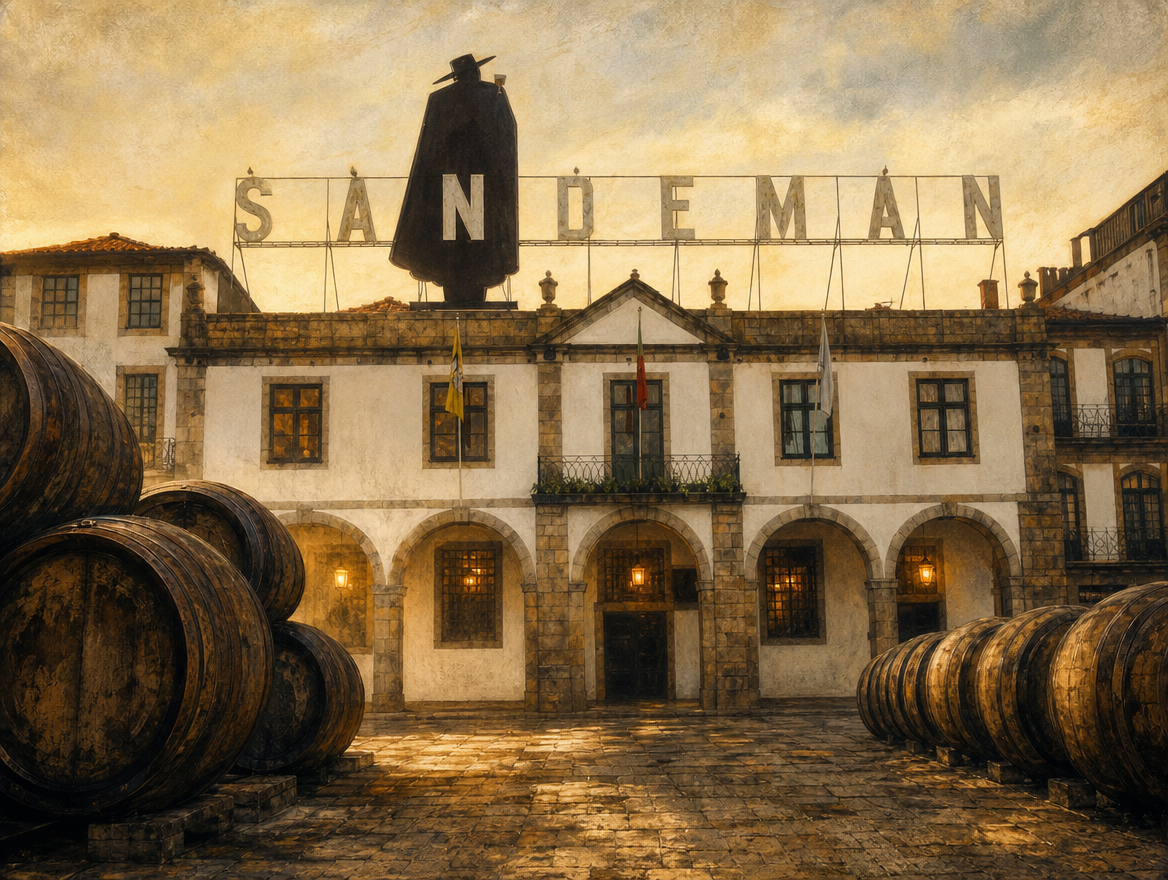
Eleanor closed her notebook. "England drank the wine. Porto kept the stone. I’m not sure which of the two got the better deal, in the end." Beatriz said nothing. She simply took one last photo of the facade, this time with her phone, and sent it, she told me later, to her grandmother with a single word as a caption: "Seen."
And you, do you know of a place whose splendor rests entirely on work that no one ever sees, nor ever mentions in history books?
Because a journey never truly ends. It continues, somewhere between the pages and the memory.
You know, seeking out these stories comes at a price. Traveling to these places, consulting archives, verifying every date with historians—it takes time, and for an independent author, time is the only currency that truly matters.
If these stories resonate with you, supporting this work will cost you less than a coffee and a glass of Portuguese wine. Newsletter for €5/month: monthly delivery with the latest articles + 2 early-access articles. And because a loyal reader deserves more than just access, as long as you are a member, the entire Library is open to you: 14 ebooks already written, with a total value of €138.60, included in your subscription. And if one day you decide to stop, you will always have the option to purchase each story individually for €9.90.
Because a journey never truly ends. It continues, somewhere between the pages and the memory.
— Lucas Lunes, author of ancient stones