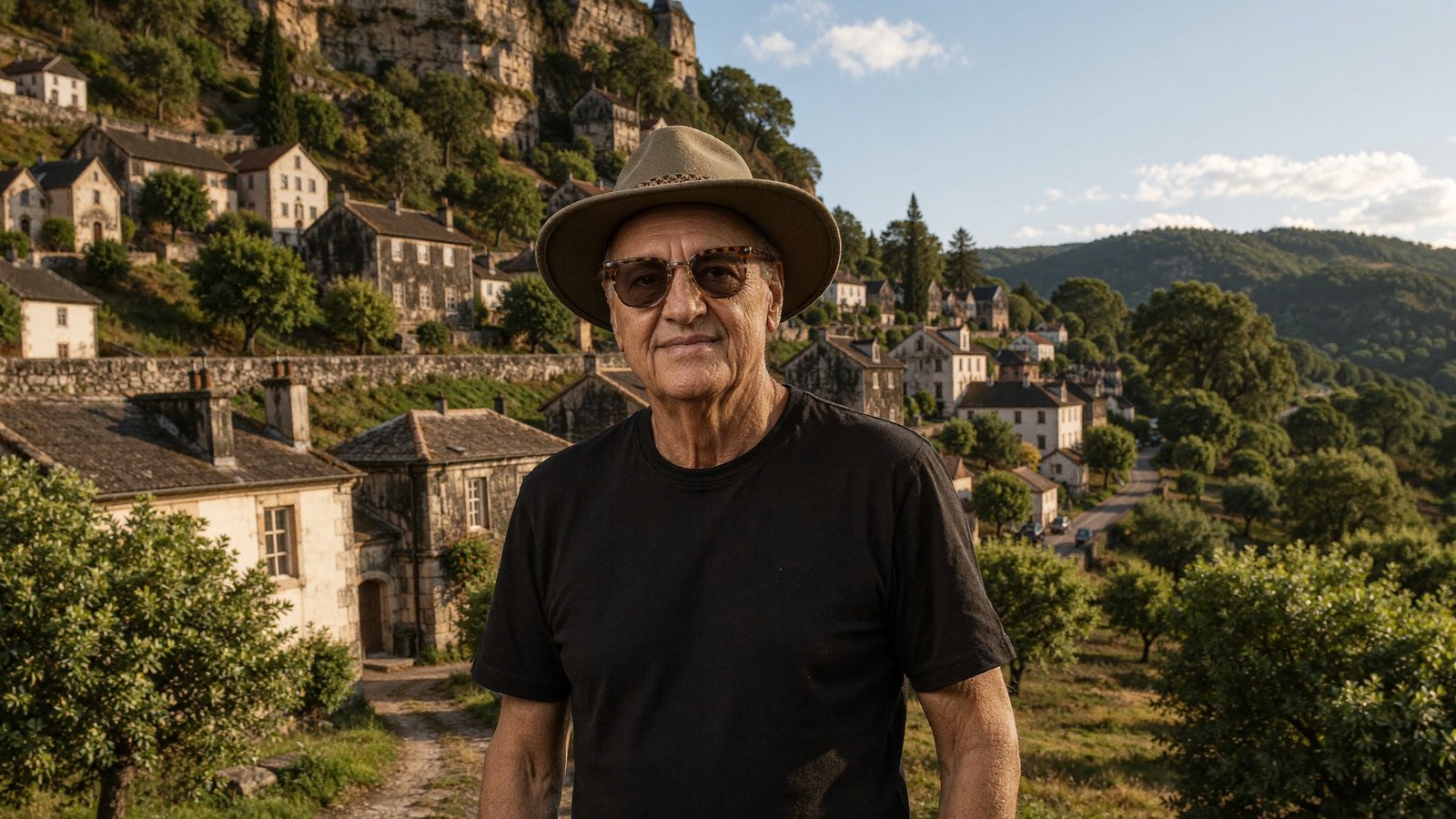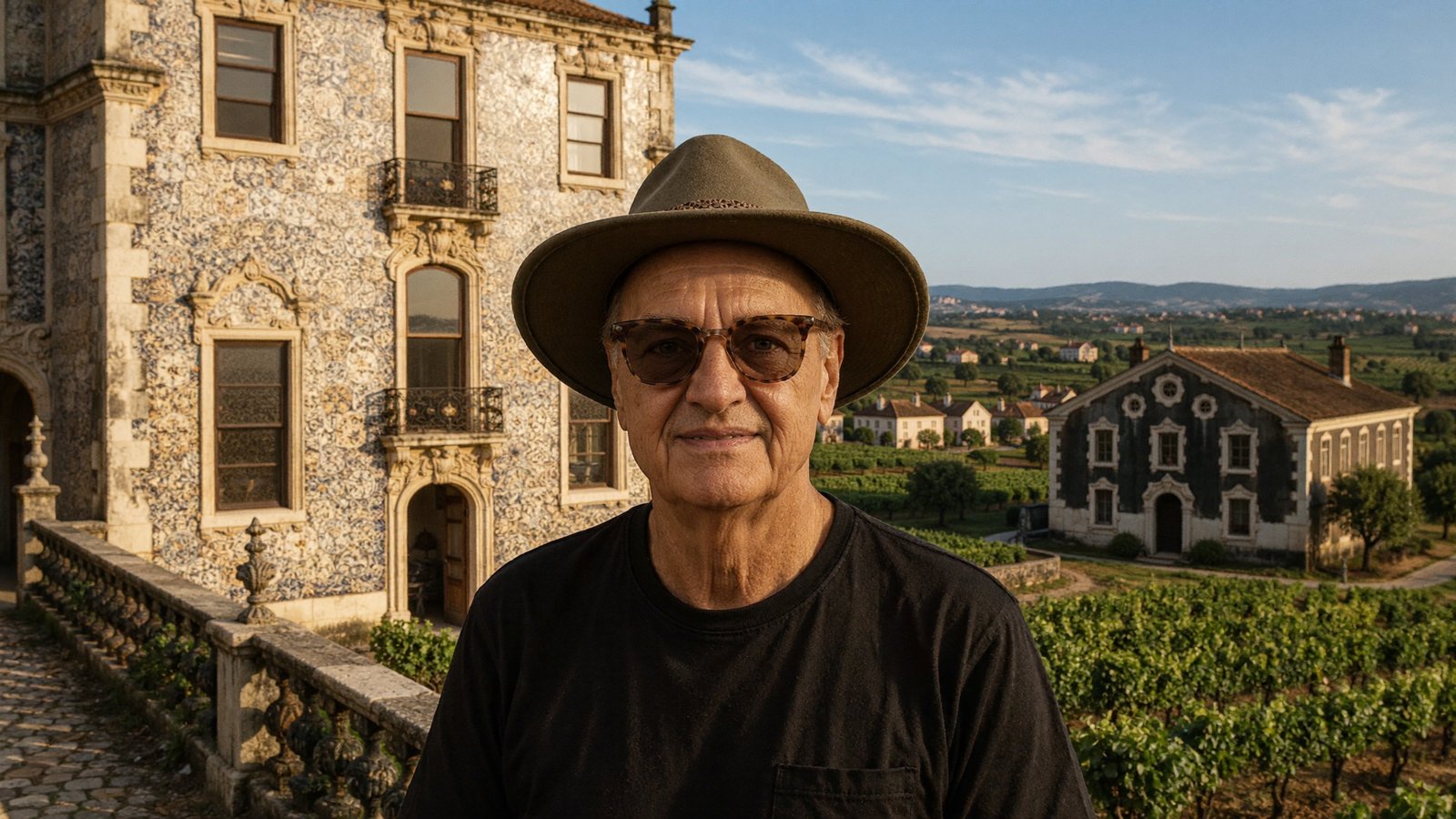
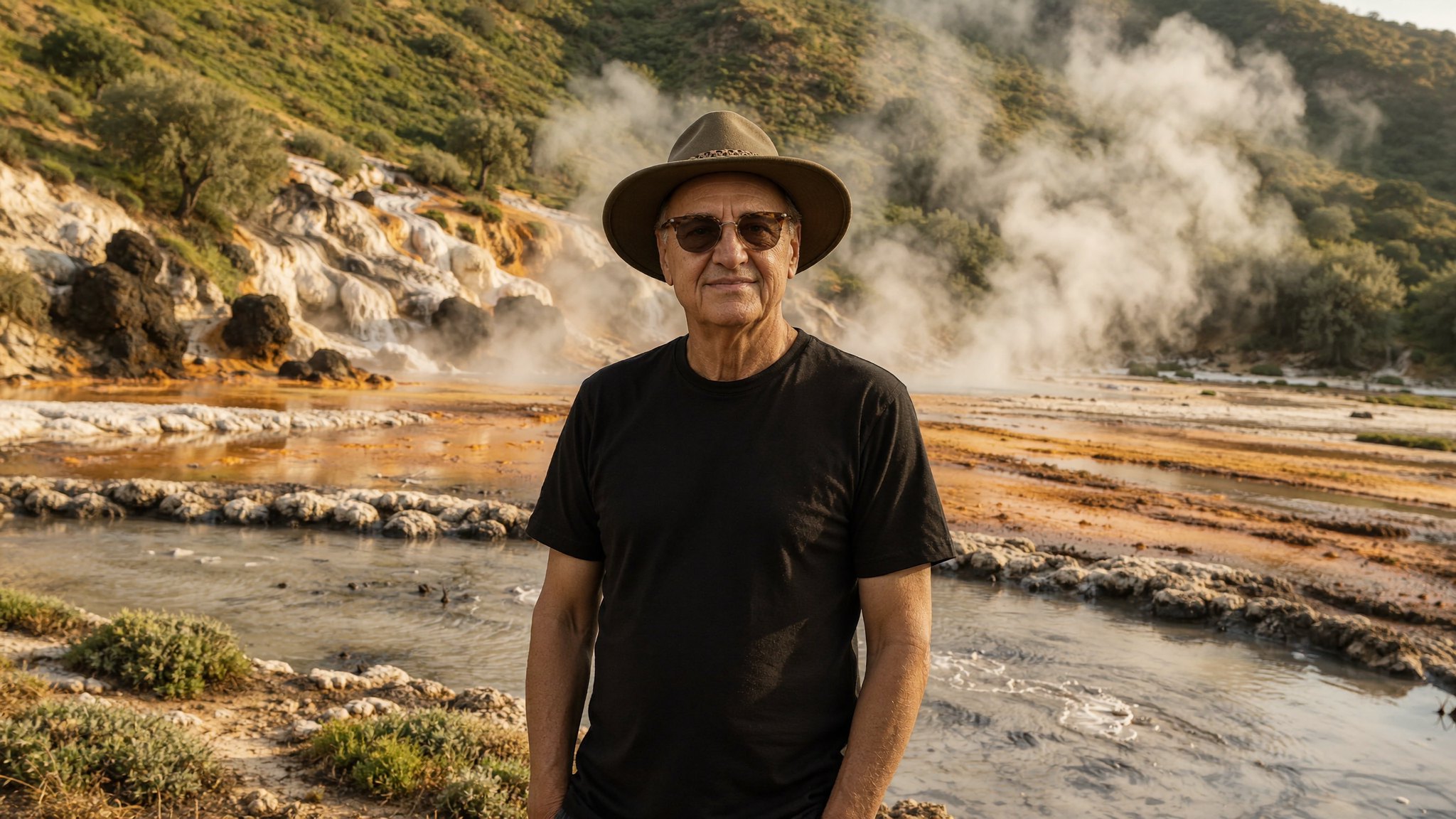
Your travel chronicle in Portugal, in the bubbling Furnas Valley in the Azores, tracing the first settlers of Gonçalo Velho Cabral (15th century) and the memory of the eruption of September 3, 1630—the same year that, back in France, Richelieu was fighting for his survival during the Day of the Dupes.
Your Daily Iberian Travel Chronicle & Guide
On September 3, 1630, before the sun had even touched the ridges, the earth at Furnas opened up. In a matter of hours, a column of ash drowned the valley, and one hundred and ninety-one people died under mudslides and volcanic debris. Survivors spoke of a sky that turned to night, a rain of warm stones, and a smell of sulfur so thick it was impossible to breathe. Three and a half centuries later, I am standing exactly over this wound in the Earth, and yet I am not afraid. I am hungry.
For that is the strange thing about Furnas. The same ground that once killed now cooks lunch. Beneath my feet, in holes dug along the edge of a lake, cast-iron pots have been simmering since dawn in the heat of the volcano itself. No fire, no embers, no flames. Nothing but the burning breath of a mountain that has never truly stopped living.
You know, there are places you go to see a landscape. In Furnas, you come for a conversation between the earth and its people, a conversation that has been going on for nearly six hundred years.
First steps in the smoking valley
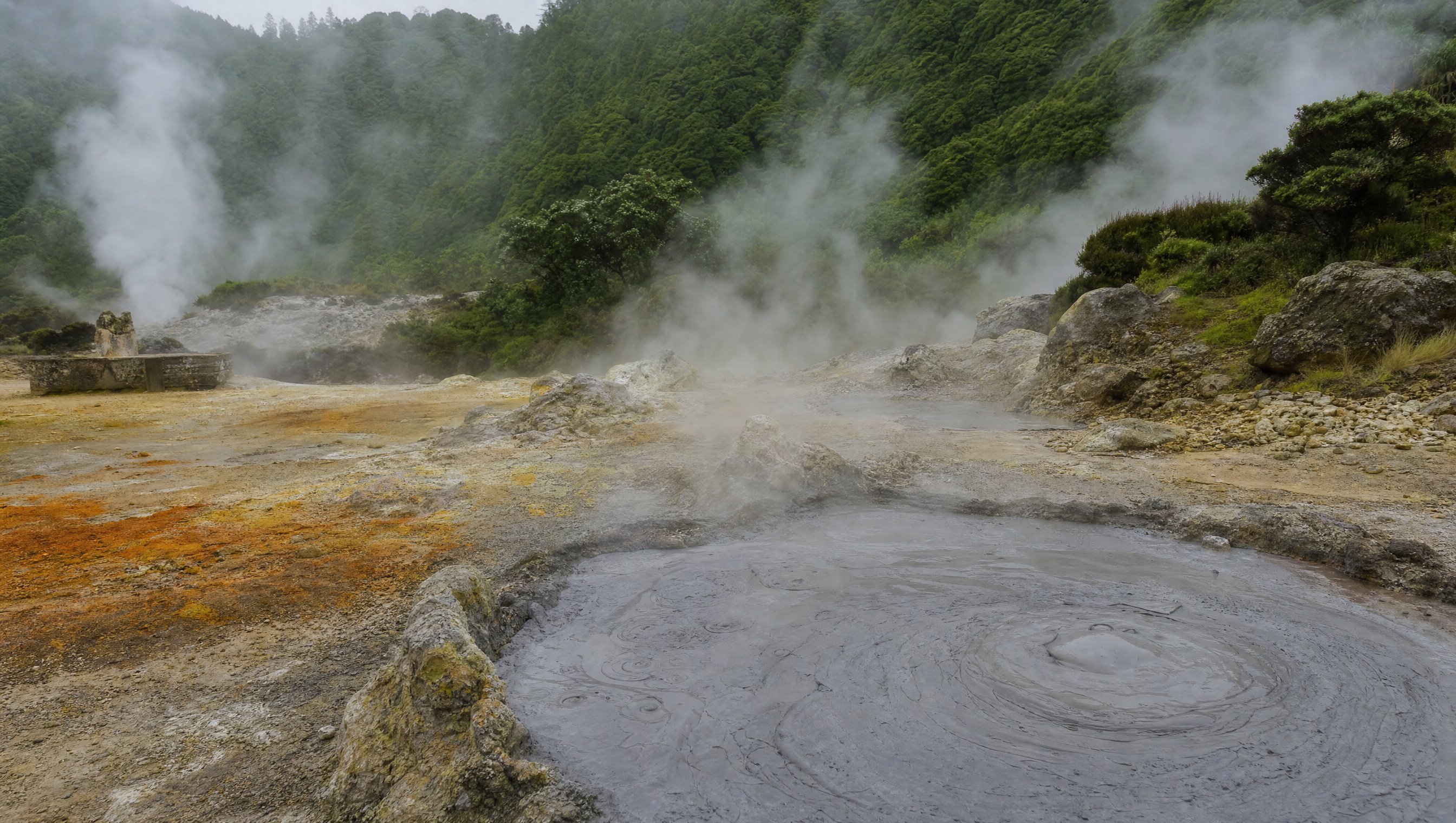
You arrive in Furnas by a road that plunges downward. The valley is an ancient crater, a caldera, and you descend into it as if into the bottom of a bowl lined with ferns, hydrangeas, and dark cryptomeria trees. The air changes before the landscape does. First, the damp freshness of the Azores, then, without warning, that slap of rotten eggs that catches you in the throat. Sulfur. Here, they call it, almost affectionately, the smell of home.
There are three of us walking toward the caldeiras, those pools of gray mud bubbling right out of the ground. Benedita leads the way. She is from Furnas, forty years old, and her family has been watching these fumaroles for three generations. Her grandfather already knew how to read the color of the vapors the way others read the sky. Rita follows us, notebook in hand—a twenty-seven-year-old Portuguese volcanologist who came from the mainland to examine this volcano that refuses to fall asleep. And then there is Jacinto, sixty-three, an Azorean who has been cooking cozido since he was a teenager, with hands as broad as shovels and an easy laugh.
Look closely, you who read these lines. The ground here is not just a picture. It pulses. Small geysers spit out water that reaches nearly a hundred degrees, and the mud forms thick, slow bubbles with the sound of soup forgotten on the stove. Benedita crouches at the edge of a pool and dips her finger a hand's breadth from the surface, just to feel the heat rising.
She smiles. Aqui a terra trabalha. Here, the earth is at work.
An island torn from the ocean
Before understanding the cozido, you have to understand how people dared to settle on a pressure cooker.
São Miguel was not always inhabited. The island already appeared, vague and nameless, on mid-14th-century portolan charts—a simple green line lost in the Atlantic. But the true settlement began on September 29, 1444, the feast day of Saint Michael the Archangel, who would give the island its name. Captain Gonçalo Velho Cabral landed with settlers, livestock, and seeds on land that had never known a plow.
Rita stops in front of a fumarole and looks up at the slopes. She tells the story, and I listen the way one listens to someone who truly loves their subject.
These first Portuguese, she says, arrived from a land of gentle plains and vineyards, and suddenly they were setting foot on ground that trembled, smoked, and smelled of sulfur. Imagine their terror. They came from a world where the earth was solid beneath their churches, and they discovered an island that breathed.
You, dear reader, try for a moment to slip into their worn leather boots. You have crossed a thousand kilometers of ocean in a wooden hull. You land. And the first night, the ground rumbles beneath your straw mattress. It takes considerable faith, or desperation, to stay.
They stayed. They planted wheat, vines, then sugarcane, woad for dye, and later oranges, which would briefly make the island's fortune. They learned that this unsettling land was also incredibly fertile, gorged on the ashes of its own tantrums. And little by little, they made peace with the fire sleeping beneath them.
A peace, it must be said, that is regularly broken.
The year of the ashes
Jacinto knows the date by heart, like everyone in Furnas. September 3, 1630.
We sat on a low volcanic stone wall, still warm from the sun, while he spoke. His voice dropped a notch—not for dramatic effect, but because some things are just said that way.
That day, the Furnas volcano erupted in a Plinian event—the most violent type, the kind that blasts a column of ash miles into the sky. The valley had only been inhabited for a few generations. People fled, but not fast enough. Mudslides and lahars roared down toward the south coast, toward Ribeira Quente. One hundred and ninety-one dead. In the islands' collective memory, it would be known as the year of the ash.
Rita, the geologist, nodded and clarified, without breaking the mood, what she knew to be true. Furnas is not an extinct volcano. It is an active, dormant one, with its last eruption dating back to 1630. Beneath the valley, a few kilometers down, a magma chamber continues to heat the groundwater. The calderas, the geysers, the warmth of the soil—none of this is just picturesque scenery. It is the pulse of a slumbering giant.
There are moments when a landscape stops being pretty and starts to feel dizzying. This was one of them. We were sitting on the warm skin of a dormant volcano, staring at the same green, peaceful valley where, one September morning, the world had ended for one hundred and ninety-one people.
And yet, people returned. They rebuilt. They even found a way to turn this deadly heat into their finest meal.
The earth that cooks
It is on the shores of the great lake, the Lagoa das Furnas, that the magic happens every morning.
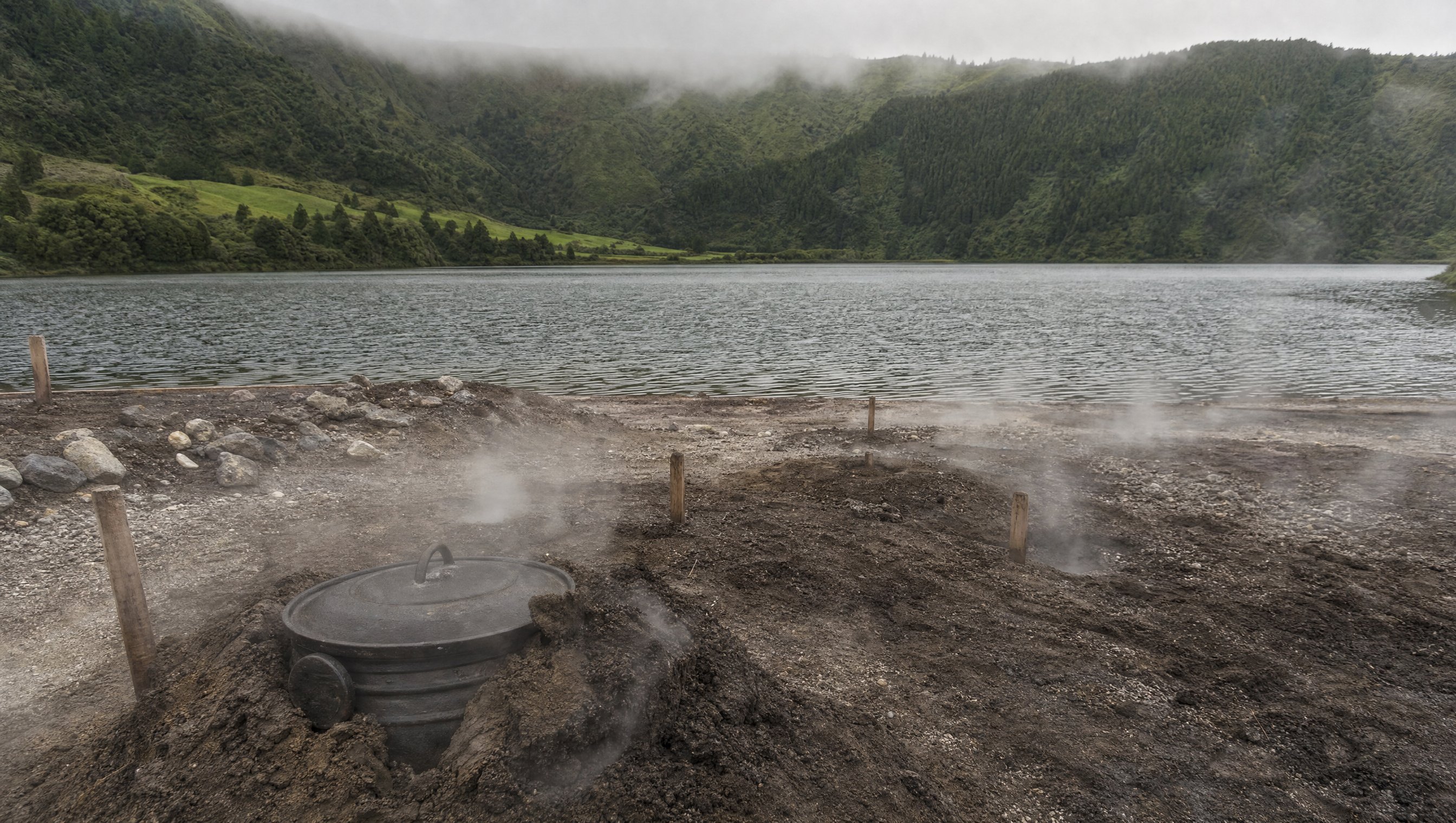
There, on a bank where the ground steams in dozens of places, holes have been dug into the hot earth. Some families and restaurants have their own, numbered and passed down through generations. Before dawn, they lower the pots into the depths, cover them with a cloth bag and then with earth, and plant a small marker to find their spot again. Then, they wait. Five, six, seven hours. Just long enough for the volcano’s heat to do, slowly, what no oven could ever replicate.
This is where we met Duarte. A lean man in his sixties, wearing a faded cap and hands the color of the earth. He has been burying and unearthing pots on this bank for over forty years, just like his father before him. He knows every hole, its temperature, and its quirks.
"Careful," he told us with a laugh, "that one runs too hot; it’ll burn your meat in five hours. This one is gentler; you have to give it seven." Every hole has its own personality, just like people.
He knelt, pushed the earth aside with his bare hands with an ease that made me shiver, and pulled up a black pot from which a scorching cloud escaped. The smell instantly overpowered the sulfur. Cabbage, bacon, blood sausage, meat slow-cooked to perfection. A Sunday smell—the kind that hits you right in the gut.
Jacinto leaned in, took a breath, and gave a nod of satisfaction. As Duarte closed up another hole, he explained what goes into a true cozido das Furnas: beef, pork on the bone, chicken, bacon, ribs, smoked chouriço, and morcela blood sausage. Plus vegetables from the volcanic garden: cabbage, carrots, potatoes, sweet potatoes, and yams—that fleshy inhame that the Azores grow along the warm streams. No flashy spices. Just the earth, time, and steam.
If you are reading this, take note: this dish isn't cooked by the steam of a pot. It is cooked by a volcano. The same heat that brought death in 1630 is exactly what will feed us this afternoon. Few tables in the world can say the same.
Time to eat
We shared the cozido in a small dining room in Furnas, one of those family-run spots with no flashy sign, where the tablecloths are thick cotton and the walls are covered in yellowed photos. It wasn't even noon, and the room was already buzzing with scraping chairs, Azorean laughter, and the clatter of cutlery.
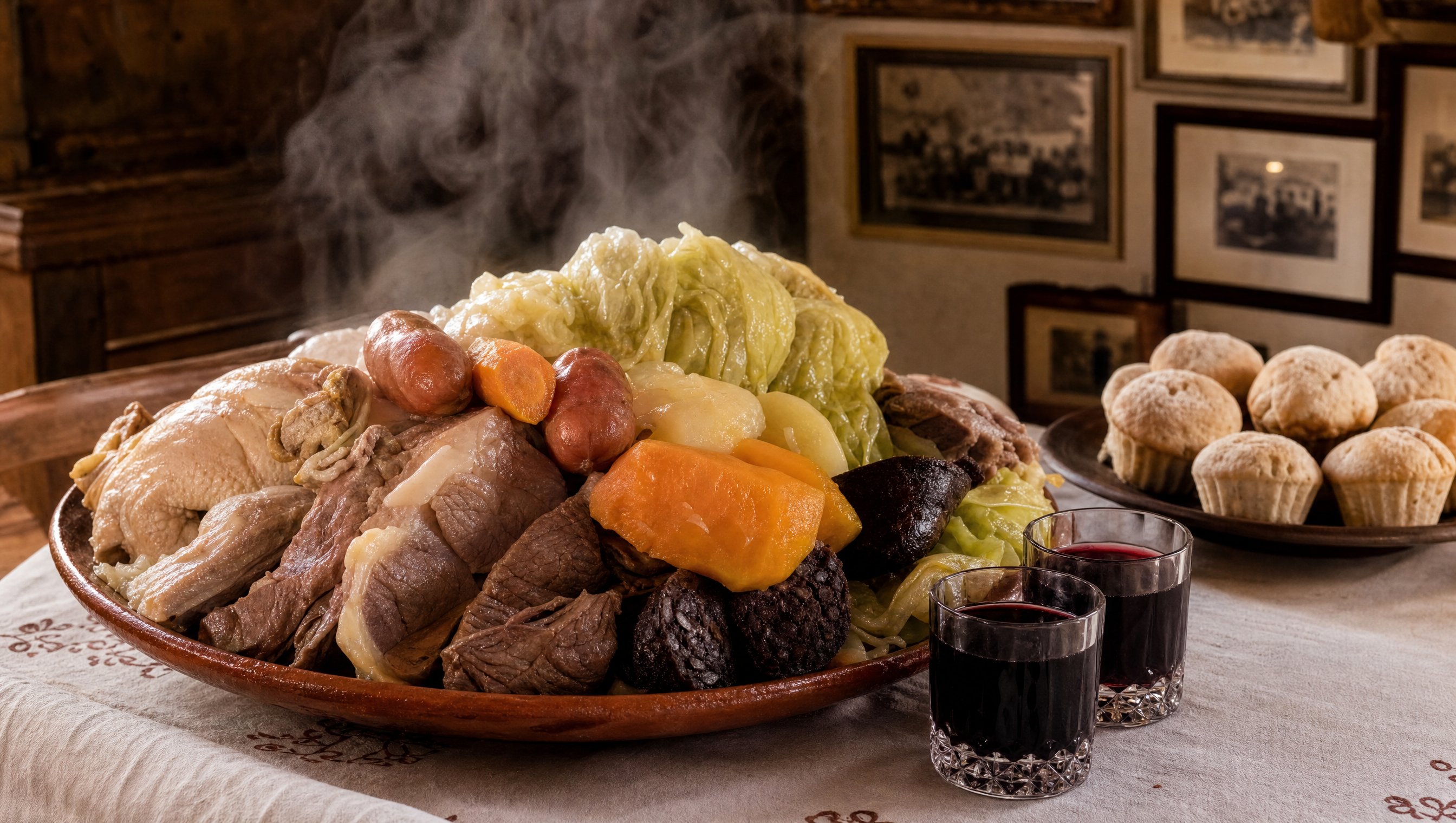
Duarte joined us. We placed the large, steaming platter in the center of the table, the meats piled high, the vegetables soaked in broth. Steam rose to our faces. Jacinto poured a local red wine into small, thick glasses—the vinho de cheiro that has been made here forever. It’s a dark, powerful, almost wild wine with a slightly foxy note, which the locals drink casually with festive meals.
The first bite of beef fell apart at the touch of a fork, so tender had it become. The cabbage had soaked up all the fat, and the sweet potato melted, sugary, on the tongue. Nothing was sharp. Everything was long, rounded, and deep, as if seven hours of patience had been laid out on the plate. On the side, they brought bolos lêvedos—those small, round, slightly sweet rolls that are the pride of Furnas—warm, soft, and perfect for mopping up the broth.
And you, reader in the shadows, you might think a dish is just a dish. Sit at this table just once, in the warm hubbub, with the heat of the plate warming your palms, the scent of cabbage and chouriço, and a glass of dark wine within reach, and you will understand that you aren't just eating a cozido. You are eating six hundred years of human stubbornness on a land that should have remained empty.
For dessert, Benedita insisted. Azorean pineapple, grown in greenhouses on the island—smaller and more fragrant than its tropical cousins, with a bright acidity that cleansed the palate of the meal's richness. Sugar and sulfur, sweetness and the volcano. All of Furnas was contained in that final slice.
What the elders say
It was at the café, once the room had cleared out a bit, that Duarte lowered his voice to tell the legend.
They say, he began, that back in his grandparents' day, the old folks never went near the calderas after dark. They claimed the valley was cooking for those who had passed on. That the bubbling ground was the breath of something immense, sleeping just beneath, which must never be disturbed. After the year of the ash, many believed it was a punishment, and whispers spread that the earth still held the memory of the one hundred and ninety-one souls it had claimed.
He paused, then shrugged with the smile of someone who loves a good story without quite believing it.
Rita gently offered the truth she held to be real. The breath beneath the earth is very much alive, she said, but it is no creature. It is magma—the burning chamber a few kilometers under our feet—that heats the water and makes the valley breathe. Science doesn't take away from the beauty; it only makes it more vast.
My friend, you choose what you prefer: the sleeping giant of the ancients or the magma of the geologists. Deep down, both say the same thing. In Furnas, you must live with a force greater than yourself and learn, one day, how to cook your lunch on it.
The final look
We left in the late afternoon, when the Azores light turns low and golden, and the vapors seem to rise more intensely in the encroaching chill. The lake was still, silver-gray, and on its banks, thin wisps of smoke still rose where other pots were already waiting for tomorrow’s lunch.
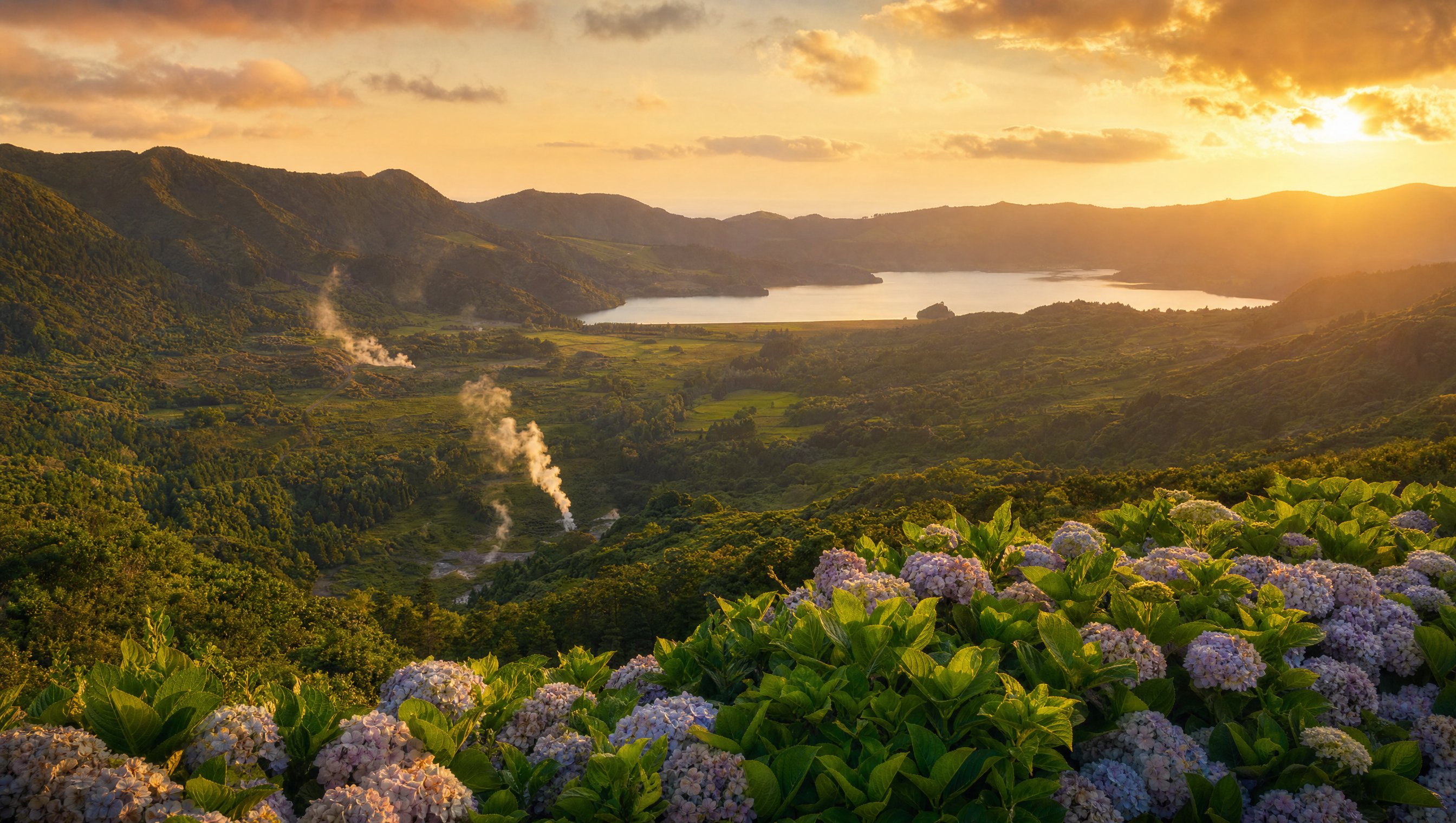
Benedita looked at the valley one last time, the way one looks at a difficult relative they love nonetheless. Three generations of her family had read these plumes of smoke. Her children would read them in their turn.
There are lands that man domesticates. Furnas is not one of them. Here, you don't tame the volcano; you make arrangements with it, entrusting it with your pots in the morning and hoping it’s in a good mood. Perhaps that is the oldest wisdom of the islands: not to conquer nature, but to dine with it.
Category: Gastronomy · Country: Portugal · Type of location: Volcanic valley
You know, seeking out these stories comes at a price. Traveling to these places, consulting archives, and verifying every date with historians takes time—and for an independent author, time is the only currency that truly matters.
If these stories move you, supporting this work will cost you less than a coffee and a glass of Portuguese wine. For €5 a month, you aren't just supporting an independent author: you are joining a community of active Iberophiles, and each month, you participate in the birth of a new story. You vote for the topic that interests you and that you want to see written. If your choice wins, your name is engraved at the bottom of the article, published for all to read and recognized by other readers as the one who brought it to life. It’s a story you can share and discuss at dinner with your friends and anyone else who shares your love for Portugal and Spain—a story that will help other Iberophiles discover these lands. Each month, your voice counts again, helping this vibrant, participatory community grow a little more.
And as long as you are a member, the entire Library is open to you: 14 ebooks already written, with a total value of €138.60, included in your subscription.
If you ever leave, no ebook truly disappears: you will always be able to purchase them individually for €9.90 each.
Because a journey never truly ends. It continues, somewhere between the pages and the memory. — Lucas Lunes, author of The Ancient Stones