Listen to the story — narrated voice
Your travel chronicle of Silves, Portugal, featuring King Sancho I and the crusaders from the North (12th century), during the time of the Third Crusade, while fleets were being armed in Flanders and England for Jerusalem in the summer of 1189.
Your Daily Iberian Travel Chronicle & Guide
On September 3, 1189, an entire city walked through its own gates, never to return. The inhabitants of Silves filed out wearing only the clothes on their backs, without a single jewel, a single coin, or even a waterskin for the journey. Behind them, the red sandstone ramparts still stood, intact and magnificent. It was not the walls that gave way. It was the thirst. And it was men from the North Sea, thousands of miles from home, who broke them.
You know, there are battles we think we know that hide a story far stranger than their name. This one begins with a patient Portuguese king and ends with a sailors' quarrel over a pile of gold. In between, forty-four days of a siege recounted, almost hour by hour, by an anonymous crusader from Bremen in a Latin text known as the Narratio de itinere navali, the account of the journey by sea. It is this text, rediscovered and scrutinized by historians, that allows us today to step back into that August heat.
Today, I am not coming alone.
First steps in the red city
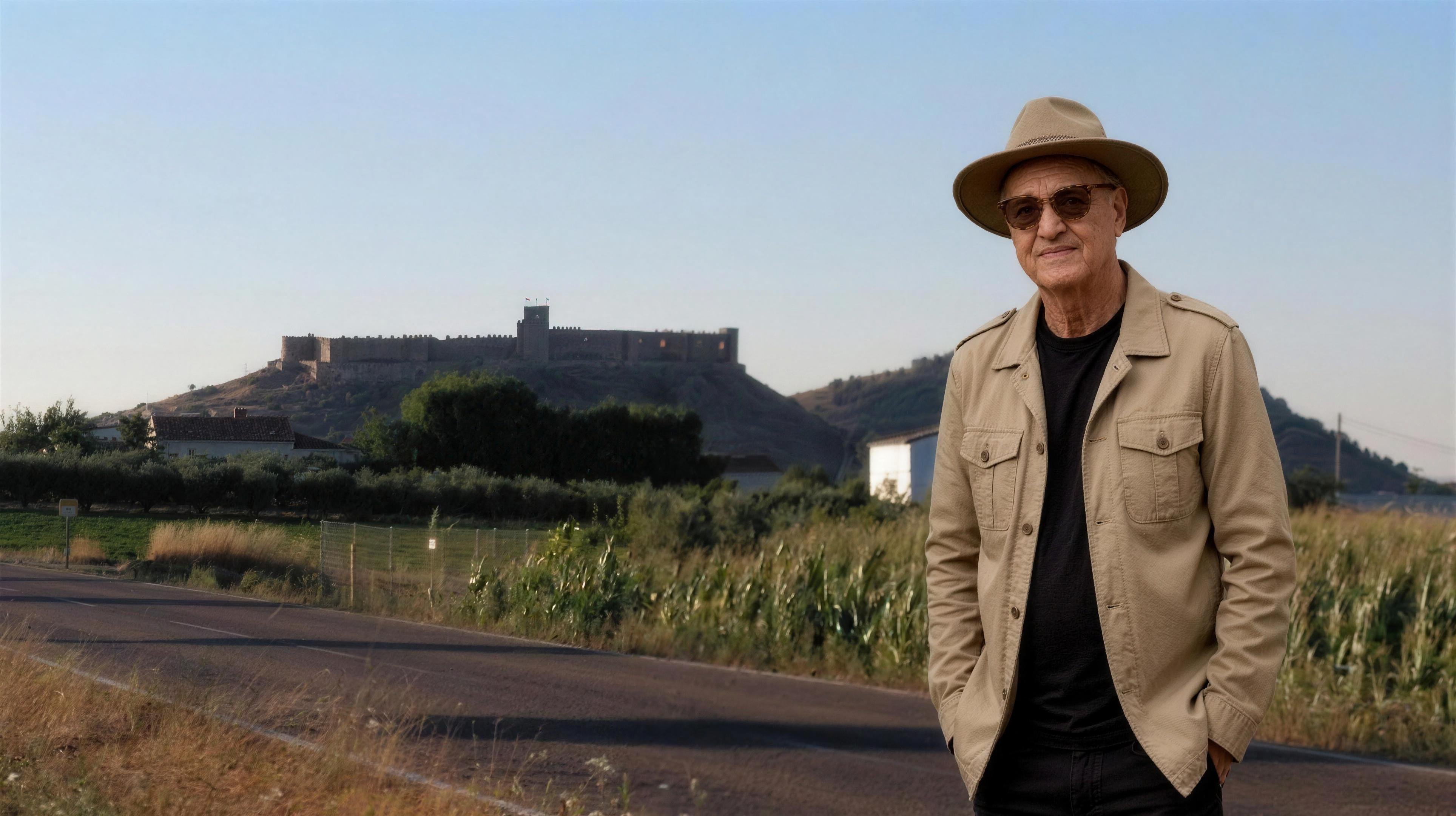
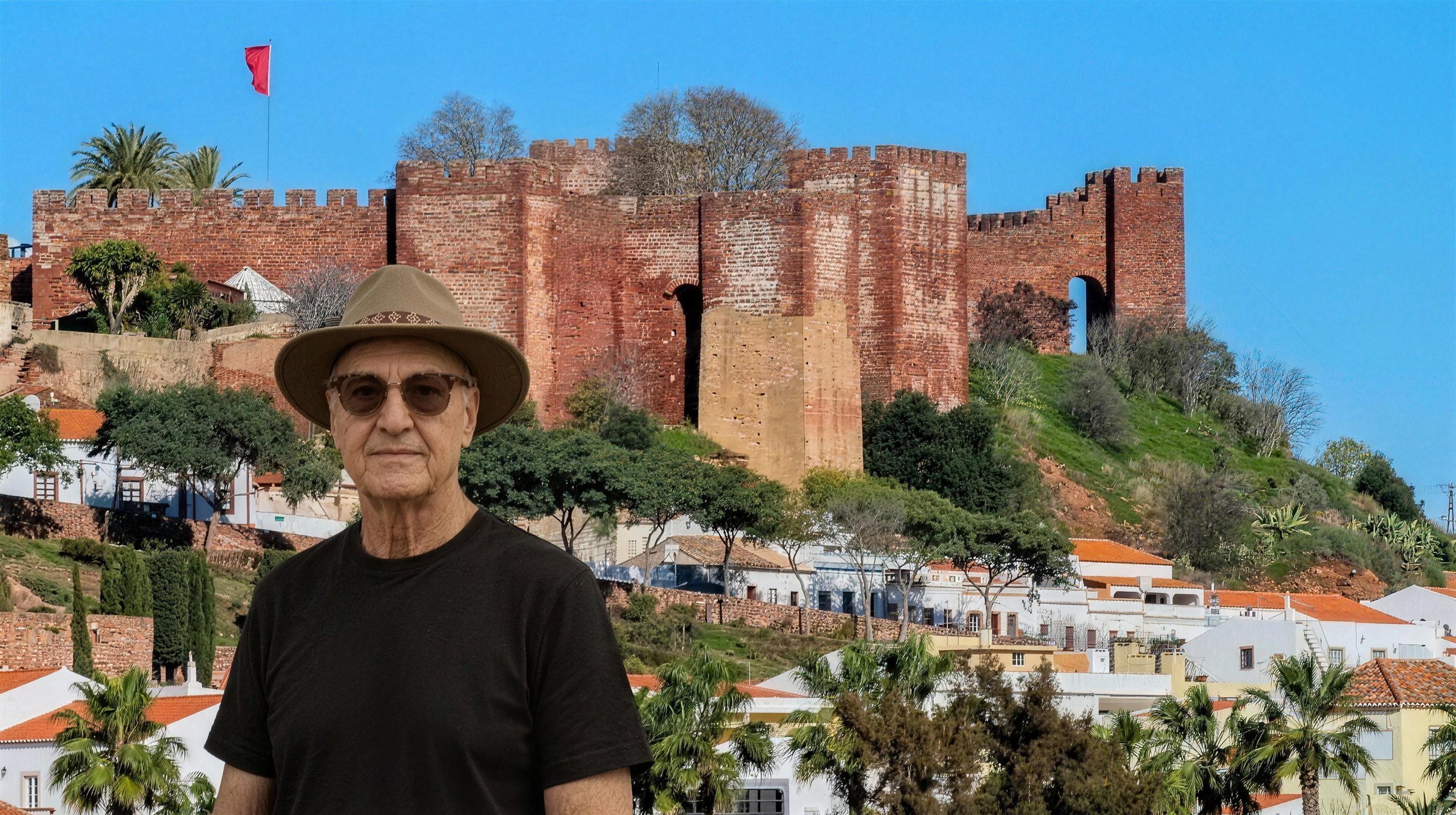
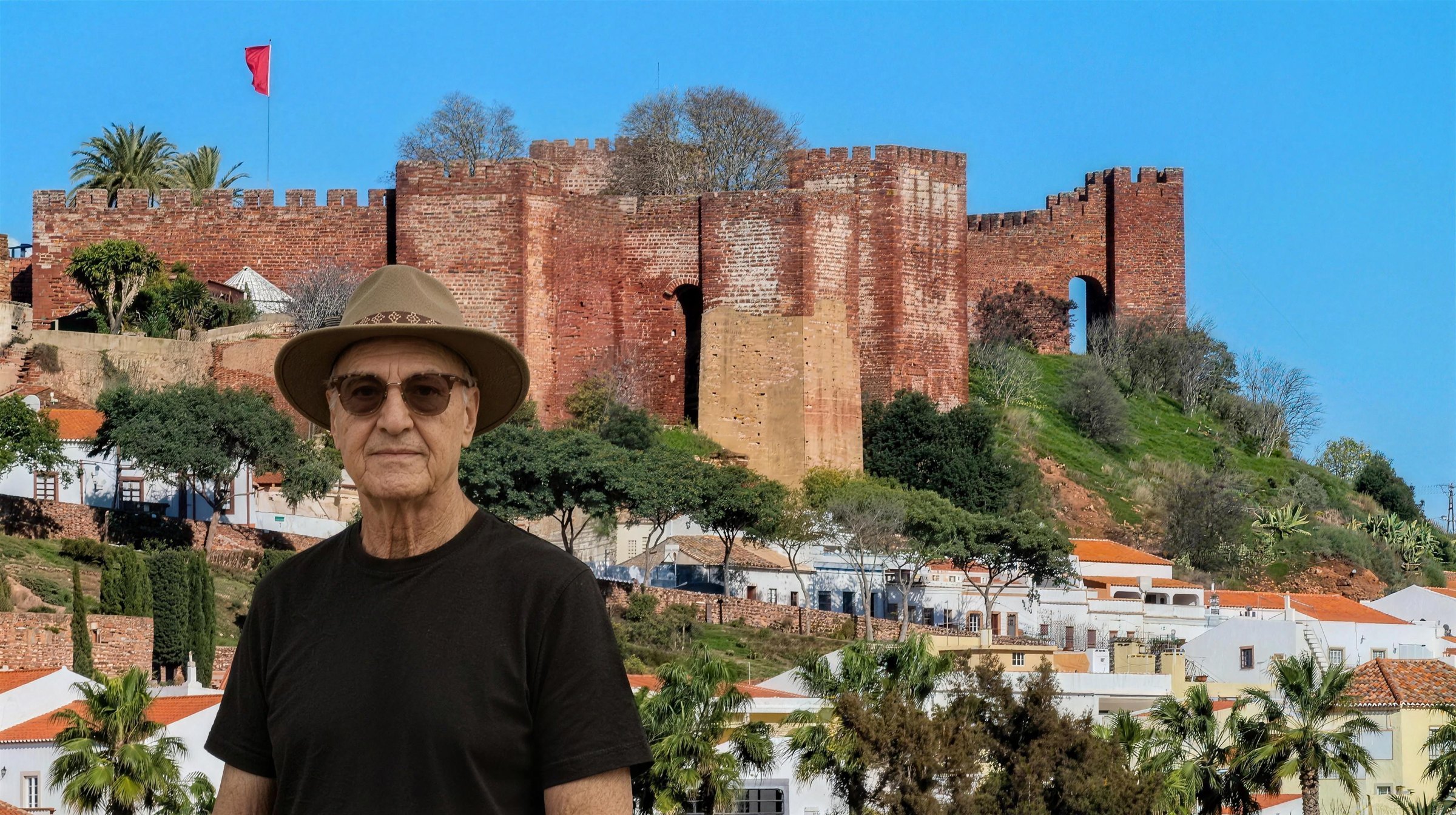
We climb toward the castle along the cobbled alleys, and the stone already sets the tone. The sandstone of Silves is not ochre; it is a bold red, almost bleeding under the midday sun. It warms your palm when you place your hand on a wall. A scent of crushed oranges and overripe figs rises from a garden below, and somewhere a cicada is relentless.
Griet walks ahead, notebook in hand. A crusades historian, forty-seven years old, Flemish, born a few leagues from the ports where the fleets of 1189 departed. She has that reserved smile of those who know they are finally going to see with their own eyes what they have only read about in manuscripts.
"Look at the position," she says without turning around. "Silves is not by the sea. The river, the Arade, used to flow all the way up here. Ships could get close. That is the whole secret of this story."
Walking beside me is Joaquim, fifty-two, a heritage architect, an Algarvian to his core. He knows every crack in this castle the way others know the faces of their children. And bringing up the rear, slow but tenacious, is Dona Fernanda. Seventy-four years old, born in Silves, daughter and granddaughter of Silves natives. In her family, an oral memory of the siege has always been passed down—distorted, surely, perhaps embellished, but alive.
"My grandmother used to say the city wasn't taken by weapons," she says, stopping to catch her breath. "It was taken by thirst. You'll see, at the top, the well."
You who are reading this, keep that word in mind. Thirst. We will come back to it.
A patient king and a passing fleet
First, we must understand who held what in the summer of 1189. Silves was no mere village. It was the capital of the Gharb al-Andalus, the western part of the Almohad Caliphate, a scholarly and prosperous city. There were perhaps fifteen thousand souls there at the start of the siege. The governor defending it bore the name ʿĪsā ibn Abī Ḥafṣ. Its walls were considered impregnable.
The king who coveted it was Sancho I of Portugal. A brand-new kingdom, barely out of the hands of his father, Afonso Henriques. Sancho wanted the South, he wanted the Algarve, but he lacked the means to take such a stronghold on his own.
This is where luck knocked on his door. Griet stops in front of a loophole and hands me her notebook, open to a map.
"A massive fleet passed offshore that year. Crusaders from the North, heading to the Holy Land for the Third Crusade. Frisians, Danes, Flemings, English, men from Bremen. About seventy-five ships according to the sources, around three thousand five hundred combatants. They stopped on the Portuguese coast to resupply."
"And Sancho offers them a deal," Joaquim adds.
"Exactly. Lend me your arms and your ships to take Silves, and you keep the loot. For these men, it was profit on the road to God. They agreed."
I’ll let you weigh the irony. Sailors who set out to avenge Jerusalem stop in the Algarve for a siege that wasn't theirs, against an enemy that wasn't the one they were looking for. The Crusades were often like that: a journey of opportunities.
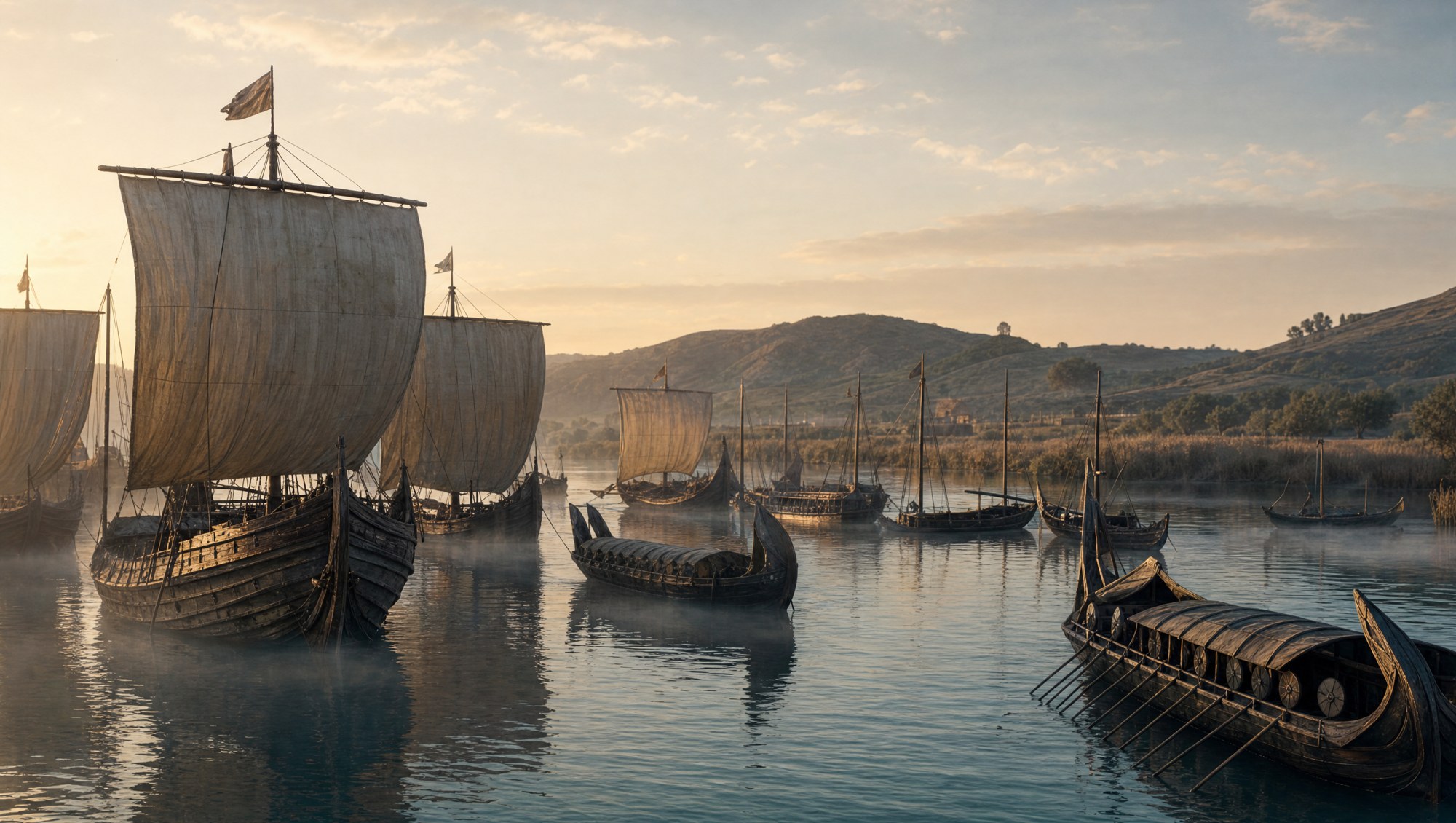
Forty-four days under the red sun
We finally reach the upper enclosure. The castle opens up, vast, and the wind finally circulates through it. Below, the entire Arade plain unfolds, green and gold. It was from down there that everything started on July 21st.
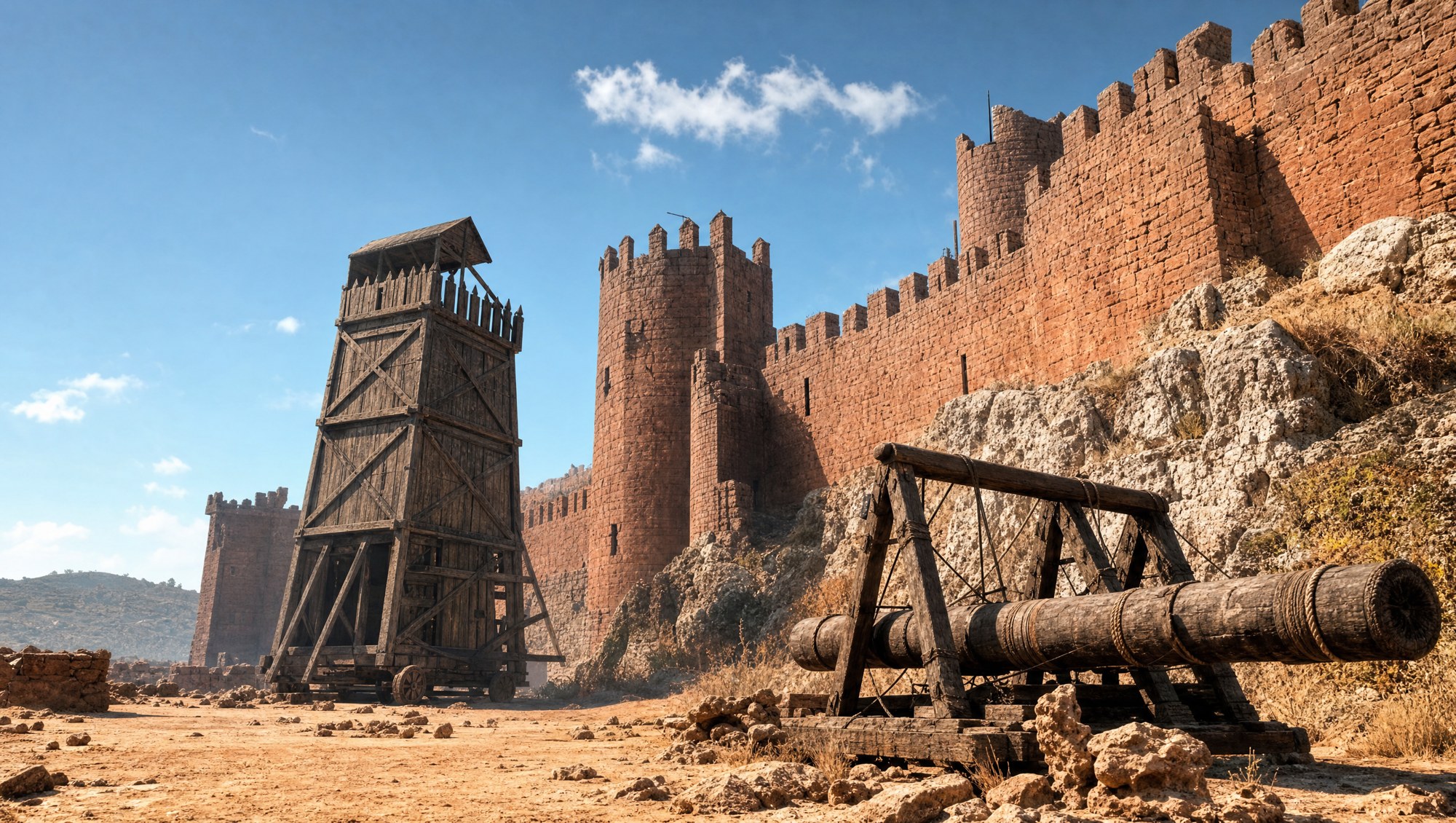
"The crusaders attacked the lower town on the very first day," says Griet, her voice changing as she speaks, becoming deeper, slower. "They took the fortified town with ladders. The defenders retreated into the citadel, right here. Then the real siege began. They built machines. On August 6th, a battering ram smashed against the wall. The besieged destroyed it. They dug tunnels under the walls, the defenders dug underneath to counter them, and the text speaks of a flood of fire thrown down on the miners."
"Greek fire?" asks Joaquim, the engineer’s eye suddenly lighting up.
"Perhaps. The chronicler didn't know the recipe; he described what he saw. Water that burns."
Sancho arrived on July 29th with his reinforcements. But the Andalusian summer is an ally that betrays no one. Look closely, you who read these lines: this siege wasn't won by the battering ram. It was won by the well.
By mid-August, the city's cisterns were nearly dry. The besiegers breached the well, filled it in, and cut off the water. And the Bremen account notes, soberly, that many of the enemy were dying of thirst. That is the truth Dona Fernanda’s grandmother carried, passed down by word of mouth over eight centuries. The red city did not fall to the sword. It fell for want of a drink of water.
Dona Fernanda approaches an ancient wellhead in the center of the courtyard. She rests her hand on it for a long moment, without a word. I don't dare break the silence. Some gestures are worth more than any manuscript.
The city that surrenders, the victors who tear each other apart
On September 1st, the defenders offered to surrender. And that is where this story stops being a glorious page of the Crusades and becomes something more human, uglier, and truer.
Sancho wanted the city intact. He offered the crusaders ten thousand gold pieces, then twenty thousand, so they would refrain from looting. The crusaders refused. They hadn't come for offered gold; they had come for stolen gold. They eventually agreed that the inhabitants could leave alive, but with nothing, wearing only the clothes on their backs. The governor accepted on September 2nd. On the 3rd, the city emptied.
"And the treaty wasn't even respected," says Griet, and I sense in her voice the discomfort of a historian who doesn't want to sugarcoat anything. "The chronicler, a crusader himself, wrote it down: in defiance of the agreement, some of his own men stripped the departing Muslims, torturing them to make them reveal where their money was hidden. I’m not the one saying this, eight centuries later. It was one of them, at the time."
The division of the loot turned into a brawl. The crusaders ended up handing the city over to Sancho without even touching the shares they had been promised. And when the king asked them to help him take Faro in the aftermath, they refused and returned to their ships. The chronicler from Bremen would harbor a bitter regret: the entire Gharb could have fallen, he wrote, were it not for Sancho’s resentment toward the crusaders and the cursed haste of a few of our own.
Joaquim nods slowly. "An alliance that wins and hates itself. The whole history of this siege is contained in that sentence."
Nine castles then passed under Portuguese control, from Lagos to Monchique, including Portimão and Alvor. A Fleming named Nicholas was made bishop and consecrated the mosque as a cathedral on September 8th. Some Flemish crusaders stayed. The others set sail again on September 7th, toward Acre, toward their war. Among the men from Bremen and Lübeck, a few would later found a field hospital with the wood from their ships, and from that handful of men, it is said, the Teutonic Order was born. A seed that sprouted in the Algarve, under that same red sun.
At Dona Fernanda’s table
It’s two o'clock, hunger is catching up with us, and Dona Fernanda doesn't give us a choice. She leads us to a small tasca below the castle, a low-ceilinged room with whitewashed walls where a fan stirs thick heat and the scent of browning garlic. A paper tablecloth, mismatched chairs, the clatter of cutlery against earthenware. The owner has known Fernanda for forty years; you can hear it in her tone.
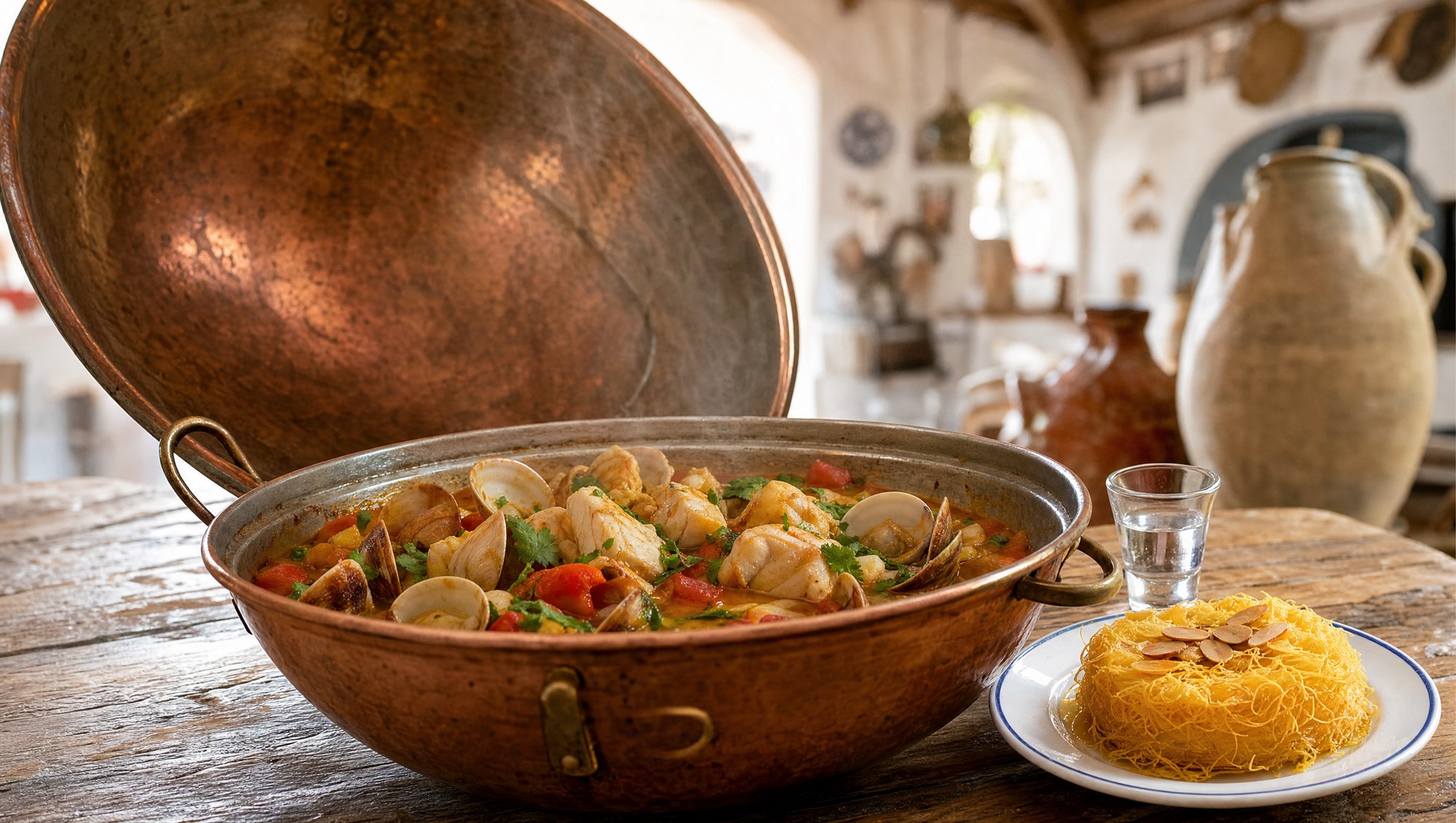
A cataplana is placed in the center—that domed copper cauldron that clatters when you open it. Steam rises in a sudden cloud, smelling of the sea and pepper. Inside, there is tamboril—firm, delicate monkfish—clams still in their shells, tomatoes, and cilantro. The copper has held the heat; the plate almost burns my fingers. I take a bite. The fish falls apart effortlessly, and the sauce has that base of white wine and ocean that only this coast can provide.
"Drink," Fernanda commands, sliding a small glass of clear spirit toward me. "Medronho. From Monchique—the real stuff, from the mountains just above us."
The strawberry tree brandy hits your nose first, warm and fruity, then goes straight down, waking you up to your very ears. Griet coughs and laughs. Joaquim raises his glass toward the Monchique hills, one of the nine castles that fell in 1189, like a wink across the centuries.
And for dessert, a Dom Rodrigo—that little Algarvian marvel of egg threads, almonds, and sugar, wrapped in gold foil that you unfold like a gift. It is so sweet it makes you close your eyes, stringy and scented with cinnamon. Fernanda watches us eat with the quiet satisfaction of someone who knows you shouldn't discuss history on an empty stomach.
The Legend of the Almond Blossoms
It is at the table, in fact, that Dona Fernanda lowers her voice to tell the story. Around us, the dining room has emptied.
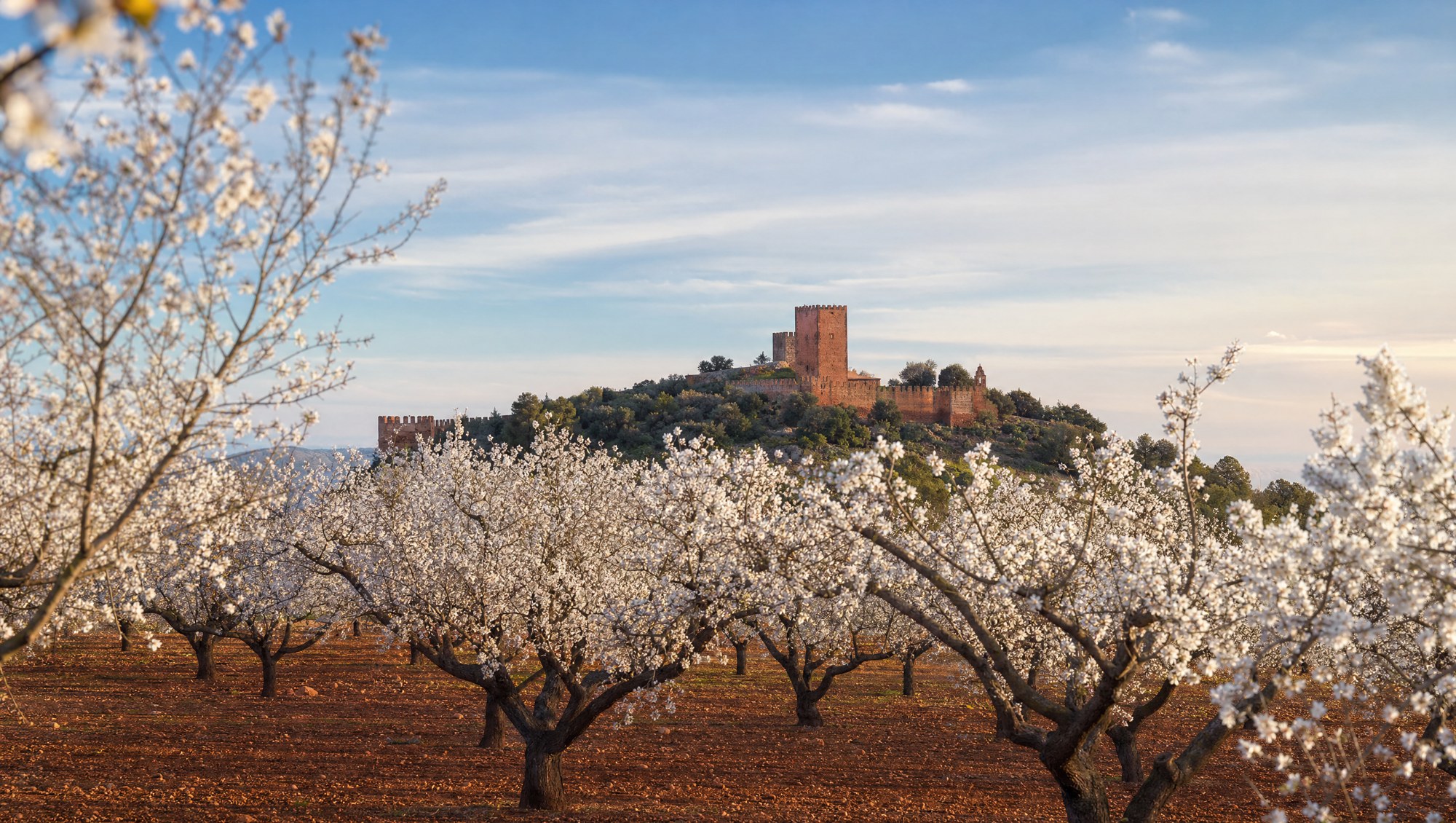
"They say," she begins—and I note that she specifically says *they say*—"that a very long time ago, a Moorish king of these lands married a princess from the North, from the ends of the earth, where the winter is white. Here, she had everything: the sun, the oranges, the sea. But she was wasting away. She missed the snow of her homeland. So, for her, the king had thousands of almond trees planted across the entire plain. And one January morning, when the trees all bloomed at once, she opened her window and saw the whole countryside covered in white. Her snow. She finally smiled."
A silence follows. The legend is beautiful, and all the more so here, where other people from the North really did come—armed, this time—to seek their fortune under this sky.
Griet, true to form, sets her glass down gently. "It’s a very old story, and it’s told all around the Mediterranean in a thousand variations. No document links it to any specific king of Silves. But," she adds with a smile, "the almond trees do indeed bloom white every winter on this plain. That part is true. The rest belongs to those who love to dream."
There you have it, dear reader: the right perspective. You can love a legend without mistaking it for history. Both have their place, provided you never confuse the two.
What the Setting Sun Leaves Behind
We head back out as the light fades. The red sandstone of the castle turns deep orange, then violet. This is the hour when Silves becomes what it has always been: a sleeping beauty on her hill.
For history did not keep its promise. Barely two years after this siege, in July 1191, the Almohads retook Silves. Sancho had to give it back. All that blood, all that thirst, all those quarrels over loot—for just two summers of possession. It would take until the middle of the following century for the Algarve to become Portuguese for good.
Dona Fernanda takes one last look at the ramparts. "Men pass," she says simply. "The stone remains. And the almond trees bloom again."
To you, my reader: the next time you see a magnificent fortress standing tall, remember Silves. The most beautiful walls in the world are worth nothing without a sip of water. And the most victorious alliances can fall apart at the very moment of triumph, over a simple division of spoils.
Nós vamos embora, mas Silves fica. We leave, but Silves remains.
Category: Great battles · Country: Portugal · Location type: Sites of memory
You know, tracing a story like this back to its roots comes at a price. It’s not enough to just tell it beautifully. You have to go there, read the Narratio in the Latin of the crusaders, cross-reference the chroniclers, verify every date with historians, and distinguish what is documented from what is legend. It is this patient, invisible work of verification that takes the most time. And for an independent author, time is the only currency that truly matters.
If these stories resonate with you, supporting this work will cost you less than a coffee and a glass of Portuguese wine. For €5 a month, you aren't just supporting an independent author: you’re joining a community of active Iberophiles, and you’re helping bring a new story to life every month. You vote for the story that interests you and that you want to see written. If your choice wins, your name is engraved at the bottom of that article, published for everyone to read and recognized by other readers as the person who brought it into existence. A text you can share and discuss at dinner parties with your friends and anyone else who shares your love for Portugal and Spain—a text that will help other Iberophiles discover these lands. Every month, your voice counts again, helping this vibrant, participatory community grow a little more.
And as long as you are a member, the entire Library is open to you: 14 ebooks already written, with a total value of €138.60, included in your subscription.
If you ever decide to leave, no ebook truly disappears: you will always be able to purchase them individually for €9.90 each.
Because a journey never really ends. It continues, somewhere between the pages and the memory. — Lucas Lunes, author of ancient stones