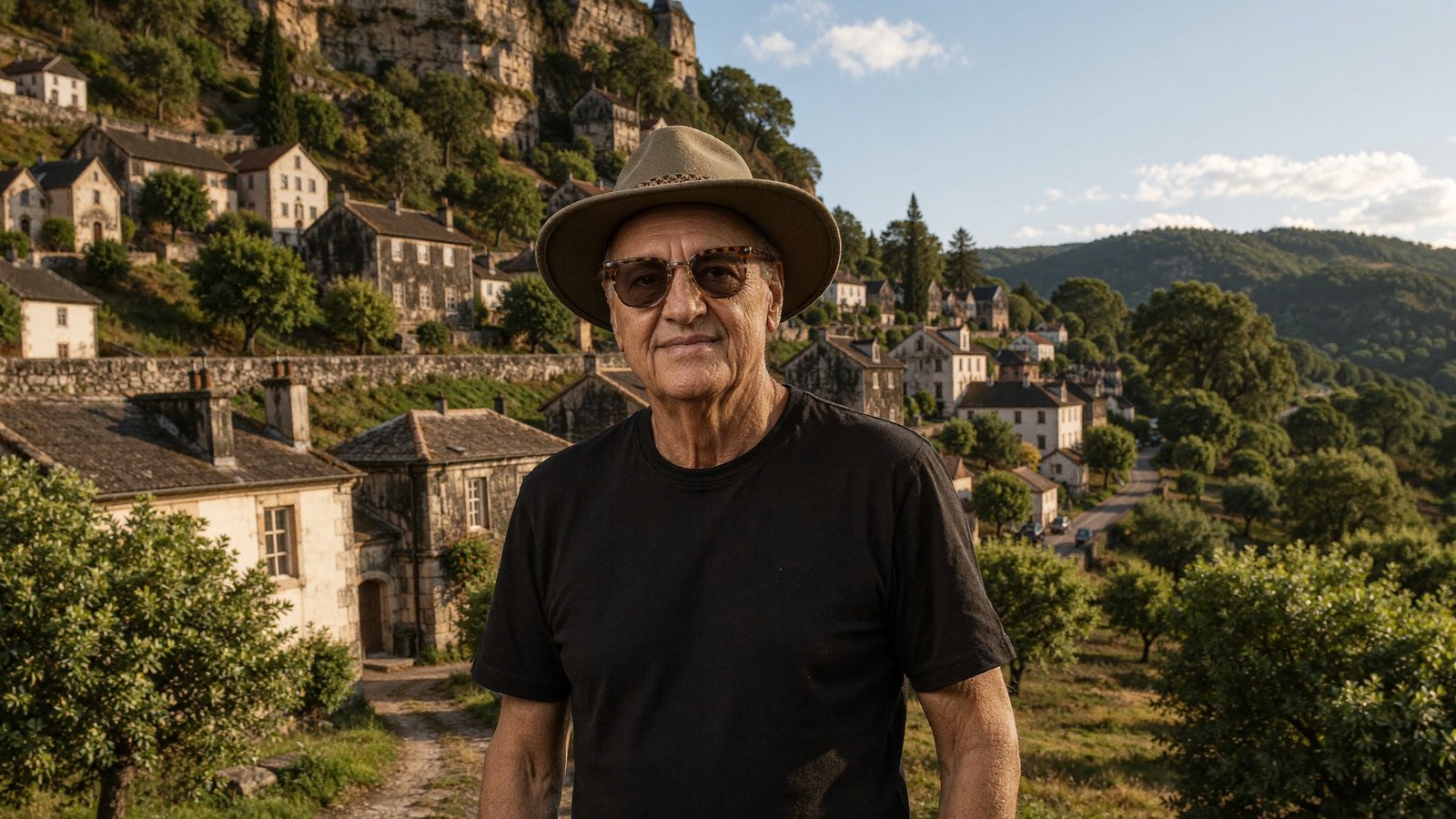
Your travel chronicle on Talasnal, Portugal—a schist village in the Serra da Lousã—with Teresa, João, and Inês (20th century), back when the central mountains were emptying of their inhabitants, while in France, the Champigny-sur-Marne shantytown was filling up with Portuguese people fleeing the Salazar dictatorship.
Your Daily Iberian Travel Chronicle & Guide
How a schist village emptied out until the very last hearth, how a legend about a spring watched over its stones, and how those who had fled it sometimes returned.
You know, there are villages built against a mountain, and then there are villages that seem born from it. Talasnal is the latter.
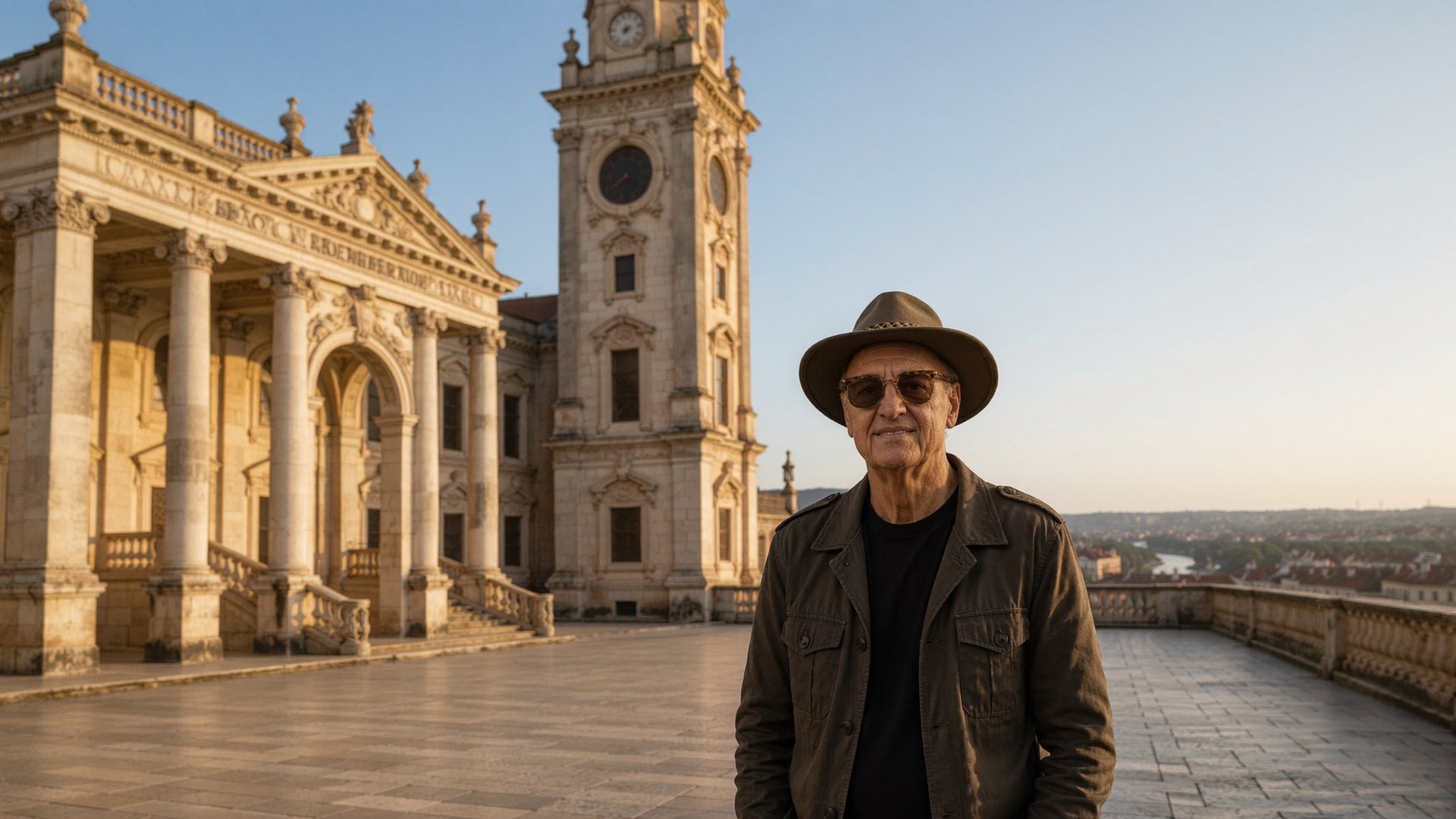
You climb up from Lousã along a road that twists between cork oaks and chestnut trees—twelve kilometers that transport you to another century. Then, around a bend, it appears: a stack of brown schist houses clinging to the slope, so perfectly blended into the rock that at first glance you think you’re seeing an outcrop, not a hamlet. The roofs tumble down the ridge. No cars pass by. You can hear the water of a fountain and, far below, the bottom of the Ribeira de São João valley.
Three people were waiting for me in the small square, in the shade of a vine trellis.
Teresa arrived first. Fifty years old, born in the Paris suburbs—in Champigny, actually—to parents who left the Minho region in the sixties. For a few years now, she has been returning to the lands of the center and north that haunted her, even though she never lived there. "I grew up with my parents' saudade," she told me, "without ever knowing which village it came from. So I’m visiting them all, one by one."
João joined us next. Sixty years old, a historian from Coimbra—forty kilometers away as the crow flies, but light-years away in terms of destiny. He knows these mountains the way one knows a family wound. "Don't get me started on the 'good old days,'" he warned right away. "These stones are beautiful. The life we led inside them was very hard."
And Inês, twenty-five, a photographer, also from Coimbra, with a camera already in hand. She was framing an ajar door before she even said hello. "Empty houses speak louder than full ones," she remarked. "You just have to let them talk."
The air smelled of cool stone, woodsmoke, and, somewhere, bread.
A village born of schist
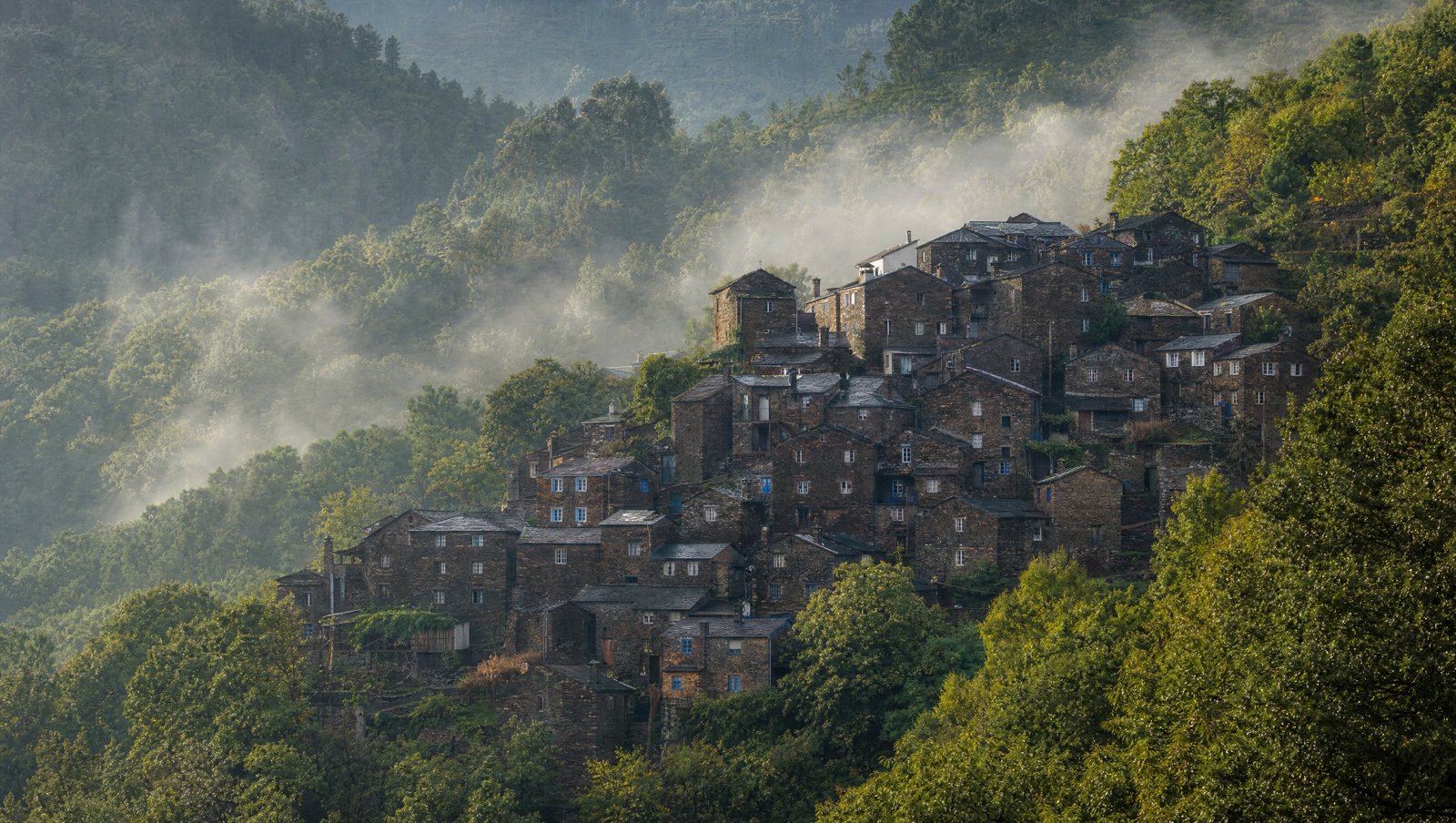
We walked back up the main alley, steep and paved with the same dark schist as the walls and roofs. Here, everything is made of a single material: the house, the wall, the path, the steps. The mountain built itself.
"Look how young it actually is," João said. "We imagine these villages are immemorial, but Talasnal only appears in the archives in 1679, in a fine from the Lousã town hall. It doesn't even appear in the 1527 census of the kingdom. These people came up here to live barely three centuries ago, on land that nobody wanted, because it was the only land left."
At its peak, around 1911, Talasnal had over a hundred souls. They grew rye on narrow terraces carved into the slope, kept a few goats, and pressed oil in two small mills, the traces of which can still be seen. There was a fountain, a basin, a tiny roadside oratory for the souls—an alminha—where people would stop for the dead. And a school.
Inês crouched down in front of a low door, framing the cast iron and its stone tank where the water fell with a clear sound.
"Everything revolved around this," João said. "The water. We washed there, we drank there, we met there. In a village like this, the fountain was the village square, just smaller."
He didn't know it yet, but he had just led us straight to the legend.
Firmino, back from Champigny
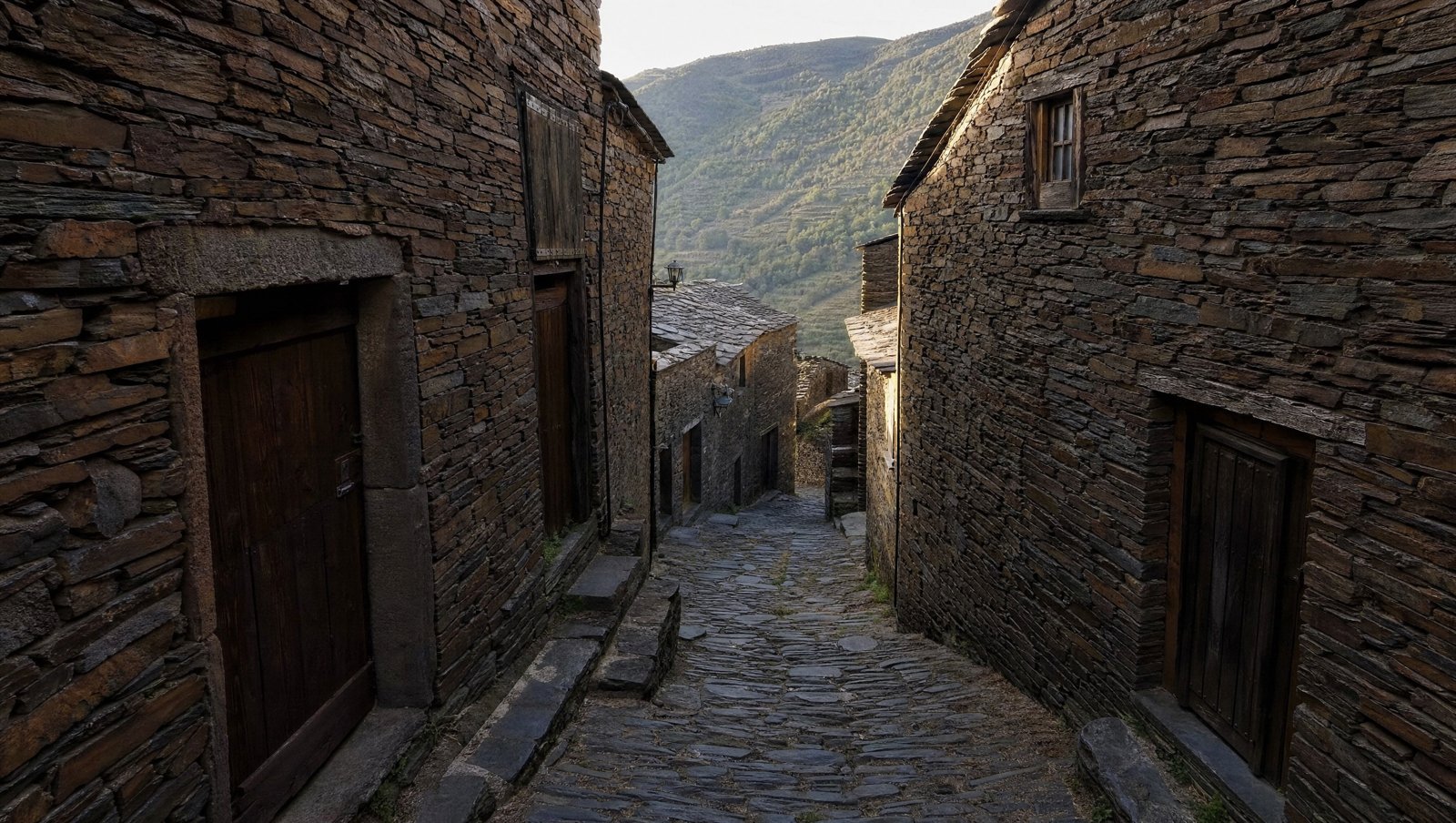
A man was repairing a shutter in front of a restored house a little further up. Maybe seventy years old, with large hands and an accent that rolled differently than João’s. He watched us climb, then, seeing Teresa, something lit up.
"You’re from France," he said. It wasn't a question.
His name is Firmino. He was born in one of these houses, left as a child, and has just returned for his twilight years after forty years spent away.
"Away was Champigny," Teresa said, very quietly.
He nodded slowly. "The Plateau. The shantytown. I was twelve when we moved into the barracks."
You, reading this, pause on that word. Because it connects two places that everything else keeps apart. While Talasnal and a hundred villages like it were emptying out, fifteen hundred kilometers away, on frozen ground in the eastern suburbs of Paris, the largest shantytown in France was rising. From 1956 to the early seventies, up to twelve or fifteen thousand Portuguese crowded into its mud and corrugated iron. Champigny was called the second capital of Portugal. People arrived there by the salto—the leap—the clandestine crossing of the Pyrenees on foot, paid for with the price of a house, to flee poverty, the Salazar dictatorship, and, for the boys, the colonial war in Angola or Mozambique where they didn't want to die.
"We didn't leave to chase dreams," Firmino said. "We left because the land could no longer feed us. My father left first. My mother closed up the house six months later, with the four of us."
João continued, without raising his voice. "That’s the truth behind the postcard. Between the fifties and the seventies, Portugal lost more than a million and a half inhabitants. Here, the school closed in 1975 with two pupils. By 1981, there were only two people left in the entire village. Two."
"And yet it was never entirely dead," Firmino added with stubborn pride. "One couple never left. Never. They kept a fire burning here while we were freezing up there in the North. The restaurant down below still carries their memory."
Teresa said nothing more. She looked out at the valley, just as her mother, no doubt, had looked toward the south from a window in Champigny.
The Moorish maiden of the fountain
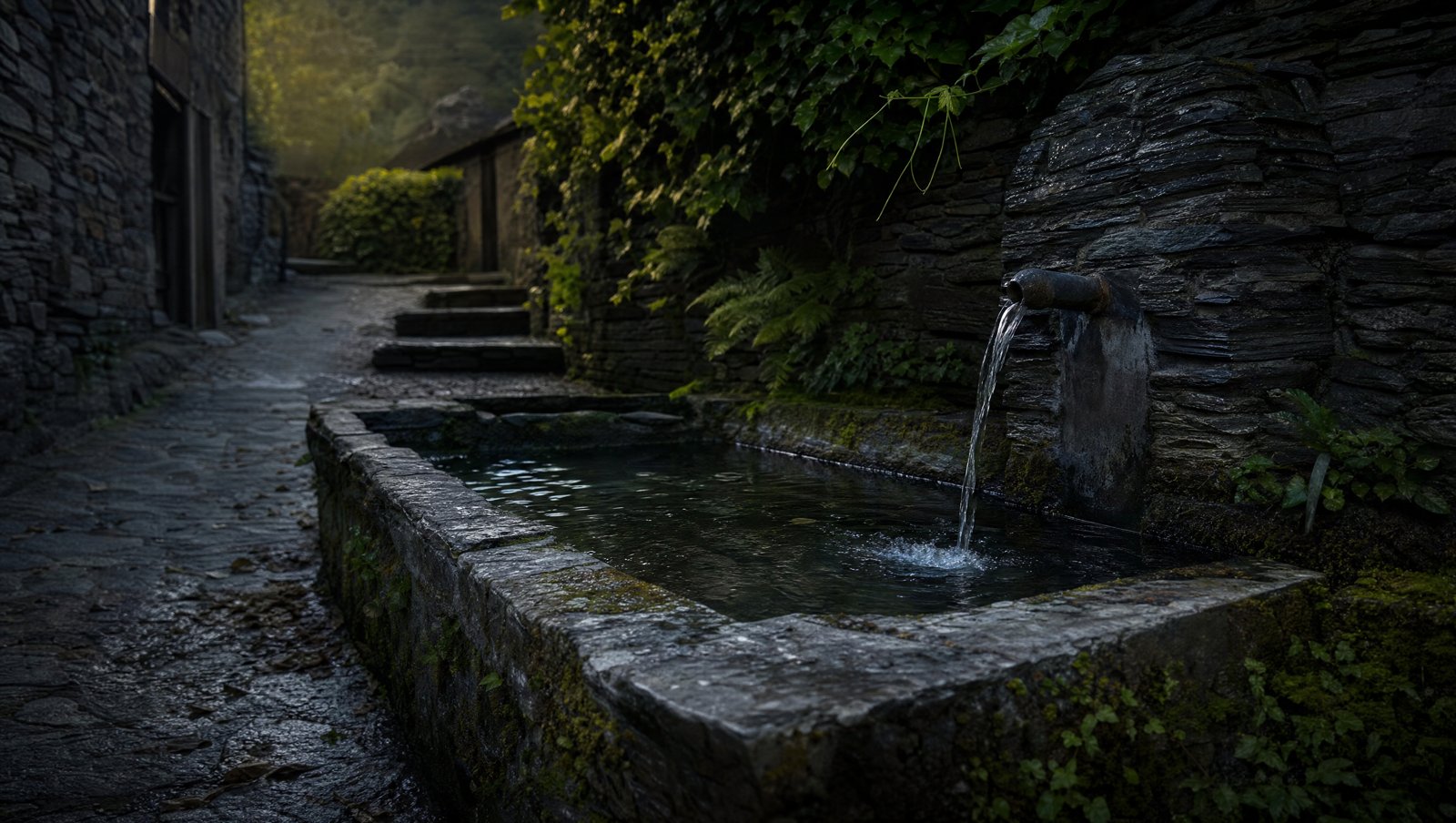
It was Firmino who led us back to the fountain at dusk, when the water takes on the color of pewter.
"Do you want a story about the serra?" He smiled. "My grandmother used to tell it to me when I was little, so I wouldn't be afraid of the dark. Or maybe so that I would be—I was never quite sure."
They say that in these mountains lives a moura encantada, an enchanted Moorish maiden. By day, she is stone. But on certain nights, especially on the night of Saint John, she awakens and comes to sit by the water—a spring, a pool, a well—and there, she combs her long golden hair with a golden comb. To anyone brave enough to approach her without running away, she promises a treasure beyond imagination. They also say that somewhere beneath the serra sleeps the treasure of the Moors, which men have spent their whole lives searching for, and which no one has ever found.
"She appears at every fountain in this country, the moura," João corrected gently, true to form. "There isn't a spring in Portugal that doesn't have its own. It’s older than the Moors, no doubt older than the Romans. It’s our way of saying that a place of passage, a spring, a threshold, always keeps a bit of mystery."
"I know," Firmino replied. "My grandmother told it anyway."
And you, dear reader, do you understand why I’m telling you this? Because the Moorish maiden of the fountain is the wealth we seek elsewhere, which was right there, close by, in the village water. These people left to find a treasure in Paris, in Zurich, in Luxembourg. And the legend had been whispering to them all along that it was sleeping right by their own fountain.
The stone that lives again
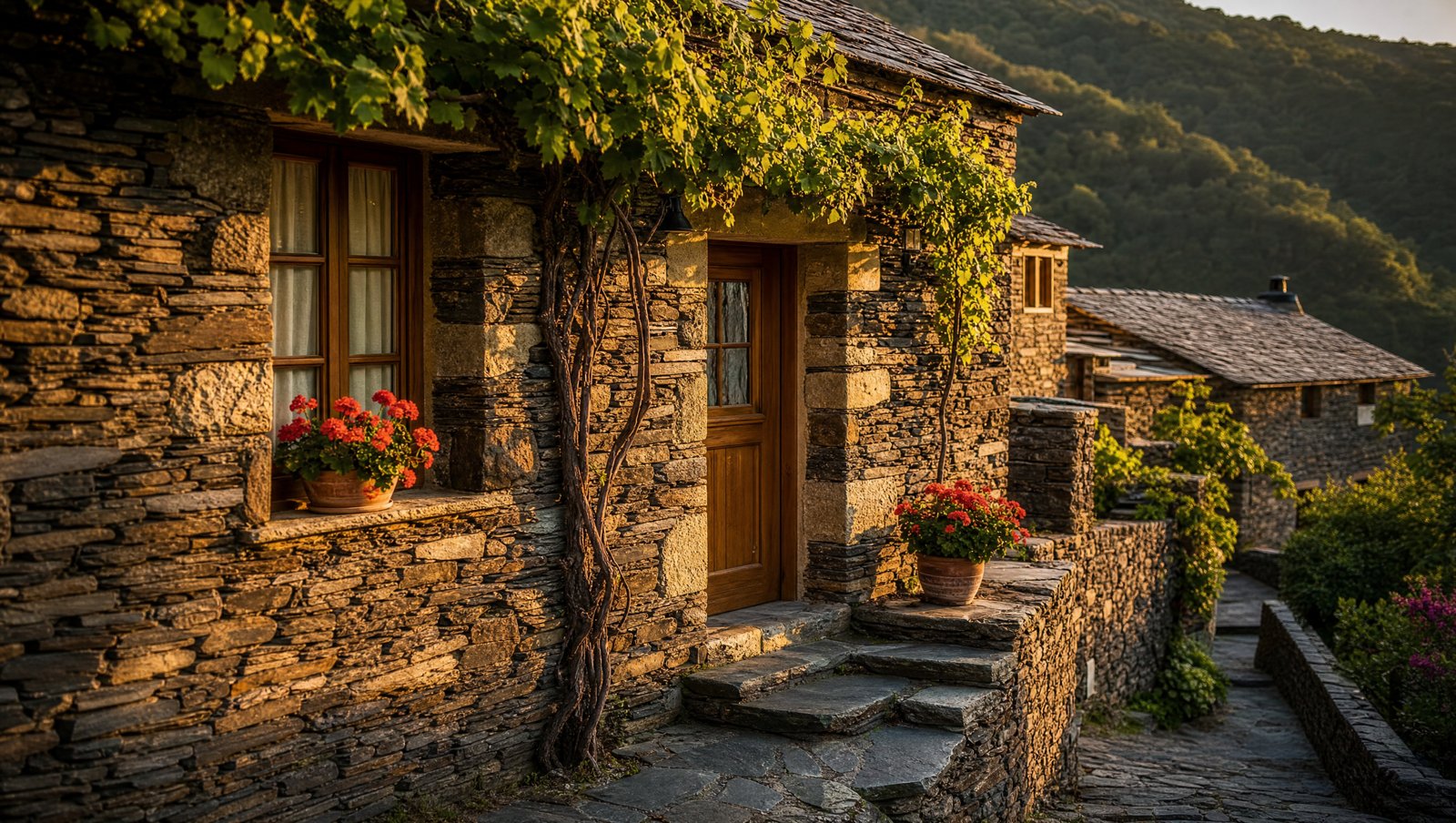
Talasnal is no longer a ghost village, and that is perhaps the most unsettling part.
At the turn of the millennium, a new wind blew through the serra. Under the Aldeias do Xisto program—the schist villages—and thanks to the European Rede Natura 2000 protection, the ruined houses were restored one by one with the care of a master craftsman. The roofs were redone, the lintels preserved, the alleys returned to their original slopes. A taberna reopened. Hikers come up from Lisbon, from Porto, from abroad. And in 2015, the school turned its lights back on, forty years after they had been extinguished.
Inês was photographing a new wall built upon three-century-old foundations.
"It's well done," she said. "Almost too well."
João finished his thought. "It's saved. But the inhabitants of yesterday didn't come back. Their children live in Paris, Luxembourg, Zurich. Some don't even speak Portuguese anymore. The village we saved isn't the one that left. It's another one, slower, more conscious, built on the same stones."
Firmino, for his part, had returned. One of the few. He looked at his house, the one he had fled as a child and was rebuilding as an old man.
"All my life, I had the serra in my head, in Champigny. And now that I'm here, I have Champigny in my head." He shrugged. "We are never quite anywhere, us. That is our treasure and our curse."
Teresa finally spoke, almost to herself.
"My mother could never tell me about her village. But I think I understand it now. It wasn't a place she had lost. It was a fountain in front of which she would never sit again."
Evening was falling over the Serra da Lousã. Down in the valley, the water continued to flow, patient, just as it flowed when the children from here herded goats, when they left, and when, one by one, a few returned.
There you have it, dear reader. You have climbed Talasnal with us. You now know that a stone village can die without a sound and be reborn without its dead, and that the wealth we cross mountains to find is sometimes hidden by the fountain we left behind. Perhaps that is why we return. To sit, finally, by the water's edge.
You know, seeking out these stories has a price. Traveling to these places, consulting archives, verifying every date with historians—it takes time, and for an independent author, time is the only currency he truly possesses.
If these stories move you, supporting this work will cost you less than a coffee and a glass of Portuguese wine. For €5 a month, you join the newsletter, with the latest stories and two previews before anyone else. And as long as you are a member, the entire Library is open to you: 14 ebooks already written, with a total value of €138.60, included in your subscription.
If you ever leave, no ebook truly disappears: you will always be able to purchase them individually for €9.90 each.
Because a journey never truly ends. It continues, somewhere between the pages and the memory.
Lucas Lunes, author of ancient stones