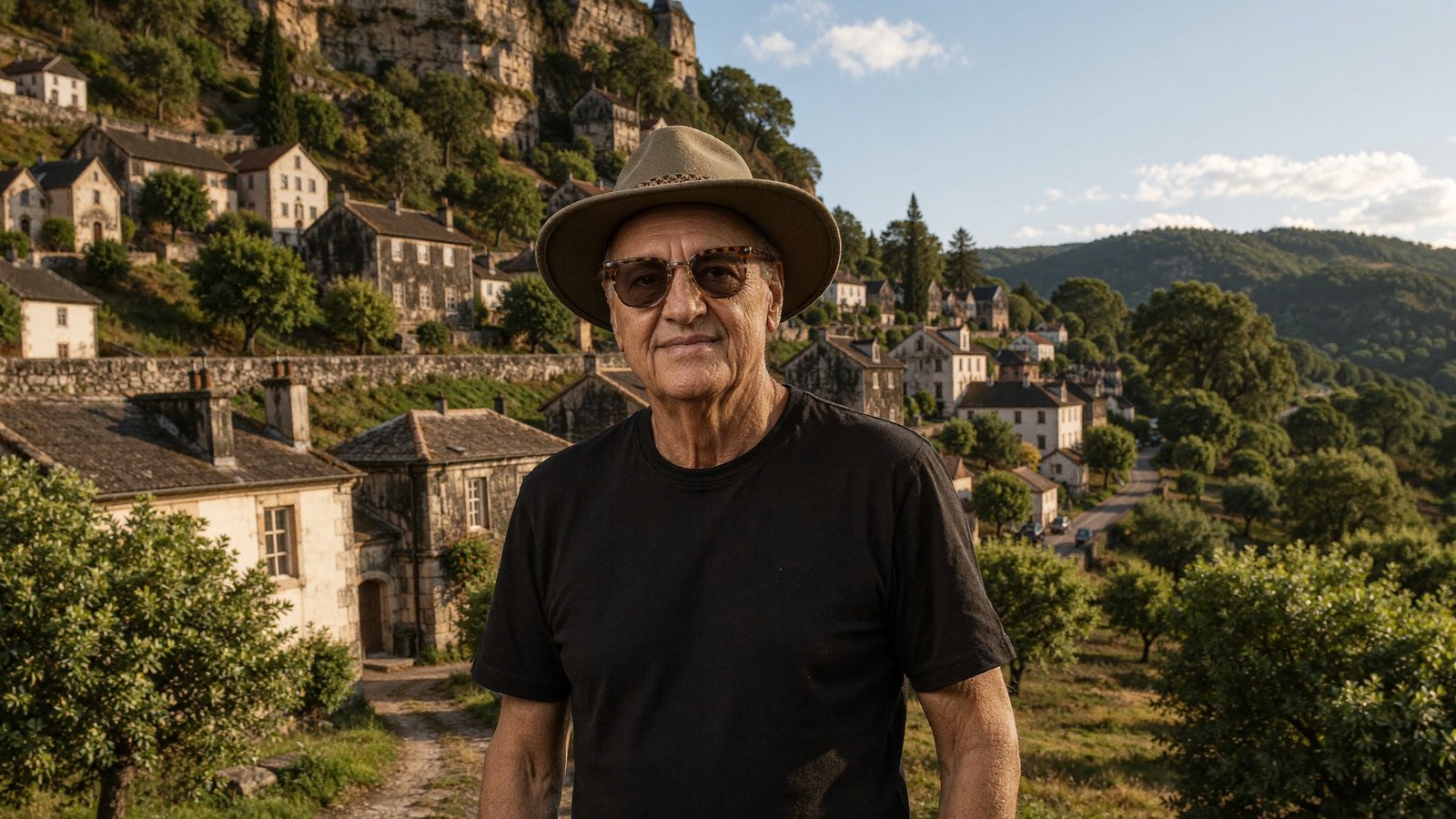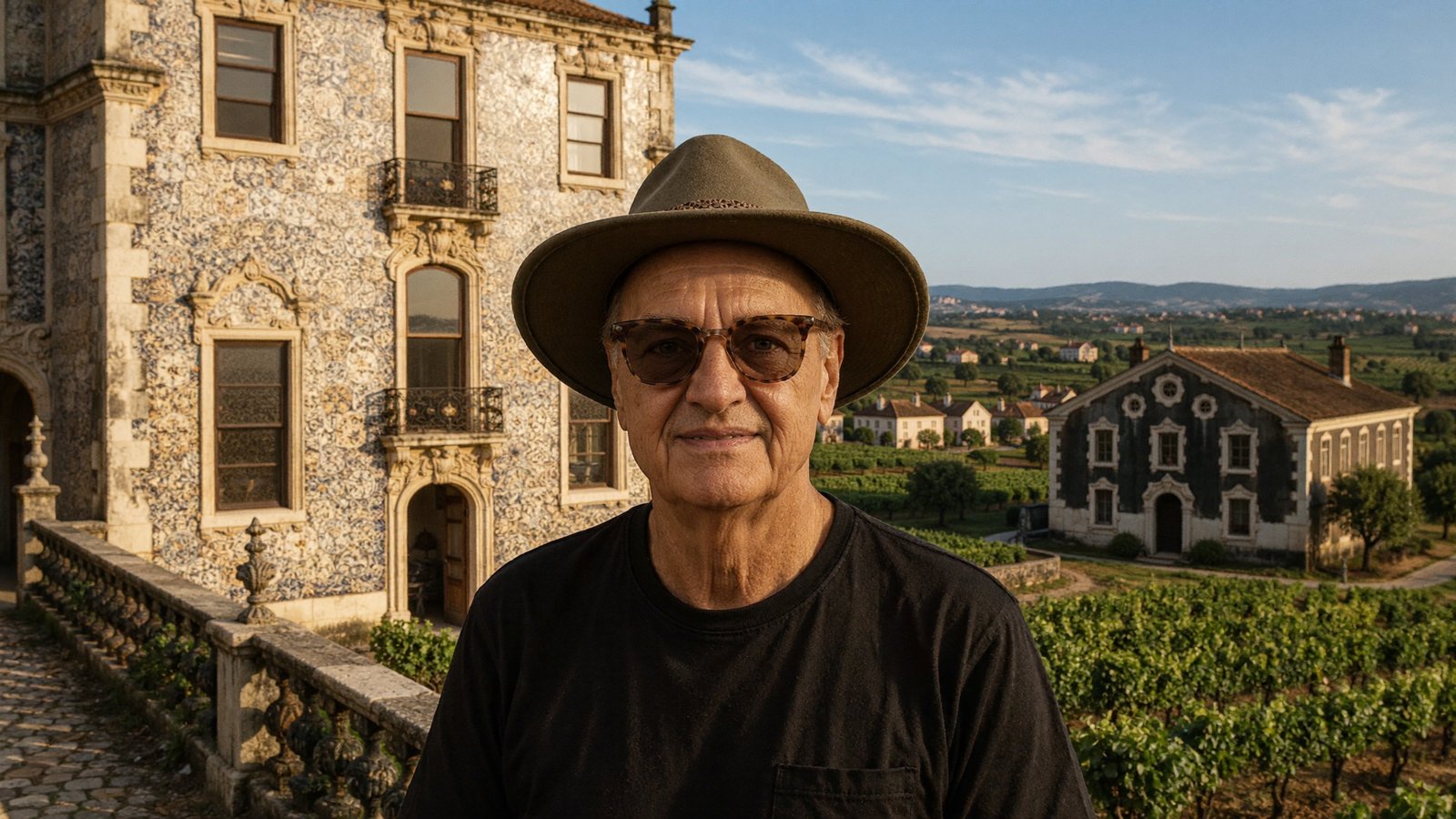
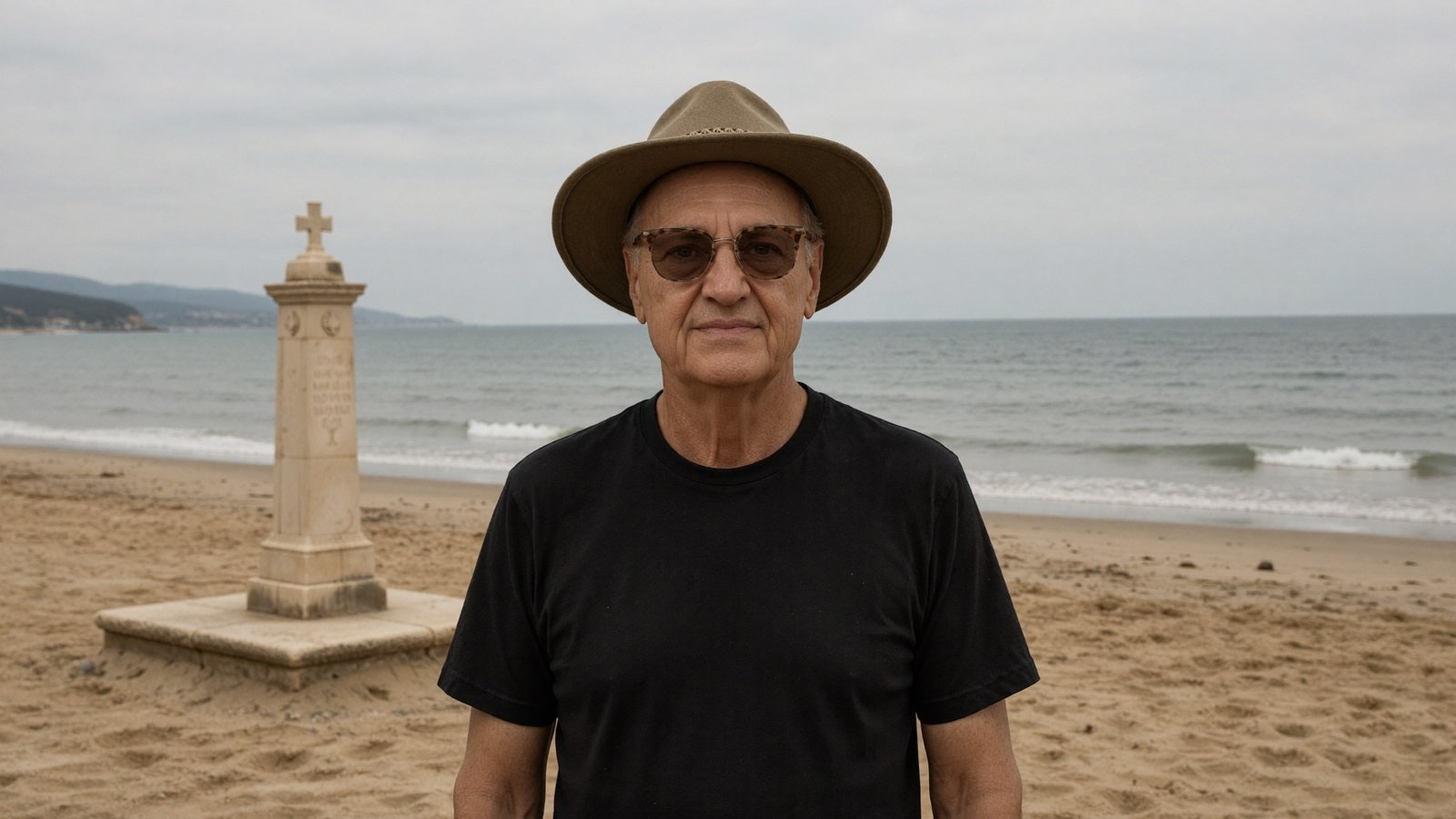
Your travel chronicle tracing the path of Spain in exile, from the beach of Argelès-sur-Mer to the grave in Collioure, with the refugees of the Retirada and the poet Antonio Machado (1939), back when the Spanish Republic was collapsing, while on the other side of the Pyrenees, Franco signed the final communiqué of the war on April 1, 1939.
Your Daily Iberian Travel Chronicle & Guide
How half a million Spaniards found, at the end of their flight, a beach ringed with barbed wire, and how a poet died a few kilometers away, with a final verse about the sun of his childhood in his pocket.
You know, there are beaches made for summer, and beaches that carry a winter they never speak of. Argelès-sur-Mer is both.
On this late autumn morning, the sand is almost empty. A few walkers, a dog, the sea coming and going, the long line of the Pyrenees plunging into the Mediterranean to the south. It’s beautiful, it’s peaceful, it’s a postcard. And it is exactly there, on that very sand, that one of the harshest chapters of 20th-century Spanish history took place.
Three people were waiting for me near the entrance to the beach.
Pilar arrived first. In her fifties, born in Perpignan, twenty kilometers from here, the granddaughter of a man who crossed this border in February 1939. "My grandfather never spoke about it," she told me right away, as if she needed to get it out before anything else. "He just said: the beach. All his life, that word meant something different to him than it did to us."
Ramón joined us next. Sixty years old, a historian of memory from Barcelona, a life spent in the archives of exile. "Don't call it a holiday camp, don't call it a reception center," he warned. "The French government of the time wrote 'concentration camp.' Let's use the words they used."
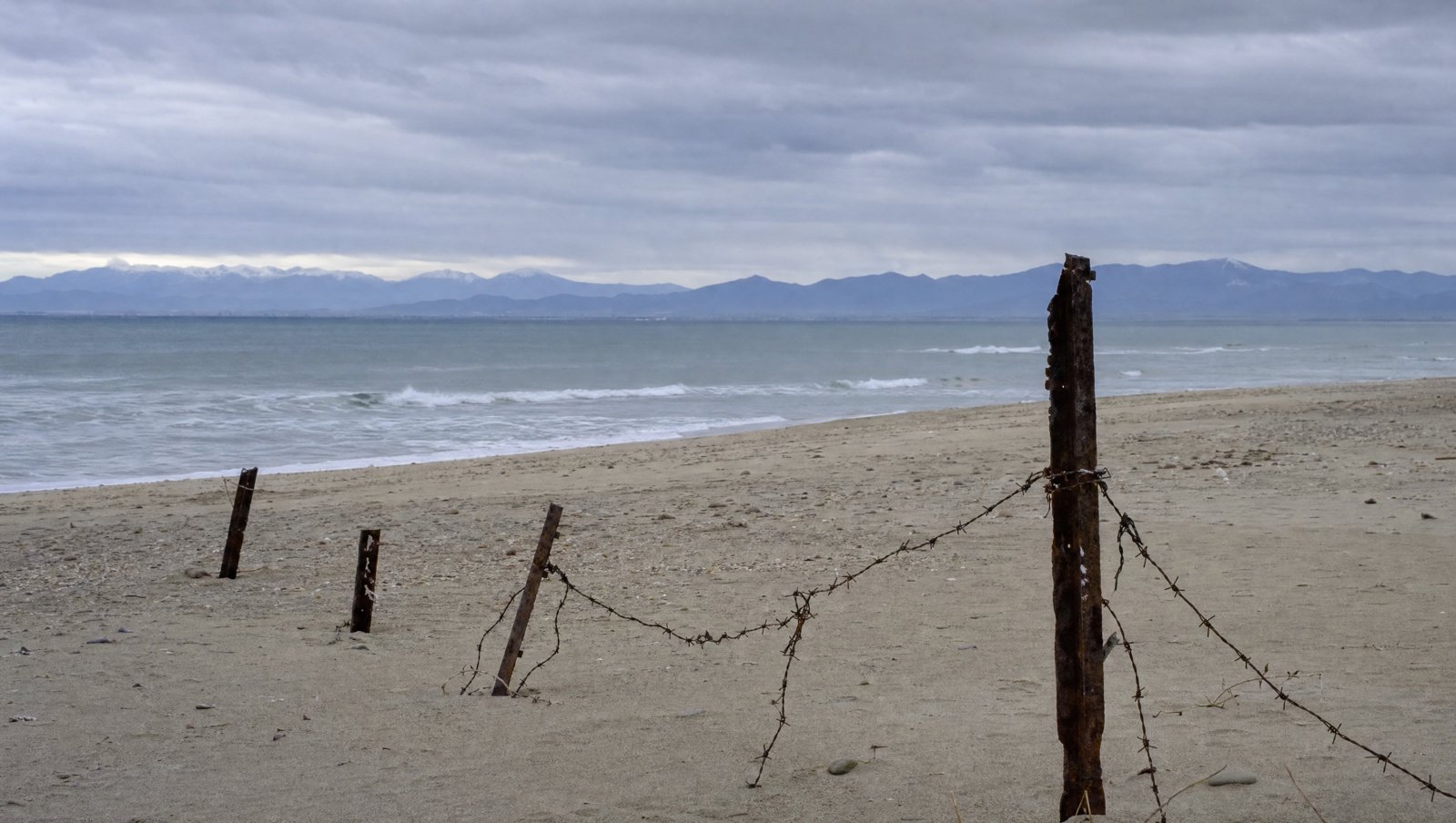
And Clara, twenty-six, a photographer from Madrid, silent, her camera already raised toward the barbed wire of an ordinary fence that had nothing to do with history, but was enough to make the shot. "The sand swallowed everything," she said. "That’s what I want to photograph. What can no longer be seen."
The Beach of Barbed Wire
I need to tell you how we ended up here, on a beach, in the middle of winter.
In January 1939, the Spanish Civil War was drawing to a close. Barcelona fell on the 26th. Catalonia, the last bastion of the Republic, collapsed. On January 27, France opened its border, and thus began what would be called the Retirada, the retreat. In a few days, nearly half a million people crossed the Pyrenees on foot, in the rain, through the snow of the mountain passes. Defeated soldiers, but above all civilians: women, the elderly, children, fleeing the bombings and the repression that was looming.
"Half a million," Ramón repeated, to let the number sink in. "For a department, the Pyrénées-Orientales, which had barely two hundred and forty thousand inhabitants. In March 1939, there were more Spaniards in the camps of Roussillon than there were Roussillonnais in the entire department."
Nothing was ready. So, in a hurry, starting in February, a camp was set up on this beach. Barbed wire was planted in the sand, between the dunes and the sea, and the refugees were corralled there. No barracks at first. No drinking water. No latrines. No shelter from the tramontane wind that freezes everything. Nothing but the sand, the sea, the wire, and the winter.
"Between February and June 1939, more than one hundred thousand people passed through here," said Ramón. "Argelès was the first and the largest. People slept in holes dug in the sand. They drank brackish water from makeshift wells. Dysentery did the rest. And families were separated: men on one side, women, children, and the elderly sent elsewhere."
Pilar was looking at the sea, far away.
"My grandfather was nineteen. He told me only once that he had slept buried in the sand up to his shoulders to stay warmer. Just once. After that, nothing more."
Clara was no longer taking photos. She was listening, her camera hanging uselessly around her neck.
Josep, and what the sand has kept
An elderly man had approached without us hearing him, one of those locals who know how to recognize, by the way people look at a beach, that they haven't come to swim. His name is Josep, he is from Argelès, and for years he has kept the memory of the camp alive as a volunteer, guide, and guardian.
"You're looking for the camp," he said. "There's nothing to see, and that's the hardest part. The sand has taken it all back."
Then he lowered his voice, as people do when they are about to share a story you won't find in any books.
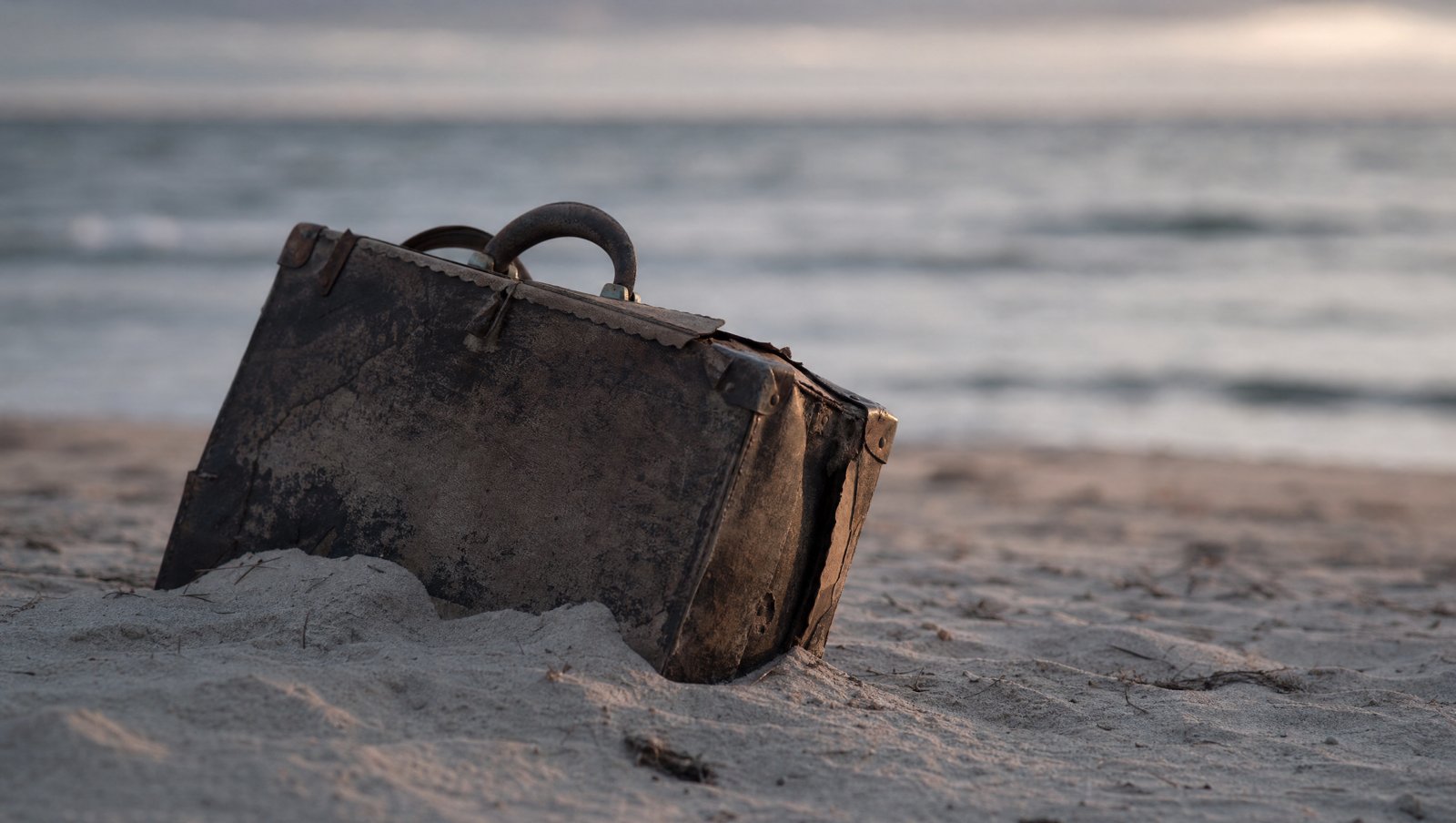
They say around here that some men, before being searched and disarmed at the camp entrance, buried what they didn't want to give up in the sand. A rifle for one, to keep believing he would fight again. A folded flag for another. For many, a bundle of letters, a photo, a wedding ring, a handful of Spanish soil. They dug by night, marked the spot in their minds, and swore they would return. They say the sands of Argelès still hold those buried promises somewhere. And that, some winters, the sea gives one back.
"It's a beautiful story," Ramón said softly, without a hint of scorn. "There's no proof of it. No archives mention treasures in the sand. But let me tell you, friend: when a people have nothing left to hold onto, they bury what matters most and swear to return. No archive can contradict that, either."
And you, dear reader, do you understand why I’m sharing this legend with you? Because it is the entirety of exile, captured in a single image. We leave behind what we love most, promising ourselves we will return for it, and most often, we never do. The treasure remains in the sand. And the sand, for its part, gives back almost nothing.
The Poet of Blue Days
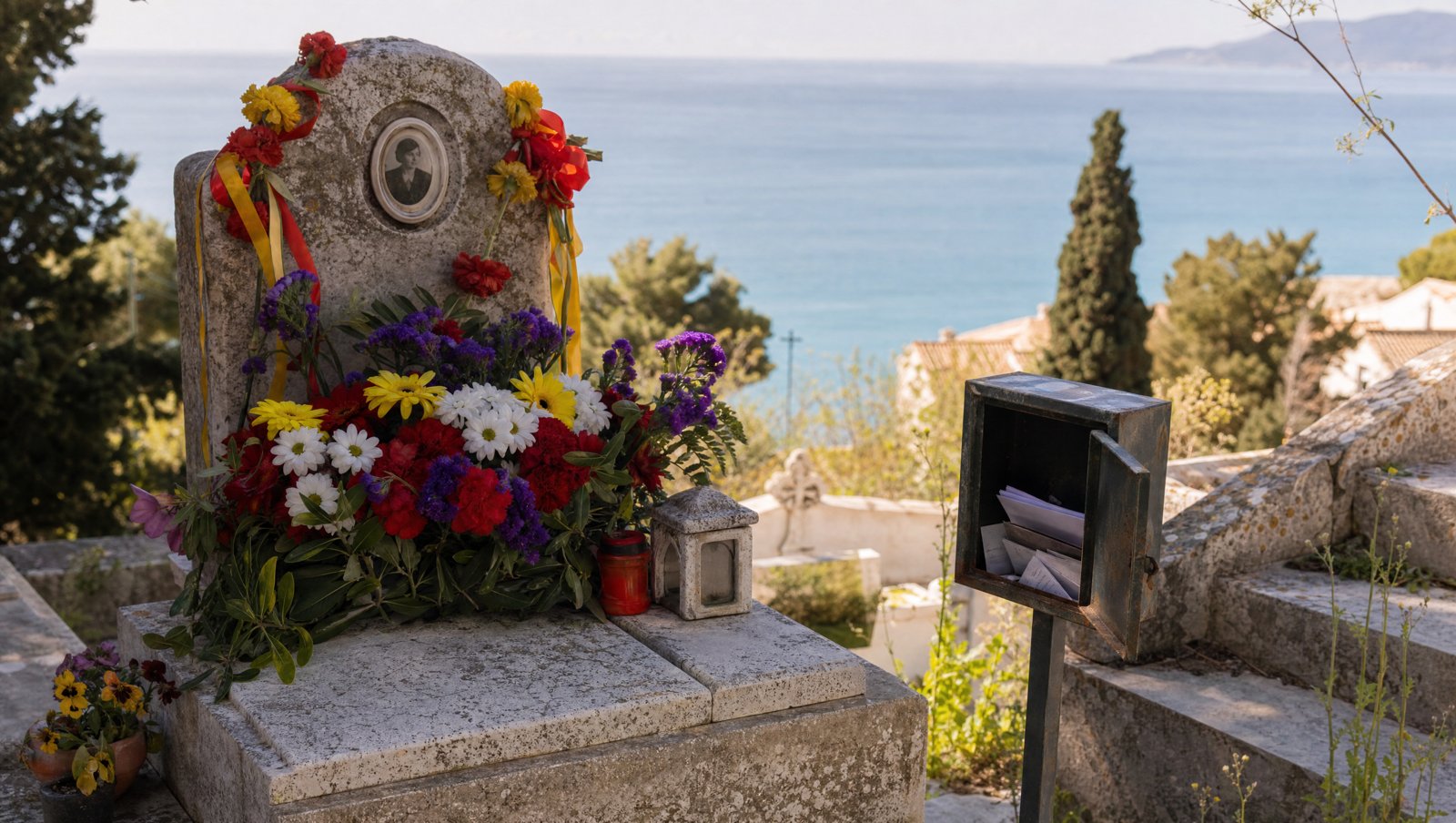
A few kilometers south of Argelès, the coast breaks into small coves, and there, tucked away, lies Collioure. A fishing port that painters loved for its light. That is where we must go now, up to the small cemetery overlooking the sea.
Because a man arrived there, too, during the Retirada. His name was Antonio Machado. He was one of Spain's greatest poets.
He was sixty-four when he crossed the border on foot on January 27, 1939, in the rain, with his elderly mother Ana, his brother José, and his sister-in-law. Exhausted and ill, he abandoned his suitcases like everyone else. On the 28th, a crowded train dropped him off in Collioure. He settled into a room at the Hôtel Bougnol-Quintana, and he would barely leave it again.
He died on February 22, 1939, at three-thirty in the afternoon. His mother was dying in the same bed; she followed him three days later. He was buried in Collioure, his coffin draped in the Republican flag, carried by twelve Spanish soldiers who were prisoners in a nearby fort.
"And that is where it becomes unbearably poignant," I said to the other three.
After his death, his brother José searched the pockets of his coat. He found a crumpled piece of paper. On it was a single line, the last one Machado ever wrote, scribbled in Collioure facing that sea: "Estos días azules y este sol de la infancia." These blue days, and this sun of childhood.
A poet fleeing war, dying of exhaustion and grief on the edge of a country that was not his own, and who, in his final days, does not write of anger, of defeat, or of Franco. He writes of the blue of the sky and the sun from when he was a child.
Pilar had turned away. Clara took a photo—just one—of the sea from the cemetery, without a word.
"That poet said something else," Ramón whispered. "That the path doesn't exist beforehand, that you make it by walking. All those people, on the beach, in the mountain passes, they were making a path that didn't exist. Toward nothing certain. Just toward what came next."
Sueños encontrados
So, what became of those in the sand?
Many were drafted into foreign labor companies, employed on roads, in fields, and in factories. Some left by boat for Mexico, which took them in. Others, when the war came, joined the French Resistance, and a few would end up deported. Many simply stayed and rebuilt their lives where they had only intended to pass through. They learned French, opened workshops, and raised children who would speak two languages and carry two countries.
This is where the title of this story finds its meaning. Tierras perdidas, sueños encontrados. Lost lands, found dreams. Because from this catastrophe, something else was born, against all odds: a Spain outside of Spain, tenacious and proud, which took root in Roussillon, in Toulouse, in Paris, and which eventually passed on not shame, but memory.
"My grandfather never went back to live in Spain," Pilar said. "He stayed in Perpignan. But I, his granddaughter, am here on his beach, and I know his story. He thought he had lost everything. He didn't know he was leaving me this."
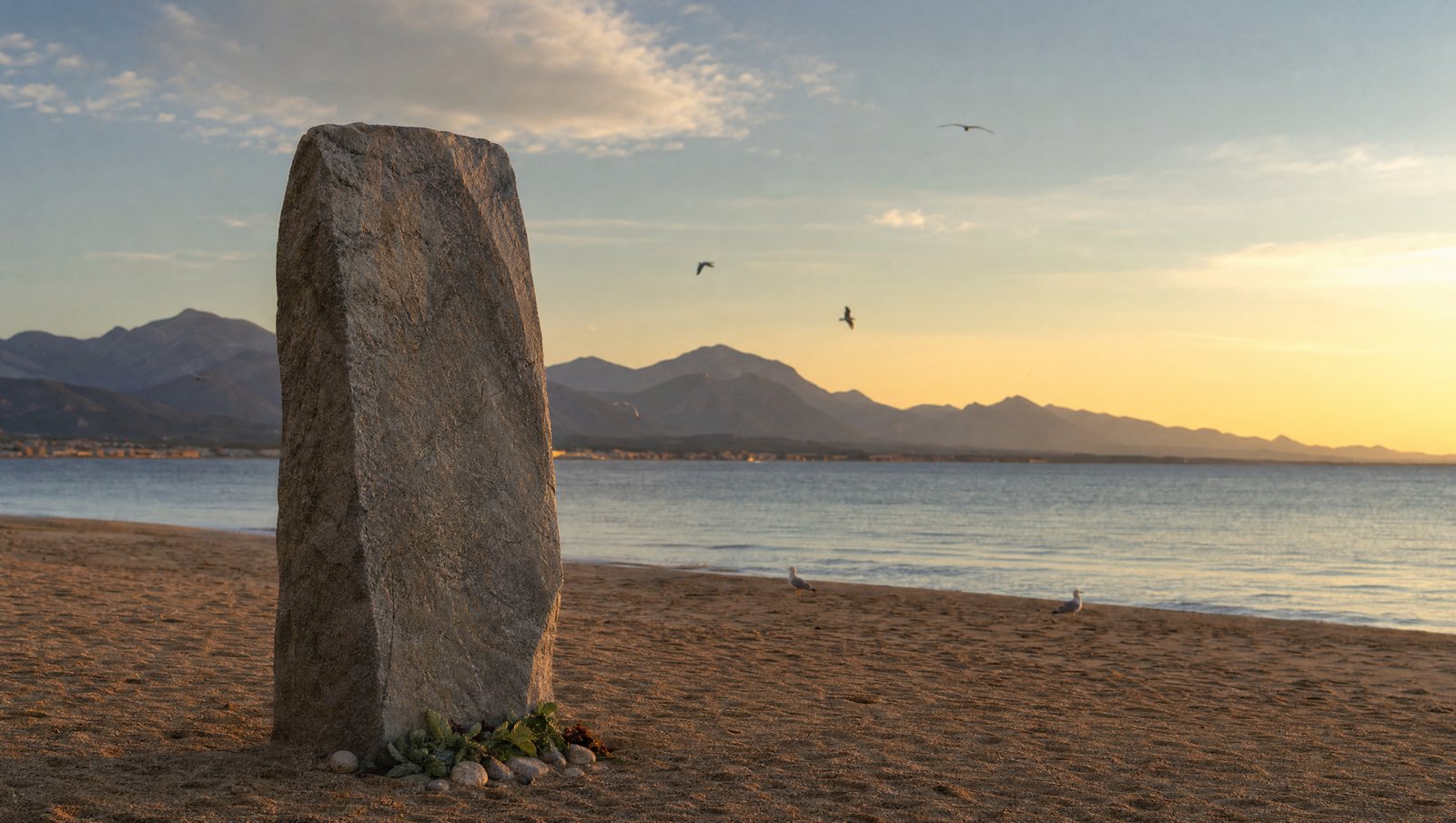
Today, a memorial stands in Argelès, opened in 2014, featuring a monolith on the beach and a small Spanish cemetery. Fifteen thousand people visit it every year. There, you learn the word Retirada and put faces to the hundred thousand souls lost in the sand.
Evening was falling over the Mediterranean. The same sea that had seen the barbed wire, the holes in the sand, and the poet dying in Collioure. It shimmered, indifferent and gentle, exactly as in Machado’s final verse.
There you have it, dear reader. You have walked on a summer beach that was once a winter camp, and you have climbed to the grave of a poet who died in exile. You now know that Iberia does not end at the Pyrenees, that it spilled over to the other side in pain, and that it unintentionally planted dreams there that eventually took root. Perhaps that is why we return to these beaches: to give back to the sand a little of what it has kept.
You know, uncovering these stories comes at a price. Traveling to these places, consulting archives, and verifying every date with historians takes time—and for an independent author, time is the only currency that truly matters.
If these stories move you, supporting this work will cost you less than a coffee and a glass of Portuguese wine. For €5 a month, you join the newsletter, receiving the latest stories and two previews before anyone else. And as long as you are a member, the entire Library is open to you: 14 ebooks already written, with a total value of €138.60, included in your subscription.
If you ever decide to leave, no ebook truly disappears: you will always be able to purchase them individually for €9.90 each.
Because a journey never really ends. It continues, somewhere between the pages and the memory.
Lucas Lunes, author of ancient stones