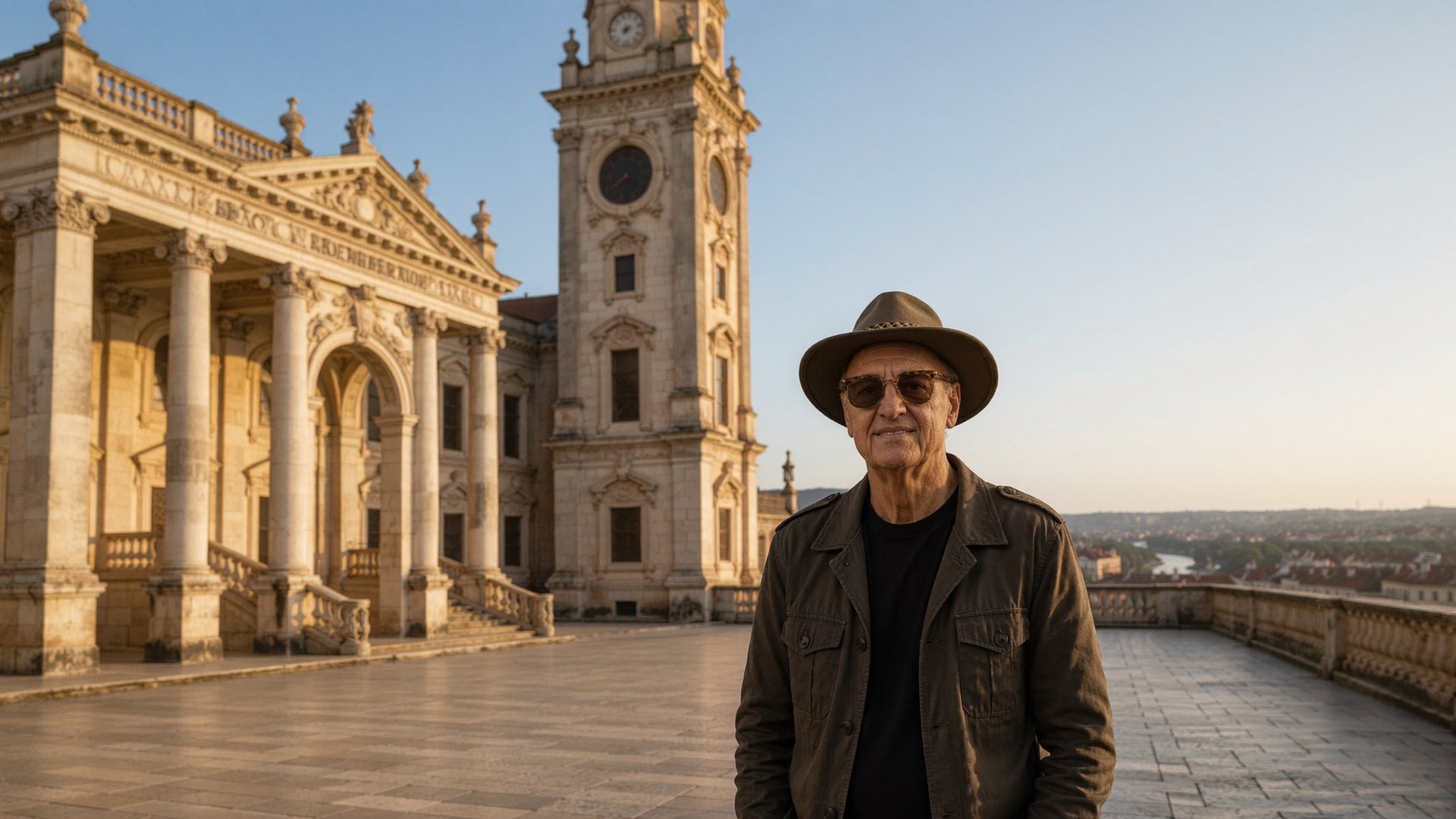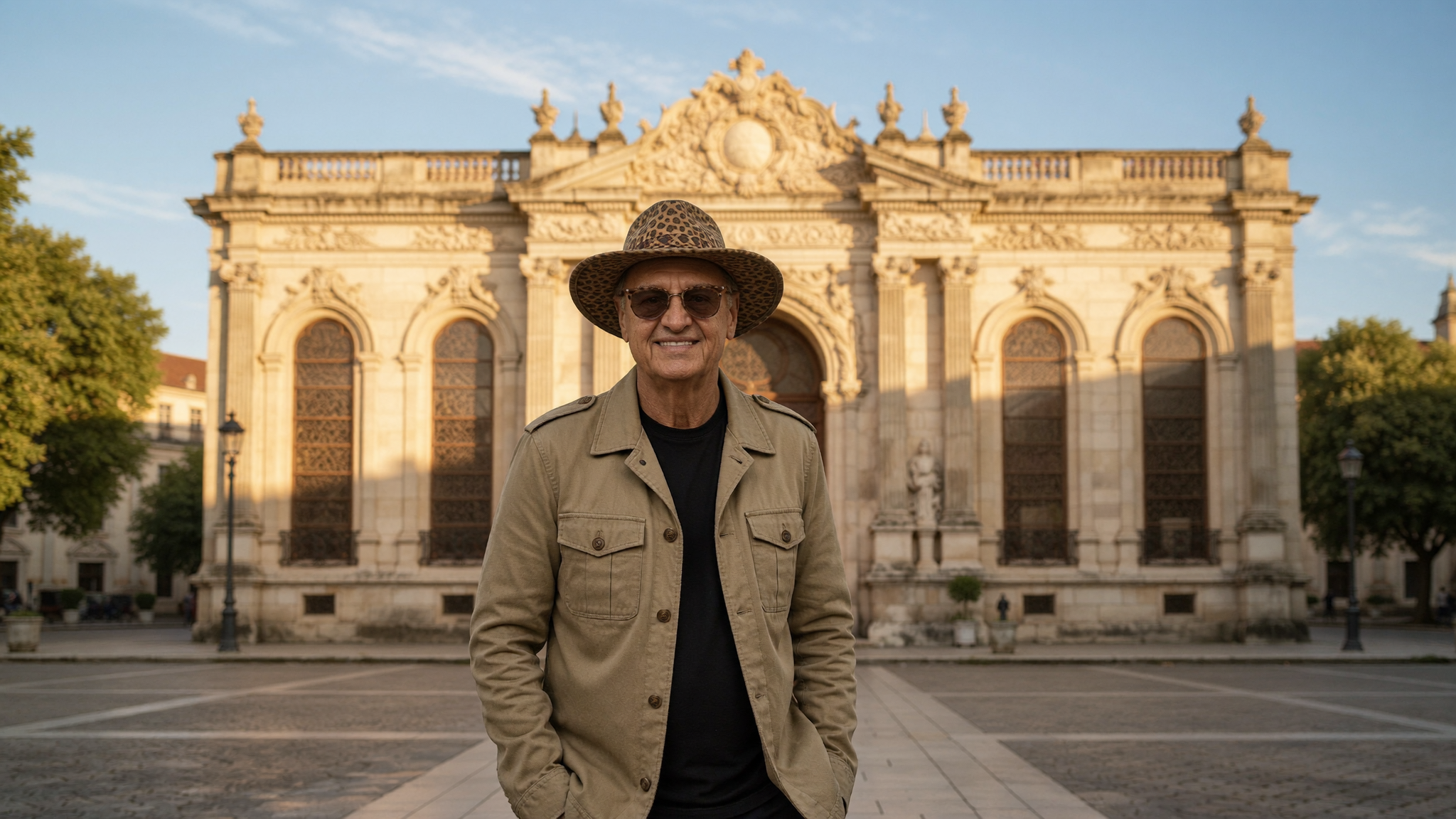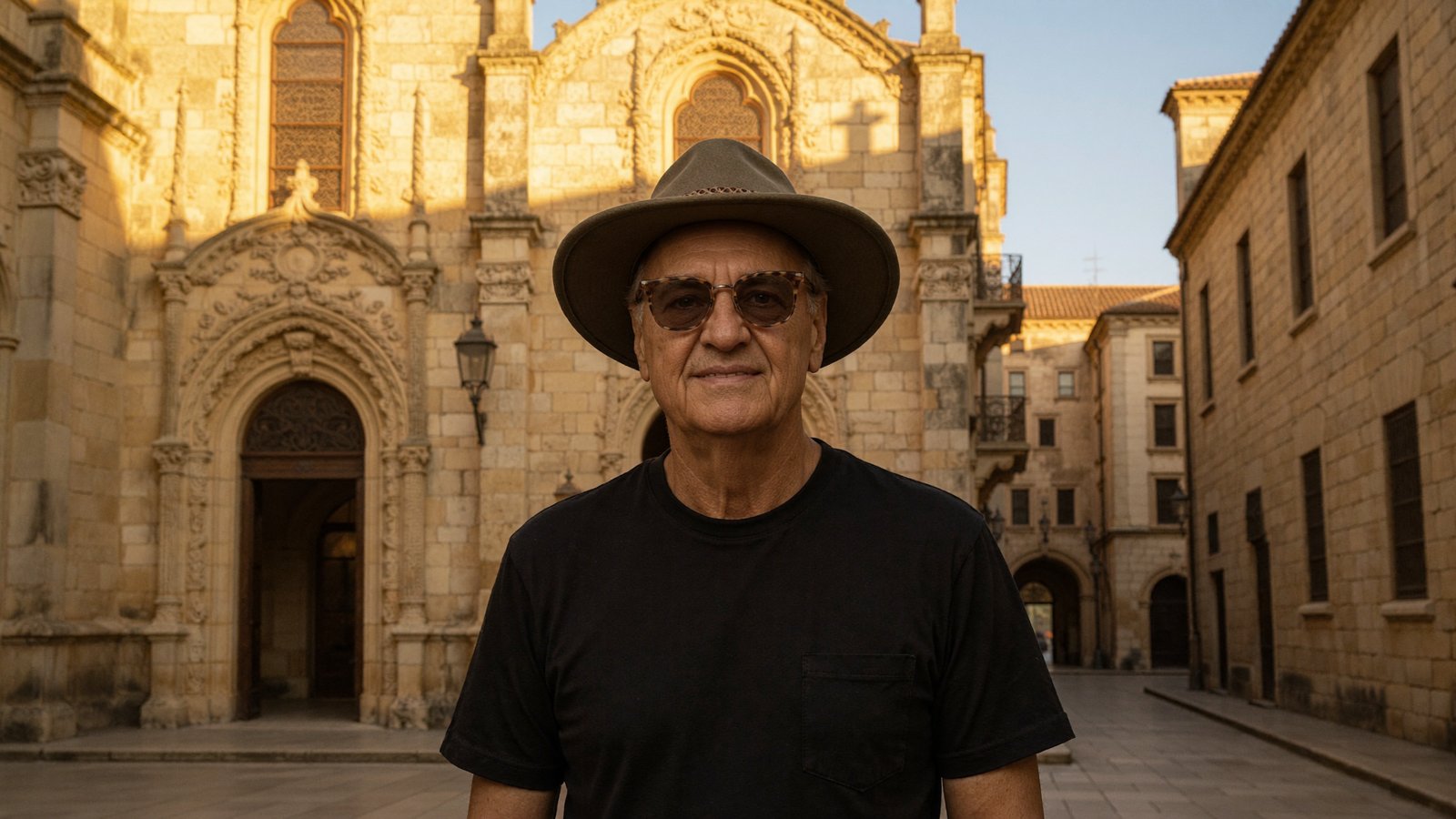
Your travel chronicle on Toledo, the City of the Three Cultures, featuring Ahmad ibn Hadidi and the translators of Gerard of Cremona (10th and 12th centuries), back when all Greek and Arabic knowledge was being translated into Latin, while in Paris, the schools of Notre-Dame were coalescing into a university that Philip Augustus would recognize in 1200.
Your Daily Iberian Travel Chronicle & Guide
How an eight-by-eight-meter brick mosque and a few men hunched over manuscripts restored the world's memory to Europe. (Chapter 1 of 2)
You know, some cities reveal themselves at a glance, while others demand that you earn them. Toledo is of the latter kind. It doesn't open up; it lets you climb it.
I arrive via the southern road, the one that runs along the Tagus before climbing toward the old town. The light is still low, grazing, almost shy. It caresses the ocher-colored walls and lights up the roofs like scales. The air smells of warm stone and, somewhere below, the wild thyme that grows between the rocks. Toledo is like nothing else. It is an island of stone set on a meander, a fortress city that the river embraces like a protective arm, watching you climb without offering a hand.
Three people are waiting for me on the Plaza de Zocodover, three gazes, three curiosities, and the same silent question in their eyes: what is so special about this city that we are still talking about it a thousand years later?
Sophie is there, Moleskine notebook in hand, glasses pushed up on her forehead. A professor of comparative literature from Montpellier, she tracks traces of cultural coexistence like others hunt for gold, and she spent the night on the train without sleeping, fueled by that specific energy of people who are exactly where they wanted to be. Beside her, Andrés, a Madrid architect with a technical eye, is already observing the masonry of the walls with an intensity that would make a stonemason smile. And then there is Carmen, a native of Toledo, guided by the memory of a grandmother who kept telling her that their family once bore another name. A name that sounded different. A name that had been forgotten along the way.
"Lucas, why do they call it the City of the Three Cultures?" Sophie asks, putting away her pen. "Is it just a slogan for brochures, or was it real?"
It’s a good question. It’s even an essential one, because the answer is neither simple nor comfortable.
"Come. We’ll start with the city’s oldest witness. An eight-by-eight-meter building that holds a thousand years of answers."
Look closely, you who are reading these lines. What I am about to tell you is the story of a place where men of three faiths attempted something unprecedented in the Europe of their time: opening the same books at the same table.
The mosque that a notable paid for out of his own pocket
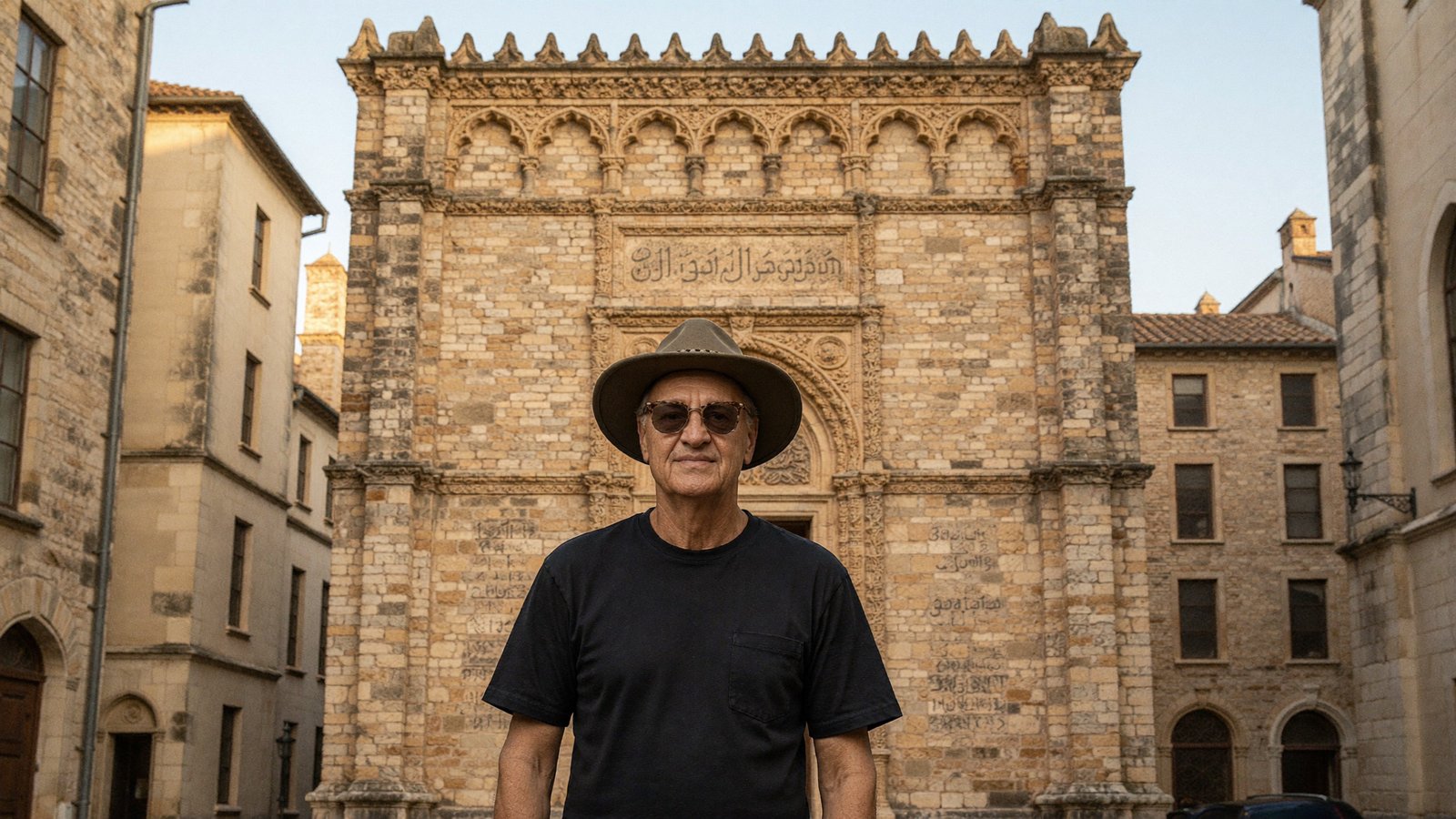
We head down a narrow alley that winds between walls of mixed brick and stone. At the end, a small, almost modest building awaits us, tucked away near the old northern gate: the Bab al-Mardum mosque.
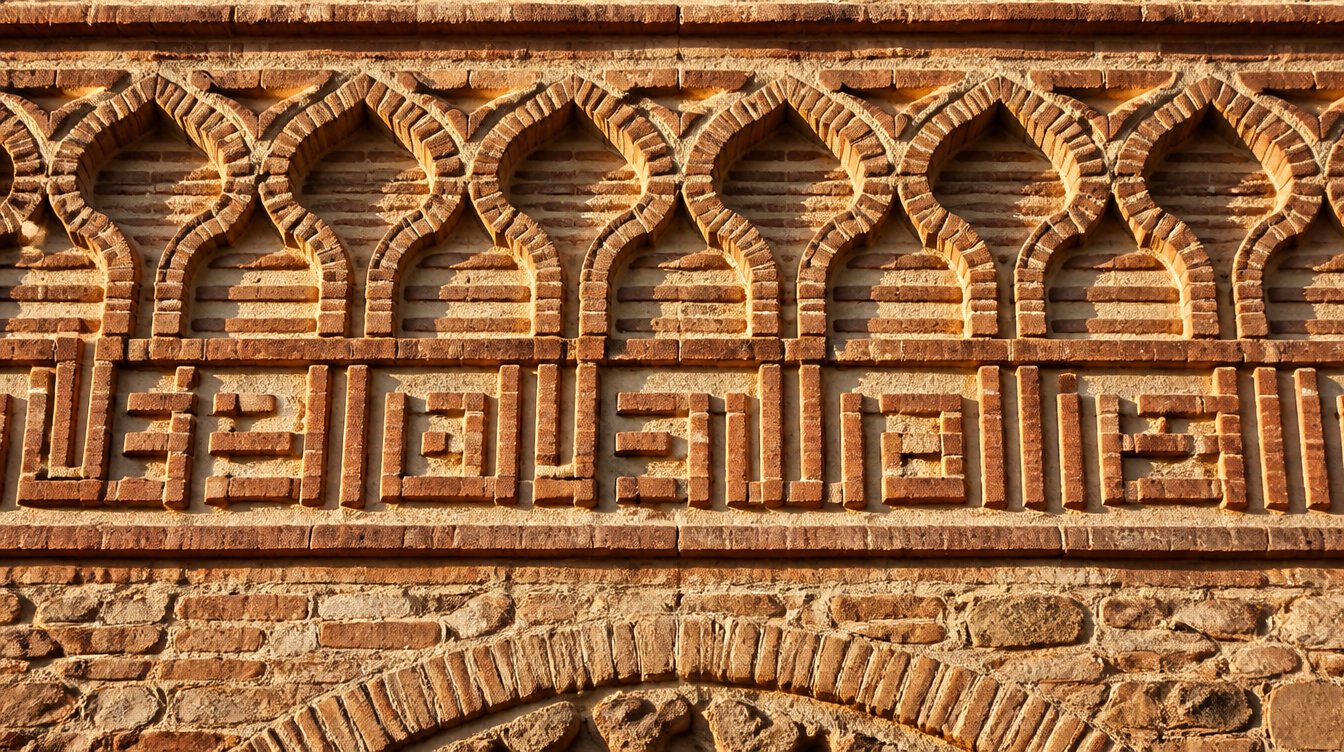
Andrés stops dead. "Look at that," he murmurs, brushing the facade. "The bricks aren't placed randomly. It's a pattern, almost a script."
He is right. The facade bears an inscription in Kufic characters traced directly into the brick, a rare technique in all of Western Islamic art. It says, roughly: in the name of Allah, Ahmad ibn Hadidi had this mosque erected at his own expense, seeking divine reward, and it was completed under the direction of the architect Musa ibn Ali. Construction finished in the year 999 of our era, in the month of Muharram of the year 390 of the Hijra. We are at the height of the Caliphate of Córdoba, and Ahmad ibn Hadidi was no prince. He was a notable, a member of one of the city's great families, the kind that produced judges and ministers. He didn't build to establish power. He built for his soul, and for a small community of scholars and merchants entering the city through this gate.
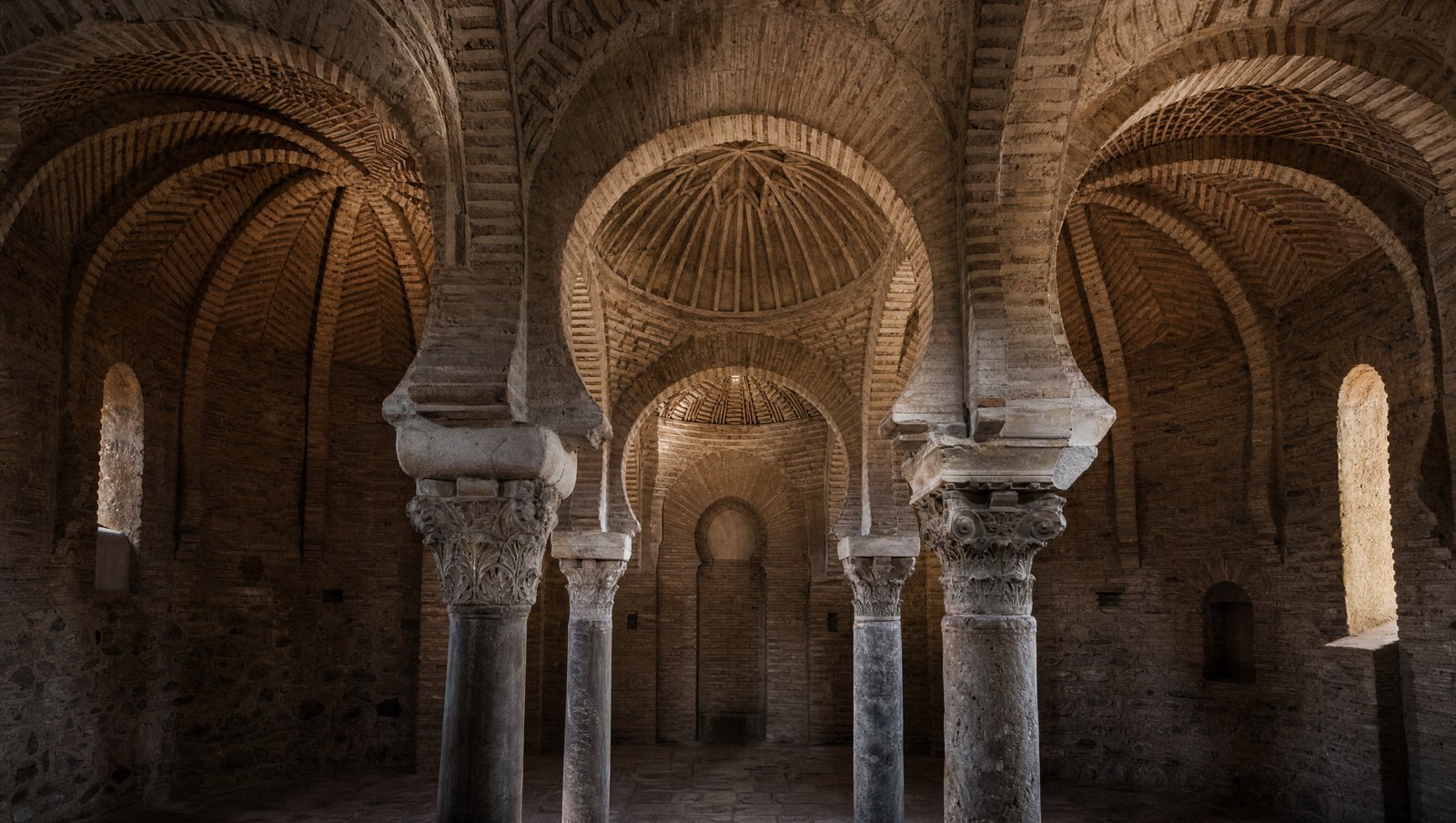
Inside, the silence is absolute. Nine ribbed domes, all different, rest on four columns. Andrés places his hand on one of the capitals and stands still.
"These are Visigothic. They are three centuries older than the mosque. They were salvaged, repurposed."
That is all of Toledo in one gesture. A Muslim mosque, set on Visigothic Christian columns, a few steps from a Roman road, with horseshoe arches that pay homage to the Great Mosque of Córdoba, which had just been completed to the south. Each civilization built on the shoulders of the previous one, not always realizing it.
"And after the Reconquista?" Sophie asks.
"When Alfonso VI retook Toledo in 1085, he promised to respect the places of worship. Yet, the great mosque was transformed into a cathedral almost immediately, without the king's knowledge. This one, the small Bab al-Mardum, would hold out for another century before becoming a Christian hermitage. An apse was added, and it changed its name."
Carmen looks up at the central dome, where light filters through narrow bays, and says nothing. She has a way of looking at the walls as if they were about to speak.
Amparo and the lamp that never burned
We step back out into the light. In front of the door, a woman in her sixties is arranging candles in a small box, slowly, with the economical movements of someone who has been doing this for a long time. Her name is Amparo. She has been opening and closing the hermitage for over twenty years, and she knows every visitor before they even ask the question they all ask.
"You want to know why it's called the Christ of the Light," she says without looking up.
She tells us the story. Legend has it that on the day King Alfonso VI entered Toledo as a conqueror, his horse stopped dead in front of this mosque and refused to move, then knelt down. Intrigued, the king had the wall excavated. They discovered a crucified Christ, walled up there by Christians centuries earlier, before the arrival of the Muslims, and in front of him, a small oil lamp that, it is said, had never stopped burning. Three hundred years of flame behind a wall. A white stone in the floor still marks the spot where the horse knelt.
"My grandmother swore the lamp was still burning," Amparo adds, and a smile passes. "I've never seen anything burning myself. But I keep lighting candles. You never know."
Sophie, softly, almost regretfully: "It's a Christian legend layered over a Muslim oratory, built on Visigothic columns. Three religions in a single story, and the latest one tells the tale of the other two."
"Maybe that's what a city is," Amparo replies with a shrug. "A place where stories don't erase the previous ones. They pile up."
And you, dear reader, consider what you have just heard. One stone, and upon it a caliphate, a reconquest, a miracle legend. No one is right all on their own here. That is what makes Toledo so difficult, and so precious.
Two men, two languages, one bridge
We head back up toward the cathedral. The sun is now beating down on the cobblestones. The smell of warm bread drifts from a bakery, mingled with a wisp of incense filtering through the ajar door of a chapel.
"Do you know what made Toledo truly unique in European history?" I say to Sophie. "It's not the coexistence itself. It's what it produced."
After 1085, the city was Christian, but it was still home to thousands of Muslims and Jews, and above all, libraries full of Arabic manuscripts. Aristotle, Ptolemy, Avicenna, Averroes—all the knowledge of the Greeks, Persians, and Arabs was there, within reach, but unreadable to the clerics of the West, who had lost their Greek centuries earlier. So, men set to work.
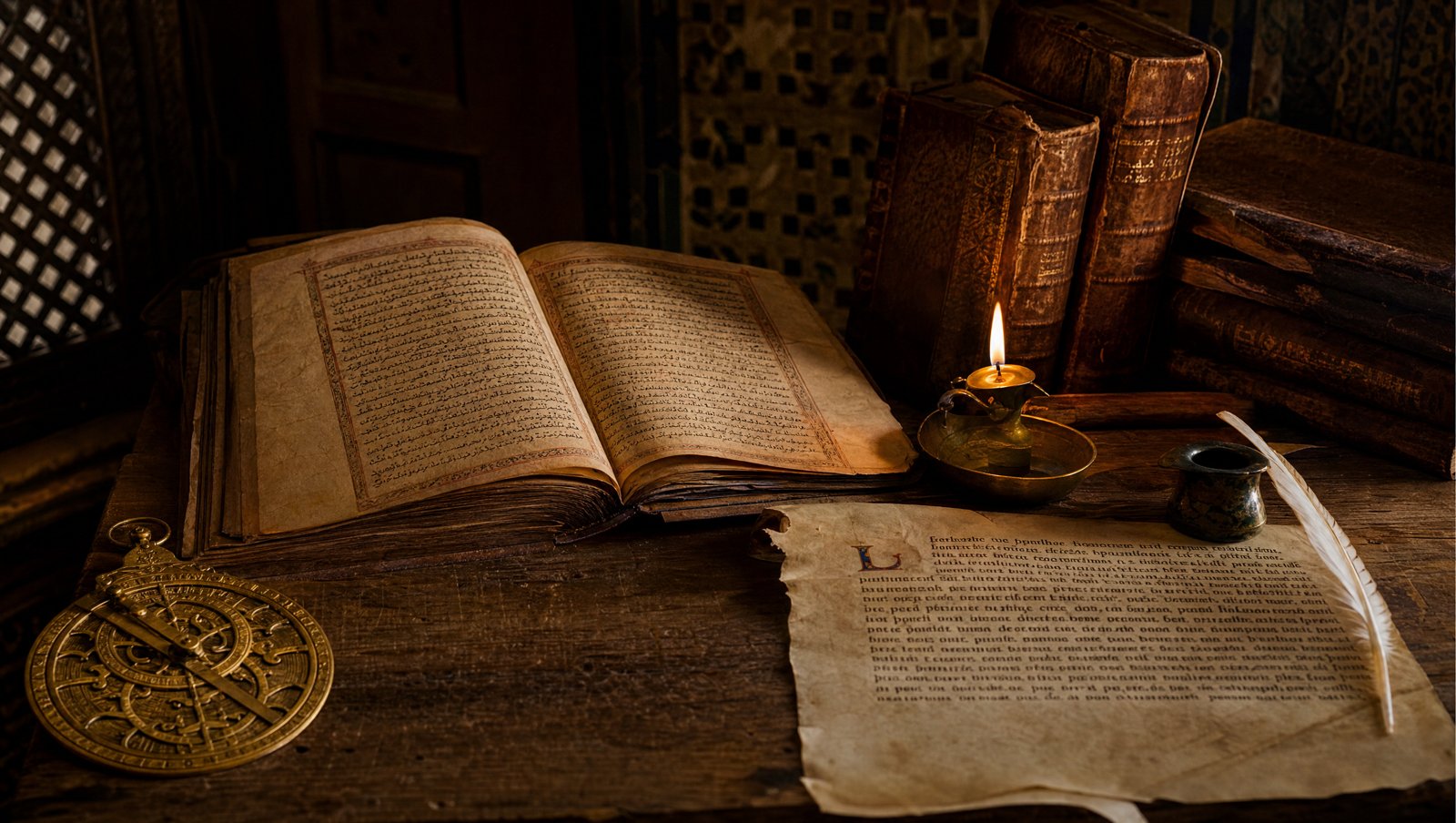
"As early as the 1120s, Archbishop Raymond encouraged teams to translate these texts from Arabic into Latin," I say. "They worked in pairs. A Jewish or Mozarabic scholar would read the Arabic and say it aloud in Castilian. A Latin cleric would listen and write it down in Latin. Two men, two languages, a bridge thrown between two worlds across a single table."
"A real school? A building?" asks Andrés, who is always looking for walls.
"No, quite the opposite. The Toledo School of Translators is a concept, not a place. It's a network. Gerard of Cremona, who came from Italy, translated over seventy works on his own, including Ptolemy's Almagest, which he had crossed the Alps to find. Robert of Chester came from England, Hermann of Carinthia from Germany. They flocked from all over Europe to this treasure that couldn't be found anywhere else. And in the following century, Alfonso X the Wise would take over by commissioning translations directly into Castilian."
Sophie has stopped writing. She stares into space for a moment, then says the thing I was waiting for.
"While they were translating all this here, in Paris, the schools of Notre-Dame were barely beginning to gather into a community of masters and students. In 1200, King Philip Augustus would grant them a charter, and that would become the University of Paris. Thirty years earlier, English students driven out of Paris had returned to swell the ranks in Oxford."
"And those young universities," I say, "were going to feed on exactly what was being produced here. The Aristotle that would soon be taught in Paris is the one passing through a table in Toledo at this very moment, from a Jewish mouth to a Latin quill."
A silence falls. Andrés finally breaks it, in a low voice.
So Europe rediscovered its own reason thanks to men of three religions sitting side by side in a Spanish city.
Yes. And it wasn't some idealized tolerance. It was pragmatic, fragile, sometimes tense, and often unequal. Jews and Muslims paid taxes that Christians did not. But there was an opening, a space where minds could meet. That space changed the course of European thought.
The light shifts
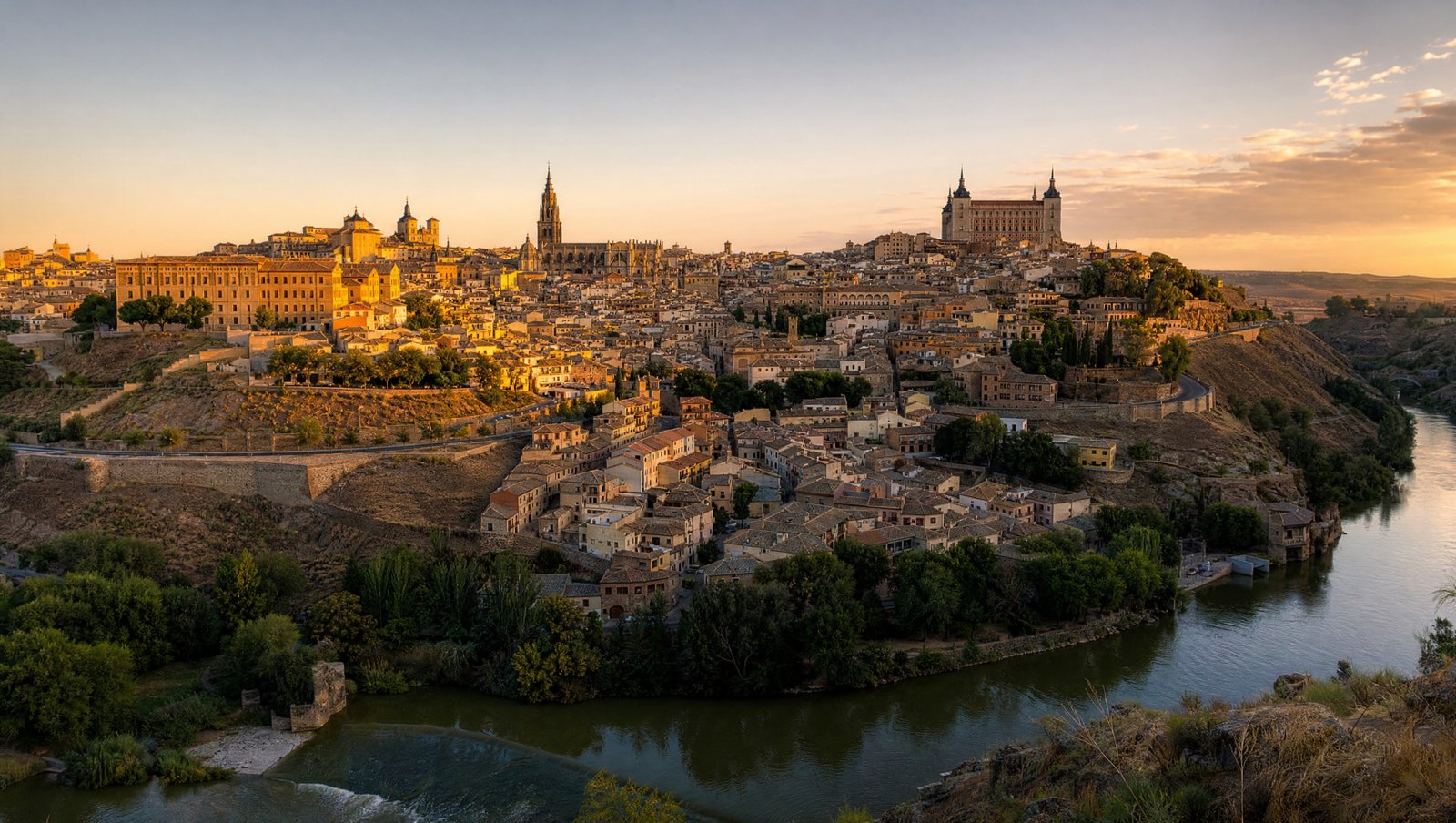
The sun is high now, and Toledo falls silent in the midday heat. Below, the Tagus flows, slow and indifferent to the dramas that have played out on its banks.
Carmen has said almost nothing all morning. She joins us with a package of mazapanes, the almond paste treats Toledo has been making since the Middle Ages—a recipe attributed at times to Christian convents and at others to Arab pastry chefs, though no one really knows its true origin anymore.
"Here," she says, handing them to us. "Perhaps this is the true trace of coexistence. A taste we share without remembering who invented it."
She bites into hers, looks at the river, and adds, almost to herself:
"The name my grandmother had forgotten, I think it came from here. From before."
No one answers. The silence of Toledo speaks better than we do.
But the story of this city does not end at noon, dear reader, and it does not end with the light. This afternoon, we will head toward the south of the old town, to the Jewish quarter, where the alleys narrow and the shadows take on a different weight. There, a synagogue awaits us with walls covered in Hebrew inscriptions, the story of a man who carved his dream into plaster, and the year 1492, when the sky over Toledo closed in on a single voice.
I will see you for this second chapter. In the meantime, take the time to let these first steps resonate. Listen to the silence of the mosque, imagine the translators hunched over their manuscripts. What comes next is darker, and even more poignant.
You know, seeking out these stories has a price. Traveling to these places, consulting archives, verifying every date with historians—it takes time, and for an independent author, time is the only currency that truly matters.
If these stories move you, supporting this work will cost you less than a coffee and a glass of Portuguese wine. For €5 a month, you join the newsletter, receiving the latest stories and two previews before anyone else. And as long as you are a member, the entire Library is open to you: 14 ebooks already written, with a total value of €138.60, included in your subscription.
If you ever leave, no ebook truly disappears: you will always be able to purchase them individually for €9.90 each.
Because a journey never really ends. It continues, somewhere between the pages and the memory.
Lucas Lunes, author of ancient stones