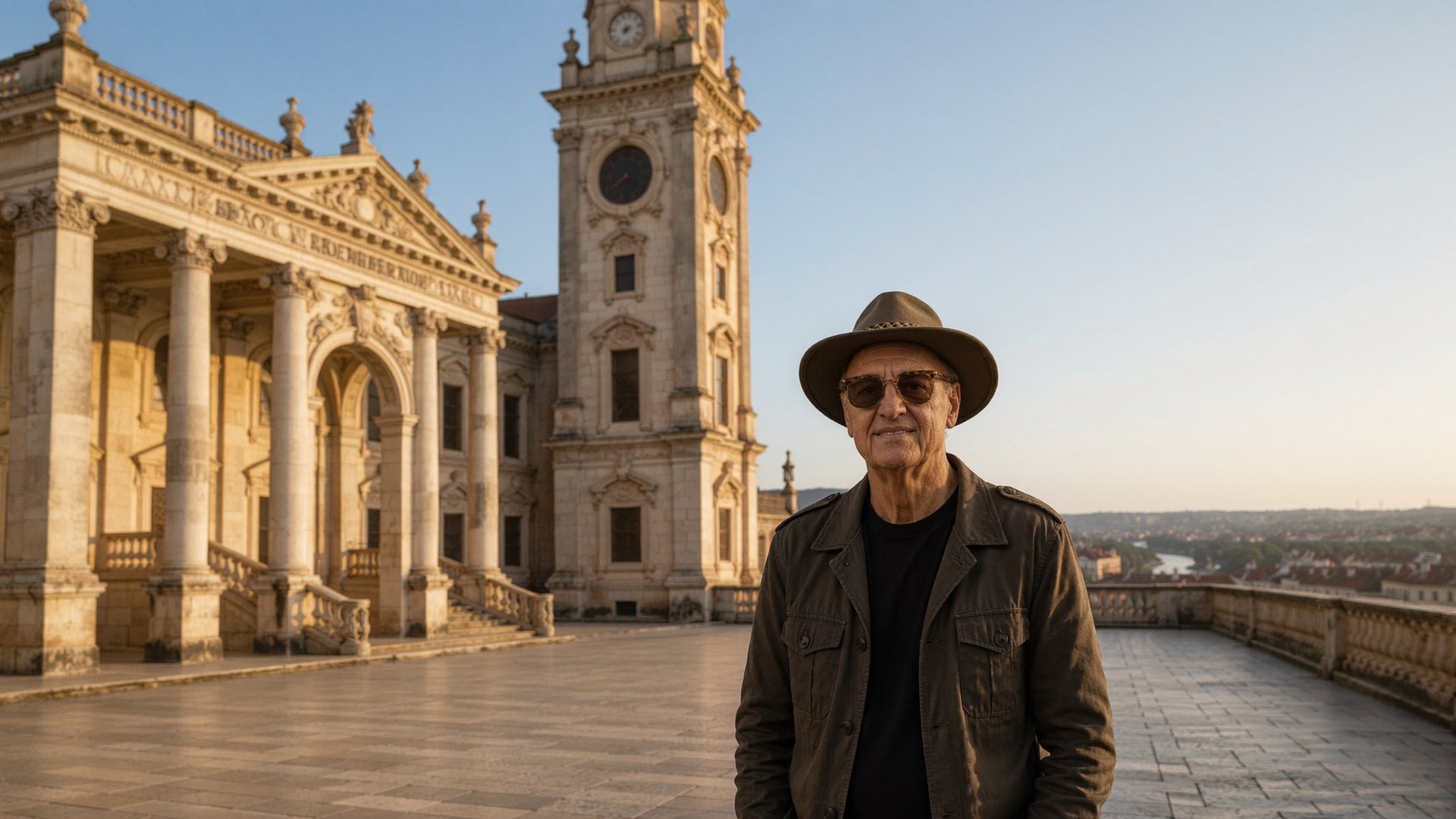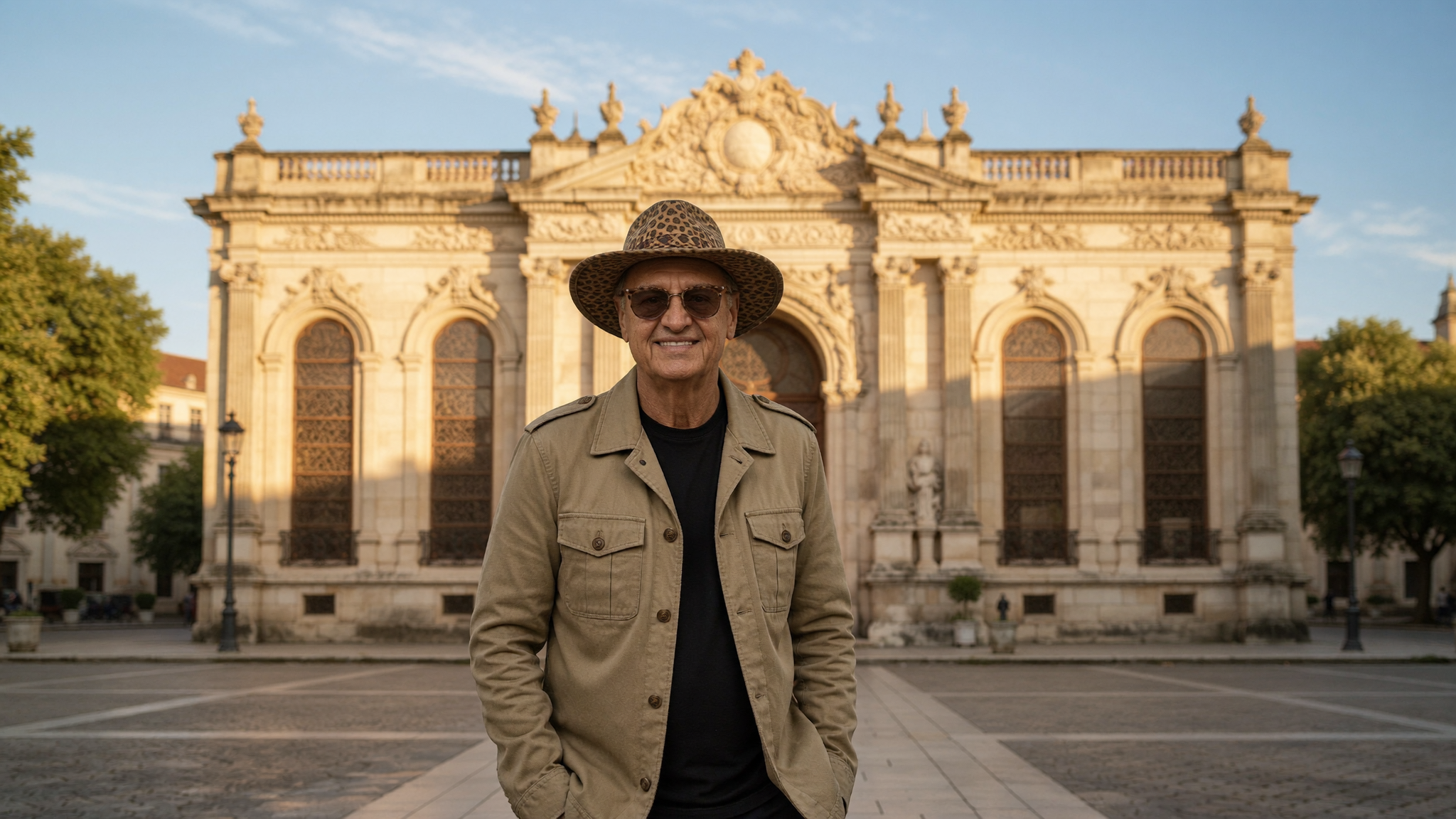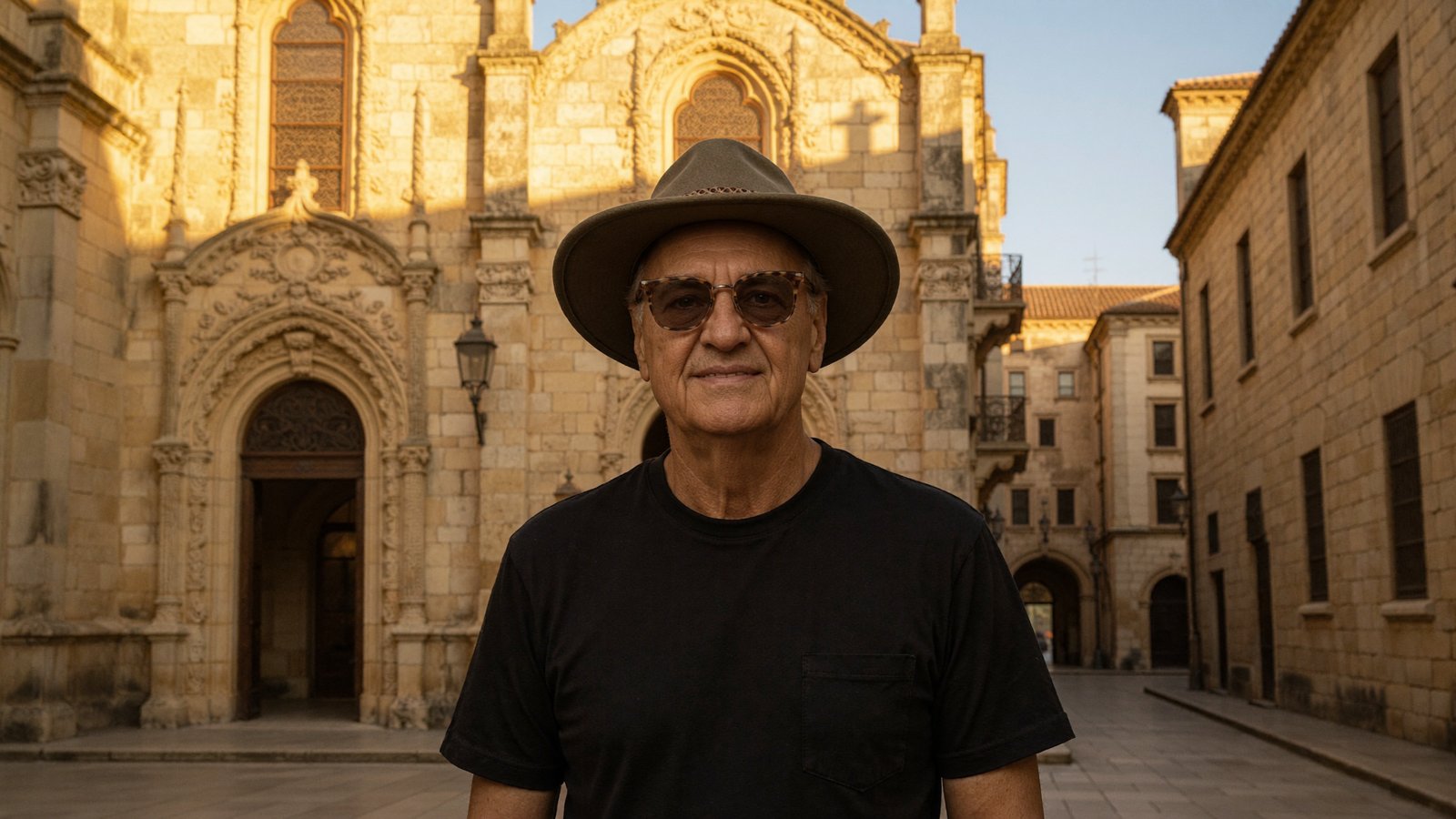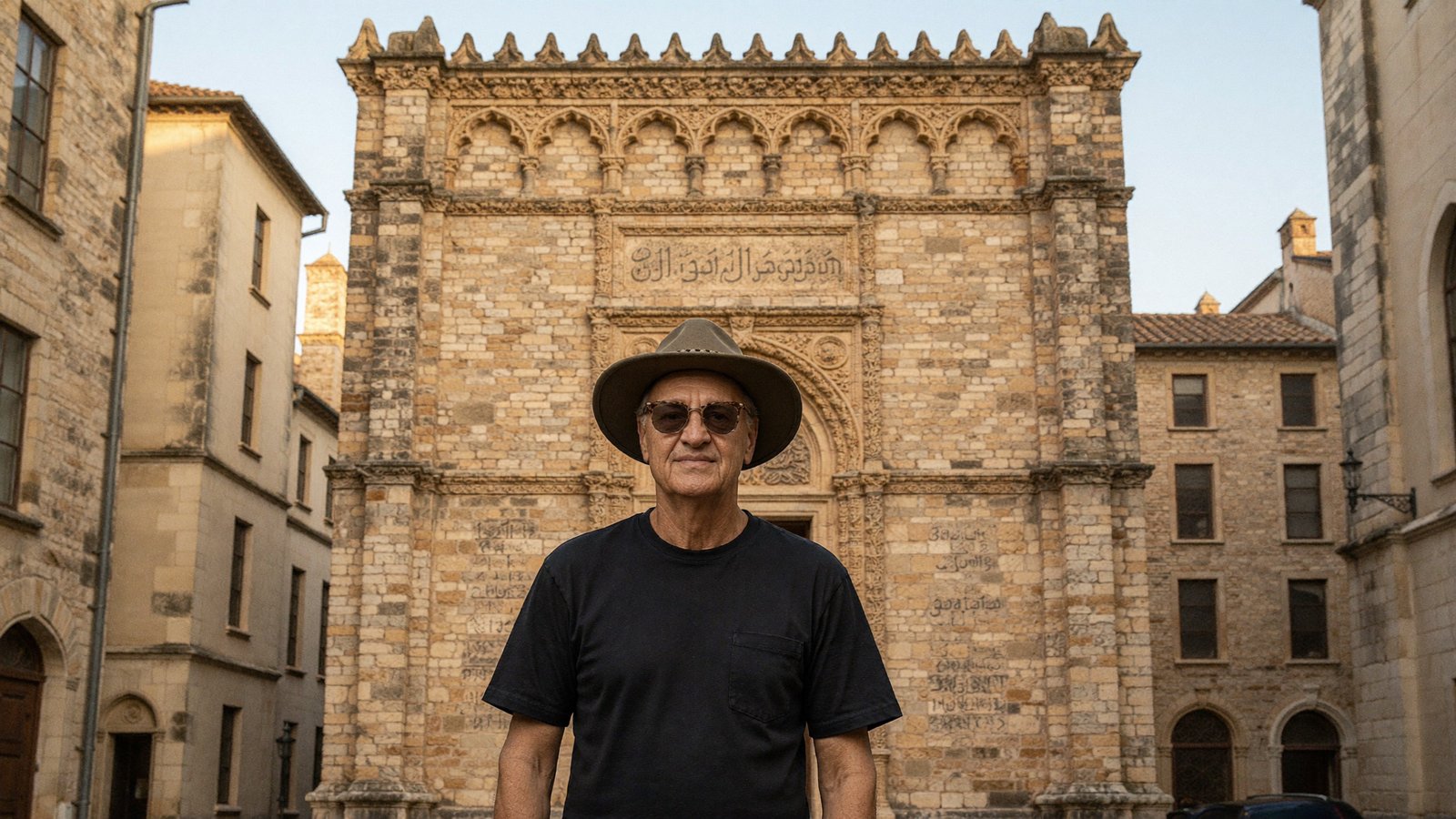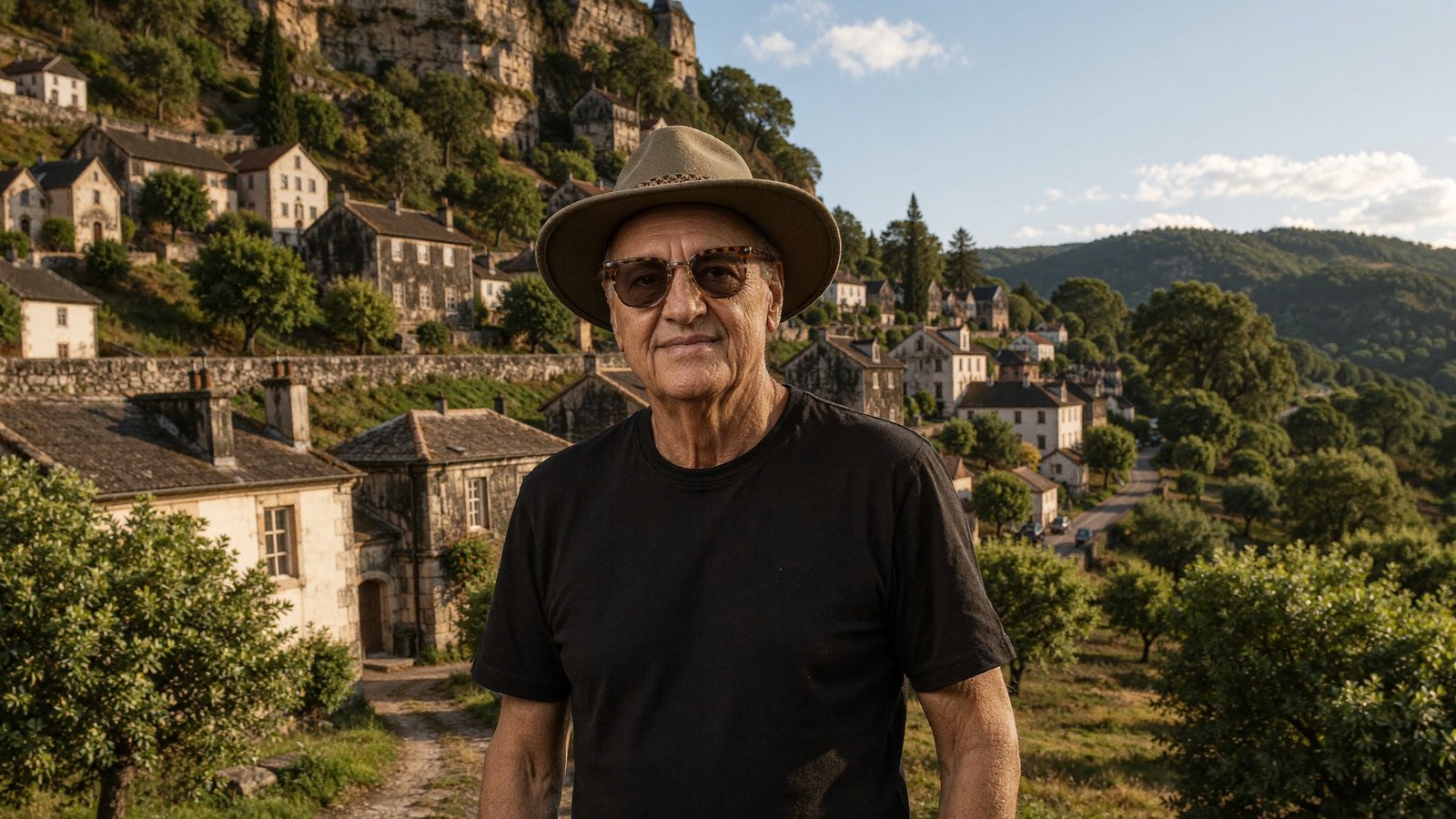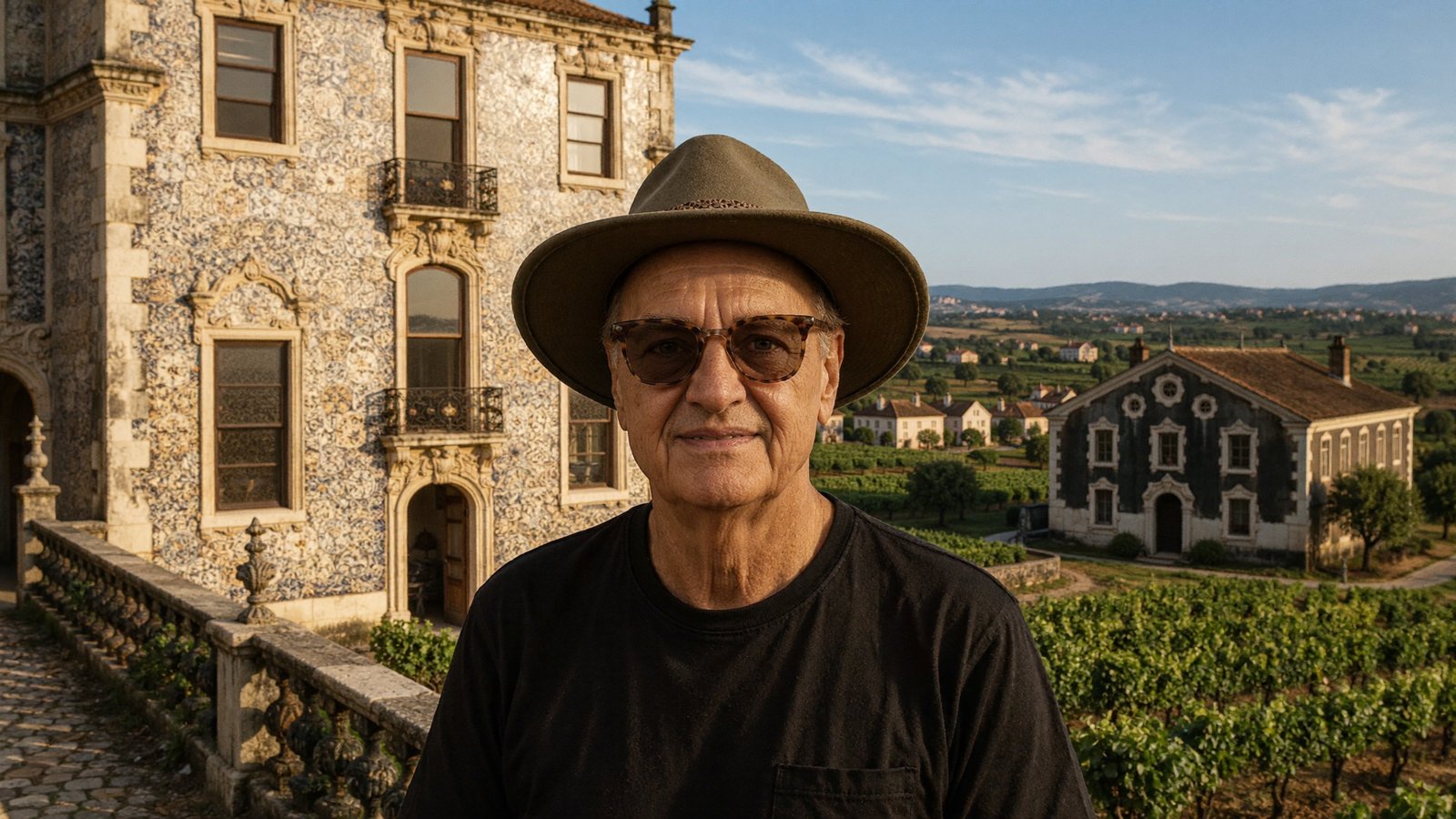

Your travel chronicle in Spain on San Cristóbal de La Laguna, featuring the Adelantado Alonso Fernández de Lugo and his surveyors (late 15th century), back when the first modern colonial city without walls was born, at a time when no one in France or England had yet laid a single stone for a city across the Atlantic.
Your Daily Iberian Travel Chronicle & Guide
You know, some cities hide behind walls, but there was one—the only one at the time—that chose to live in the open. It is around the year 1500, on a misty plateau in the north of Tenerife, five hundred meters above the sea. A man stretches a surveyor's rope across a damp plain where, just a few years earlier, a lagoon had still been sleeping. He isn't digging a trench. He isn't drawing a bastion. He is aligning straight, wide streets, open to the four winds. And without truly knowing it, he is inventing the face of cities that do not yet exist, thousands of kilometers away, on the other side of the Atlantic.
This city is San Cristóbal de La Laguna. Today, it is simply called La Laguna, and its historic center has been a UNESCO World Heritage site since 1999. But on that day, no one is thinking about eternity. They are thinking about a plan. A plan so new, so strangely rational, that it would take decades to realize that they had just written the draft for Havana, Cartagena de Indias, and San Juan, Puerto Rico.
Look closely, you who read these lines. This is not a story about a conquistador covered in gold. It is a story about geometry. And geometry, sometimes, changes the world more surely than swords.
The morning the plateau opened up
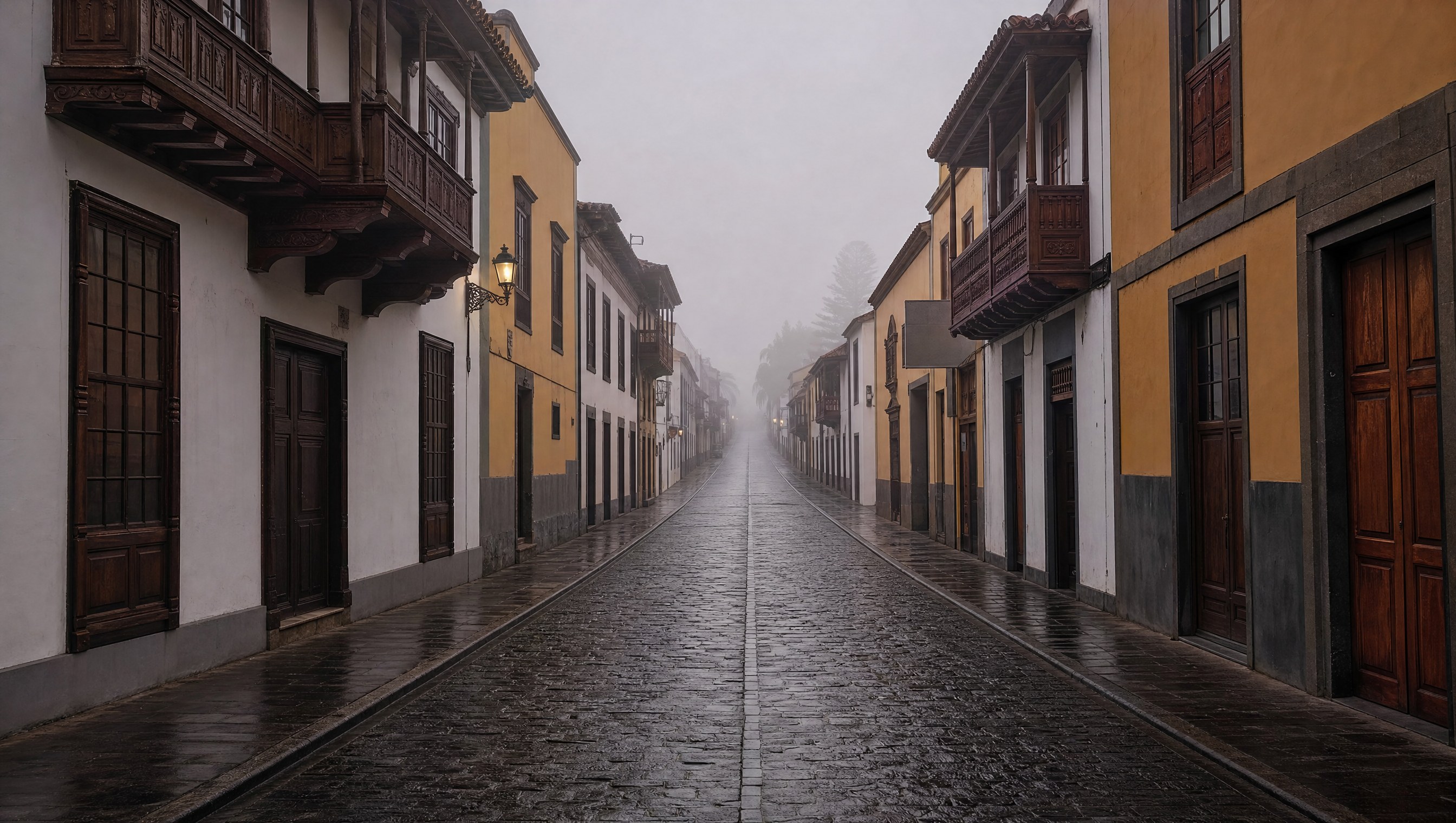
I arrive in La Laguna on a gray, woolly morning. The mist here has a name that the locals pronounce with tenderness: the panza de burro, or "donkey's belly"—that blanket of low clouds that clings to the north of the island and keeps the city cool while the south sizzles in the sun. The air smells of wet eucalyptus and the coffee being brewed in the bars on Calle Herradores. Beneath my feet, the cobblestones glisten.
Three people are waiting for me in front of the old convent, bundled up and a little chilly. First, there is Laguerra, fifty-eight, born here, a descendant of one of the families that arrived in the city's early years. She carries the land in her voice, that slight Canarian lilt that swallows its S's like the sea swallows pebbles. Beside her is Margaux, thirty-one, a French historian of colonial empires, her notebook already open, pen ready to strike. And Airam, thirty-nine, a child of Tenerife turned urban planner, the kind of person who looks at a street the way others read a poem.
"You want to understand this city?" Airam asks me, spreading his arms. "Then don't look at the houses. Look at the empty space between them."
I look up. Calle San Agustín stretches out before us, perfectly straight, lined with facades featuring large dark wooden doors and pine balconies that jut out like theater boxes. In the distance, the street doesn't turn. It doesn't veer. It goes straight on until it fades into the mist. Margaux whistles softly.
"It already looks like a city in America," she murmurs. She doesn't know how right she is.
A checkerboard laid upon a lagoon
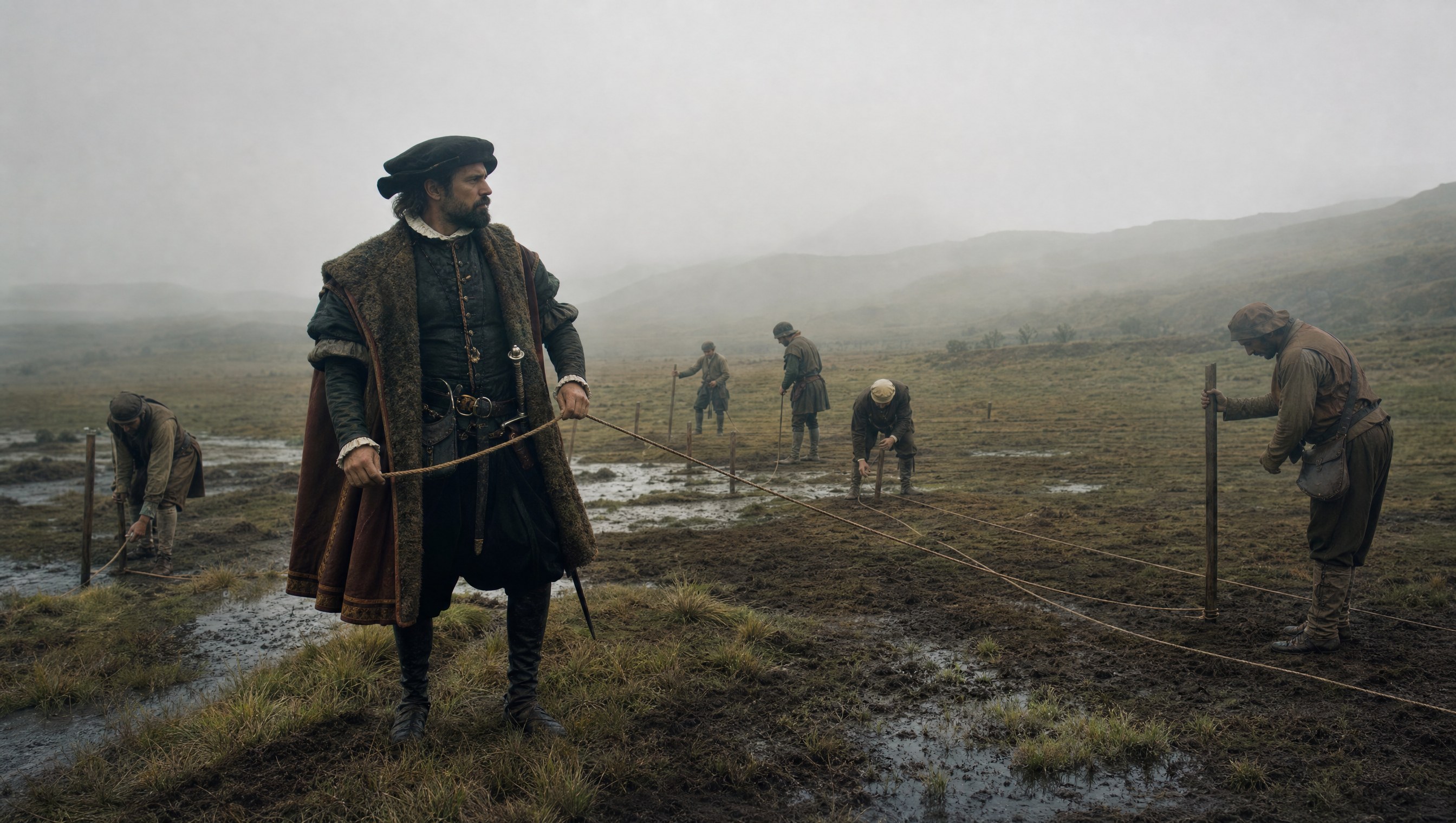
To understand the strangeness of this place, you have to go back to the man with the rope. His name is Alonso Fernández de Lugo, nicknamed the Adelantado—the one who leads the way. It was he who, at the end of a conquest completed in 1496, brought Tenerife under the Crown of Castile, the last of the great islands to fall. The Guanches, the people of herders who had lived there for centuries, called this plateau Aguere, because of the water that used to stagnate there. Lugo chose it as the site for his capital.
And that is where everything hinges. Airam crouches down and draws on the wet pavement with his finger.
"Look. A normal medieval city in Europe grows on its own, like a mushroom. The streets wind around a castle or a cathedral; they twist, they climb, they get lost. Not here. Here, someone sat down with a ruler and made a decision. Straight streets, regular blocks, a central square from which everything radiates. This isn't a city that grew. It's a city that was designed."
Historians speak of a traza, a layout, drawn in the very first years of the 16th century, around 1500 to 1502, for the lower city. Some researchers have even seen in it an echo of the ideal plans of the Italian Renaissance, the distant shadow of designs Leonardo da Vinci imagined for the city of Imola. We cannot say this with certainty, and it is better to be frank about that than to invent a connection that is too perfect. But one thing is certain: what Lugo laid out here, no one had yet dared to do on this scale in the colonial Christian world. A new, complete, rational city, placed all at once on land that had barely been conquered.
Margaux looks up from her notebook, her eyes shining. "Do you realize the date?" she asks. "1500. Christopher Columbus is still alive."
Why this city was never afraid
There is a detail that strikes every attentive visitor, and which has ended up becoming the signature of La Laguna. It has no walls. No ramparts, no fortified gates, no patrol paths. In an era when every self-respecting city surrounded itself with stone and fear, this one exposes itself, bare, in the middle of its plateau.
"And that," Airam insists, "is not an oversight. It is a calculation."
Let’s walk a bit. The street leads us to a small square where an old Indian laurel tree drips with moisture. Airam leans against the trunk and explains. La Laguna was built far from the coast, inland, on the heights. At the end of the 15th century, the threat in the Canaries didn't come from the island itself, which was by then pacified. It came from the sea: Barbary corsairs, and later, the English and Dutch fleets that would prowl around the archipelago. By settling far from the shore, protected by distance and the terrain, the city had no need for walls. The plateau guards it. The mist hides it.
Laguerra then slips in a sentence I won't forget. "My grandmother used to say that walled cities are afraid of the outside. We were never afraid of the outside. We looked at the sea from above."
Margaux adds a perspective that makes your head spin. "While Lugo was drawing his perfectly straight streets, in France, no one had yet founded a single city on the other side of the ocean. It would take more than half a century—nearly a century—for Quebec in 1608. And for the English, Jamestown was 1607. La Laguna was a century ahead. A whole century."
Dear reader, pause for a second on that figure. When the first French settlers were shivering on the banks of the St. Lawrence, this Canary Island city had already had time to age, to prosper, and to see entire generations born and die. Here, they were inventing the colonial city while the rest of Atlantic Europe was still dreaming of it.
The blueprint that crossed the ocean
This is the third act, and the most dizzying one. If La Laguna were merely one of the first Spanish cities outside of Europe, that would already be a great story. But there is more. Its layout, this tranquil grid, would serve as a template.
We enter the Plaza del Adelantado, the beating heart of the old town. All around, patrician palaces display their coats of arms. Airam slowly turns in a circle, his arm outstretched like a compass needle.
"What you see here—this square, these streets branching off at right angles, this grid—is exactly what the Spanish would replicate on the other side. Havana. Cartagena de Indias. San Juan, Puerto Rico. Dozens of cities. The same principle. A square, a grid, the church and the seat of power on the square, and everything else unfolding in blocks."
Margaux confirms this, adding detail, because a rigorous historian never lets a good idea pass without refining it. The model of the grid-plan city didn't emerge all at once in La Laguna; it matured, it was refined, and it would eventually be codified much later in the famous Laws of the Indies, which set down in black and white how to found a city in the New World. But La Laguna is there, upstream, like a first full-scale trial. A laboratory. The dress rehearsal for a spectacle that would play out across an entire continent.
"Walk through Old San Juan in Puerto Rico," she tells me, "and you are walking, without knowing it, in the footsteps of a granddaughter of La Laguna."
I look at Airam, who smiles. "That’s why I told you to look at the space between the houses. That space, those streets—that is the real monument. Not the stones. The plan."
At the guachinche table
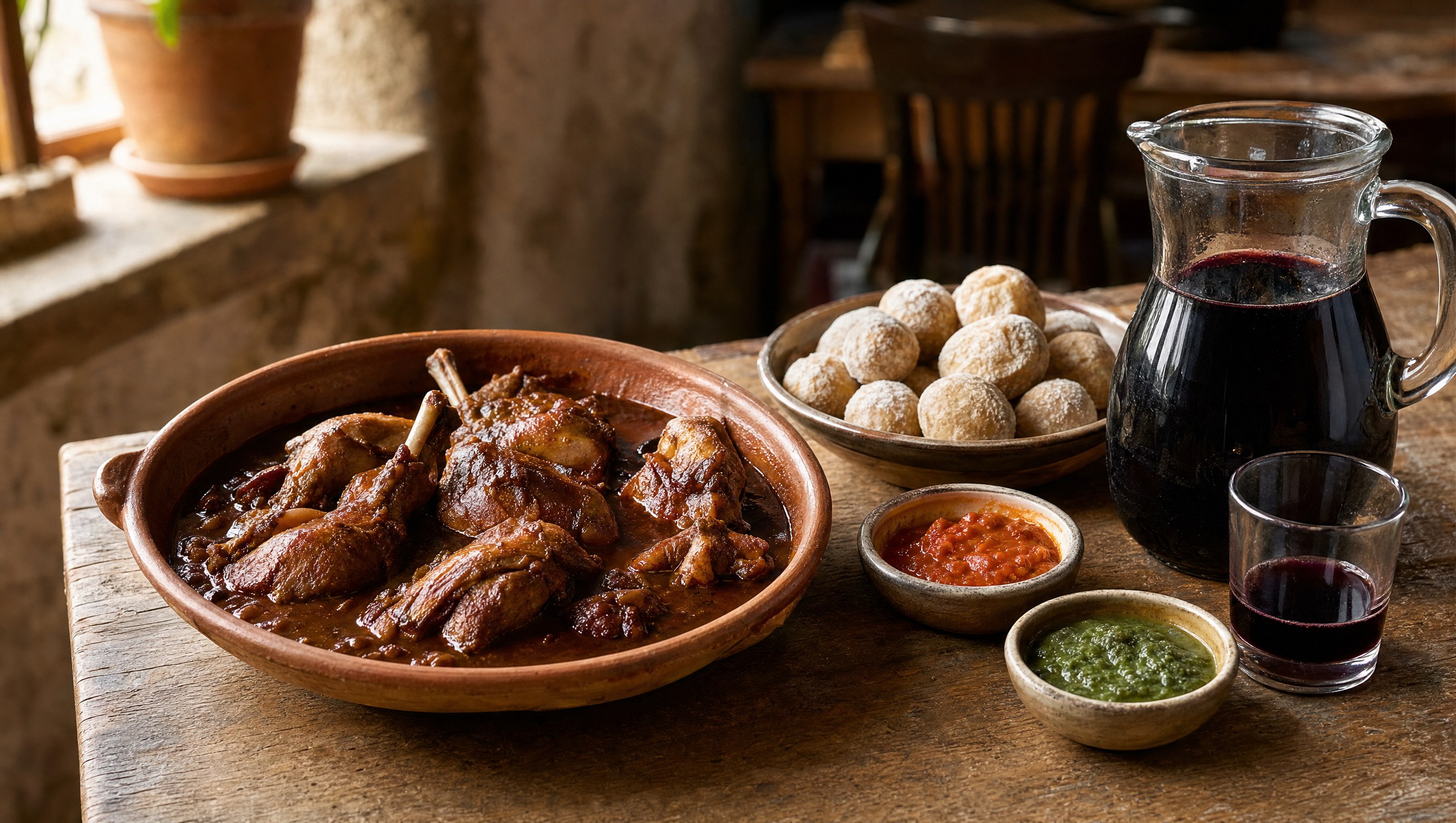
Around one o'clock, hunger brings us together, and Laguerra has something in mind. She takes us a little way off, on the slopes descending toward Tacoronte, to one of those places the locals call a guachinche. It is a northern Tenerife institution: a winemaker’s house that opens its courtyard and kitchen, serving its own wine in thick glasses and a few dishes, no fuss, no printed menu. You eat what’s available. You drink what the family has made.
The owner, a quiet giant with hands as wide as shovels, places a pitcher of red Tacoronte-Acentejo on the table—the oldest classified vineyard in the archipelago. The wine is dark, a bit rustic, with that taste of volcanic soil that pleasantly scratches the back of the throat. The room hums, families talk loudly, and the scent of cumin and garlic drifts from the kitchen where something has been simmering since morning.
Then comes the conejo en salmorejo, rabbit marinated for a long time and then simmered in a thick sauce of garlic, wine, paprika, and herbs—a dish Canarians pass down from generation to generation. The meat falls off the bone at the touch of a fork. Alongside it are the papas arrugadas, those small potatoes boiled in very salty water until the skin wrinkles and turns white, which you dip into two mojos: the spicy red pepper one and the fresh green cilantro one. The first bite warms me from the inside; the salt crunches, the heat of the chili builds gently.
"Eat with your fingers," laughs Laguerra, seeing me hesitate with my fork. "A papa arrugada is meant to be picked up, dipped, and crunched."
To finish, a quesillo, that dense and trembling Canarian flan drizzled with caramel. Margaux closes her eyes at the first spoonful. Airam raises his glass. Outside, the mist has lifted, and a ray of sunlight cuts across the courtyard. We stay there for a long time, saying nothing, full, happy, with that volcanic wine on our tongues and the very clear feeling that this, too, is history: what is eaten, shared, and written in no book.
The legend of the Christ from the North
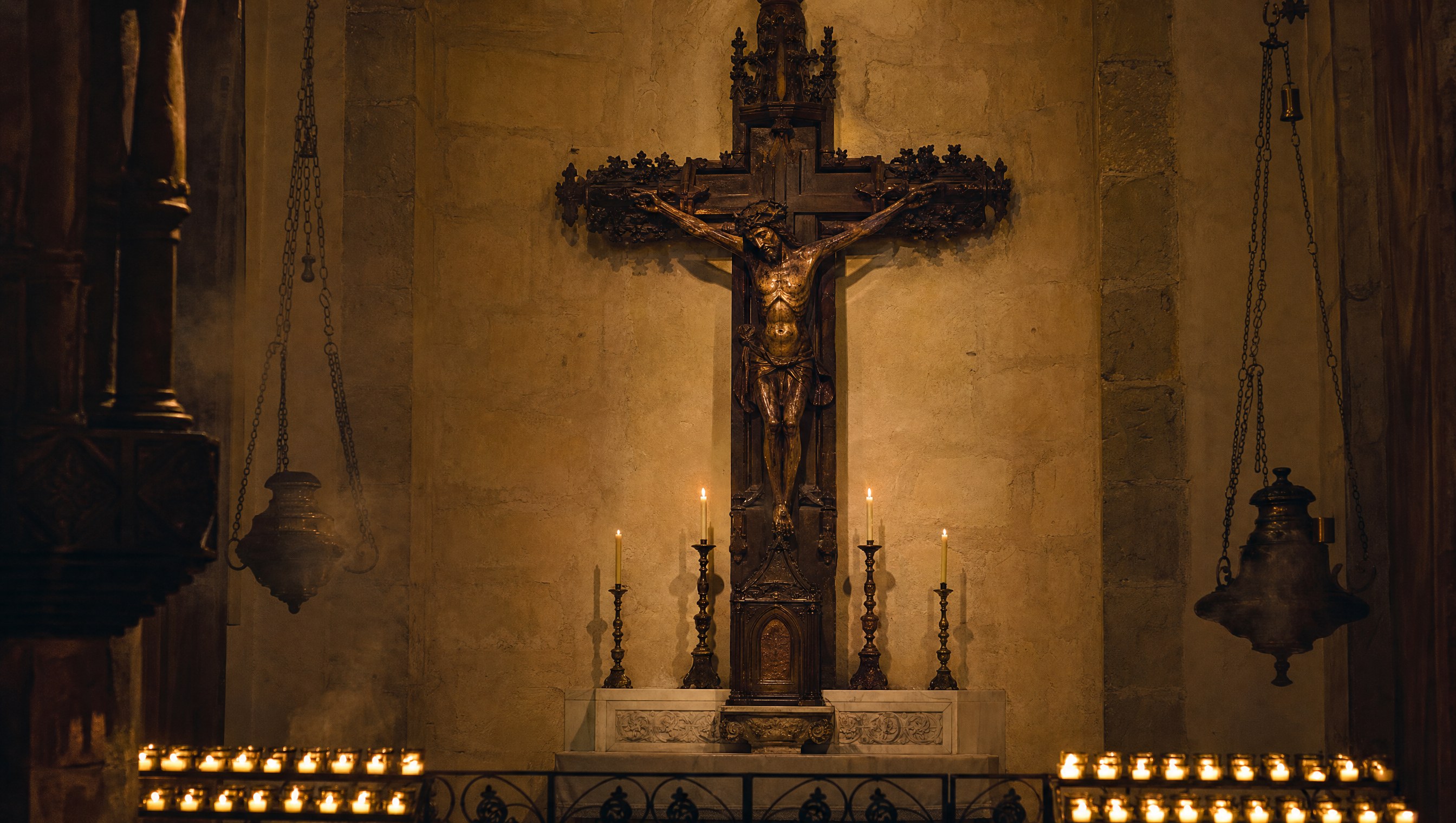
It is on the way back down in the afternoon that I meet Don Fermín. He is sweeping the forecourt of the Real Santuario del Santísimo Cristo, an old man with a hunched back, a sacristan for forty years, he says—perhaps longer. When he learns why we are here, he puts down his broom and leads us into the incense-scented gloom.
Above the altar watches the most venerated image on the island, the Santísimo Cristo de La Laguna, a Gothic wooden crucifix that came not from Spain, but from the distant north: Flanders. They say in the city that it arrived with the Adelantado himself, in the very earliest days of the founding.
"They say," whispers Don Fermín, emphasizing the they say, "that Christ chose La Laguna. That people tried to take him elsewhere many times, and each time something stood in the way. A storm. A mule that refused to move. A sign. So he stayed. And ever since, when the island suffers—drought, sickness—it is to him that we come to speak."
He crosses himself. The silence of the church weighs like velvet. You who read this, you know these stories, these sacred objects that, it is said, decide their own destiny. We must listen to them with respect, without confusing them with verified history.
And Margaux, very softly, with a delicacy I love about her, strikes just the right balance. "Devotion is the legend, and it is beautiful. But what we really know is that this Christ is a Flemish sculpture, a Gothic work from Northern Europe that arrived in the Canaries in the city's first decades. An object from Flanders, at the end of an Atlantic island. That is no legend. That, in itself, is an extraordinary journey."
I look at the wooden face, dark, patinated by five centuries of prayers. A piece of Northern Europe washed up on a Canarian plateau, watched over by an old man with a broom. Sometimes, true history does not need to be embellished.
What the mist keeps
Evening falls as we head back out. The panza de burro has returned, gently dimming the facades, and the streetlights flicker on one by one along the straight streets. Laguerra walks ahead, silent. Airam has stopped in the middle of a calle and looks, one last time, at this perfect perspective that stretches into the night.
"You know what touches me the most?" he says finally. "It’s not that the plan crossed the ocean. It’s that it stayed here, intact, for five hundred years. We are walking exactly where the first inhabitants walked. At the same corners. At the same crossroads."
Margaux closes her notebook. It is full.
And you, reader in the shadows, the next time you see on a map the perfect grid of an old Latin American city, those streets that intersect at right angles around a central square, remember this misty plateau in the Canaries. Remember the man with the rope, who preferred geometry to walls, trust to fear. A city has the rare courage to live without protecting itself, and from that courage was born, without him knowing it, the face of an entire continent.
Sometimes, the future hides in a straight line.
Category: Monumental heritage · Country: Spain · Type of location: Historic city
You know, searching for these stories comes at a price. Traveling to these places, consulting archives, verifying every date with historians—it takes time, and for an independent author, time is the only currency they truly possess.
If these stories move you, supporting this work will cost you less than a coffee and a glass of Spanish wine. For €5 a month, you don't just support an independent author: you join a community of active Iberophiles and participate each month in the birth of a new story. You vote for the story that interests you and that you want to see written. If your choice wins, your name is engraved at the bottom of that article, published for all to read and recognized by other readers as the one who brought it to life. A text you can recount and discuss at your dinner parties with your friends and everyone with whom you share your love for Portugal and Spain, a text that will help other Iberophiles better discover these lands. Each month, your voice counts again, helping this vibrant, participatory community grow a little more.
And as long as you are a member, the entire Library is open to you: 14 ebooks already written, with a total value of €138.60, included in your subscription.
👉 I'm becoming an active Iberophile
If you ever leave, no ebook will truly disappear: you will always be able to repurchase them individually for €9.90 each.
Because a journey never truly ends. It continues, somewhere between the pages and the memory. — Lucas Lunes, author of The Ancient Stones